The Consortium of Higher Education LGBT Resource Professionals put Center Awareness Day on a Zoom clock: Monday, October 19, 9 to 10:30 a.m. Pacific, 12 to 1:30 p.m. Eastern. The title this year is “QT Resource Centers as the Blueprint: How Queer and Trans Resource Centers are Foundations for Radical Hope.” That is ninety minutes. It is not a door.
The Connection at Cosumnes River College, Nanci Thao on October 21, is a different object: a Queer Faculty and Staff Panel on October 13 in Winn-150. Marie Saelee, a student who uses they/them pronouns, told Thao the discussion is how they learned about the availability and visibility of CRC’s Pride Center. The Daily Bruin on October 22 ran an opinion column under a file photo of UCLA’s LGBTQ Campus Resource Center. Three documents. Mix them and you will screenshot a webinar and call it office hours.
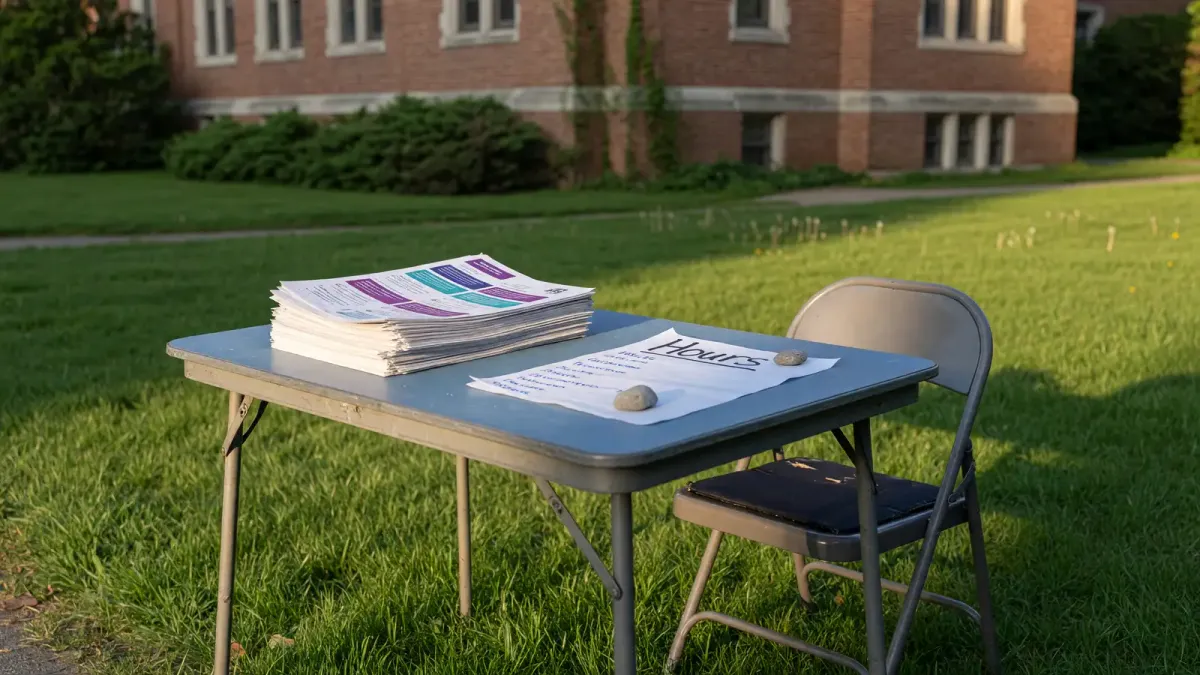
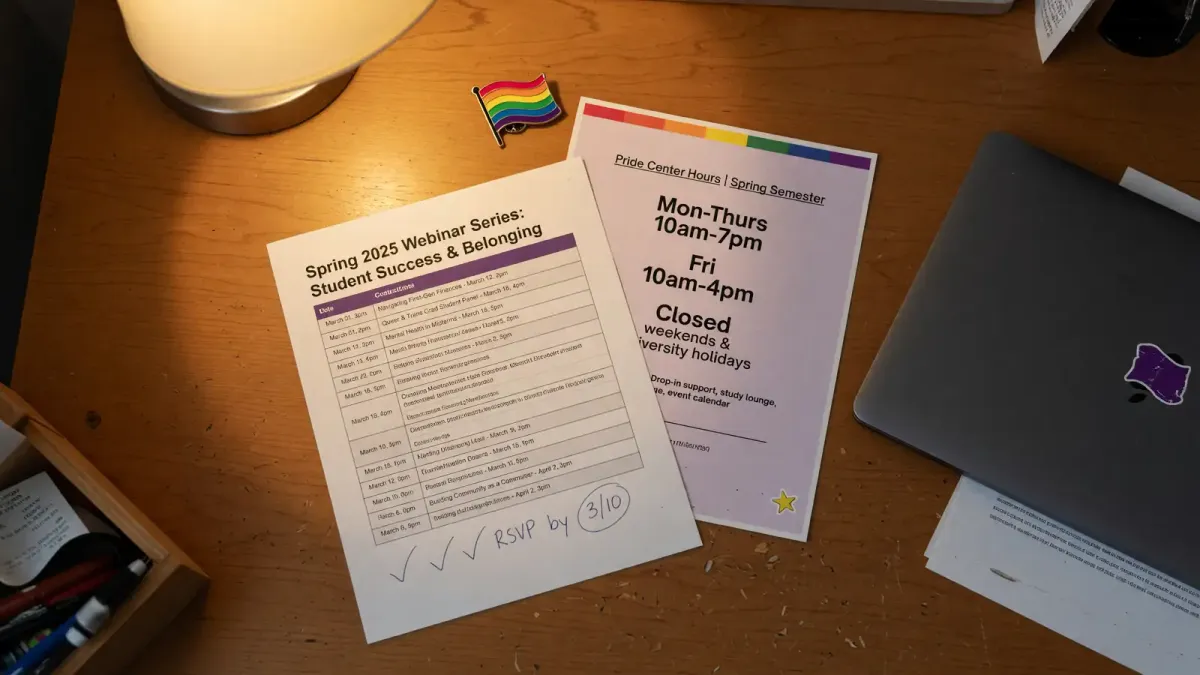
We already filed a resource-fair table against Pride Center hours and Syracuse turning 25 against two hours. This week the named day is October 19. The named room is Winn-150, which is still not the Pride Center.
9 to 10:30 Pacific is a webinar, not a sofa
The Consortium says the Center Awareness Day webinar is meant for any stakeholder, and that people in decision-making roles who affect queer and trans resource work are especially invited. That sentence is the point of the day. It is a briefing for people who control budgets and floor plans. It is not drop-in hours for a first-year who needs a printer.
The copy honors histories and the work that extends past the physical center into faculty, staff, administrators, and students. It names a book the session is inspired by: Championing Queer and Trans Inclusion Beyond the Campus Resource Center, by Kaity Prieto, Nick Daily, and Kristopher Oliveira. Beyond the center is the book’s argument. Steal that as a warning, not as permission to close the room. A blueprint that lives only on Zoom is a PDF.
Ninety minutes, once a year, on a Monday morning on the West Coast. If your campus is in Eastern time, the window is lunch. If your Pride Center is closed Mondays, the webinar does not open it. Put the recording, if they post one, in the same place you put the hours. Do not replace the hours with the recording.
Decision-makers on that call can leave thinking they attended Pride. They attended a professional development slot. The student who walks up at 4 p.m. still needs the posted interval. We keep filing that distinction because months, days, and now webinars keep getting used as substitutes for a door.
Winn-150 is October 13. The Pride Center is the thing Saelee learned existed.
Thao’s lede is the panel, not the center. Jennifer Martinez, a CRC success coach, is on the right of the photo, microphone in Winn-150, October 13, one of several History Month events. Penny Diaz, a student support specialist, said the event was organized to bring faculty and staff together in support of the LGBTQ+ community. Visibility and representation are Diaz’s words. Those are staff-facing goals. They are allowed to be. They are not a map.
Martinez talked about previous jobs where she hid part of her identity so she would not be labeled difficult. “The best way for me to show up is being my authentic self,” she said. That is a staff story. Useful. Still not hours.
Saelee came partly because a professor was there, used the panel to meet faculty, and, in the sentence we actually need, learned about the availability and visibility of CRC’s Pride Center. That is the product hiding under History Month. If a student has to sit through a panel to find out the center exists, the center’s signage failed before the panel succeeded.
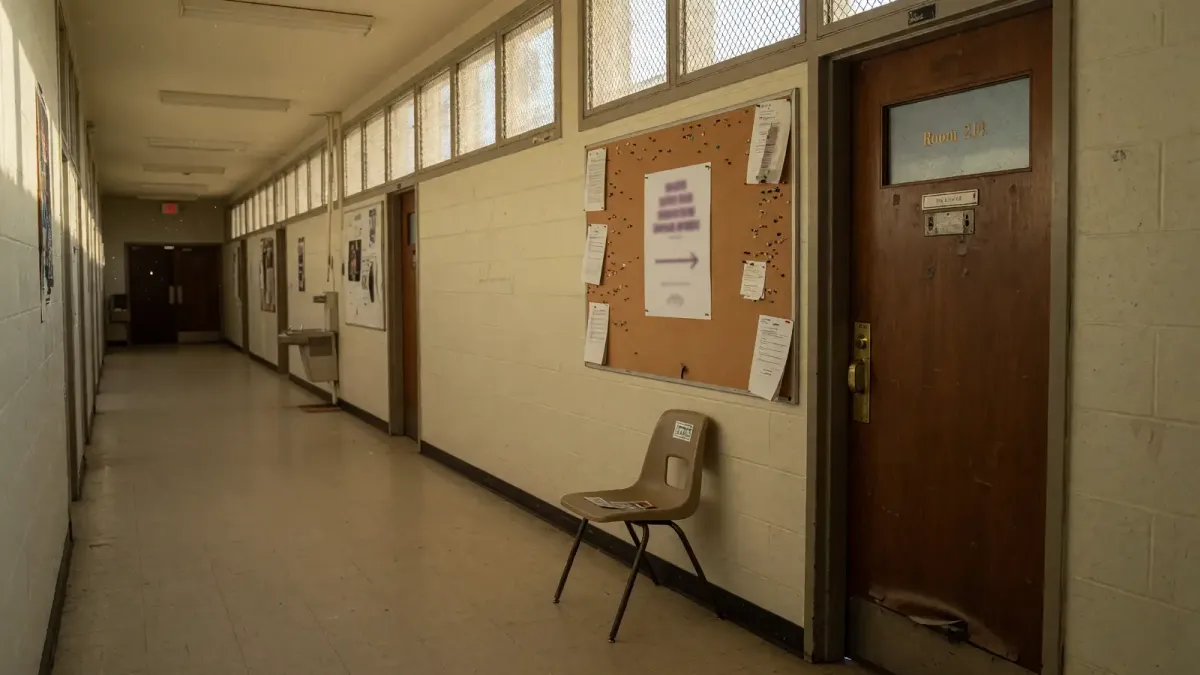
Thao does not print the Pride Center’s building, room number, or weekday hours in the chunks we have. Look them up. A college that can fill Winn-150 can print a door schedule on the same page as the panel recap. Until that line exists, do not cite The Connection as if it staffed the sofa.
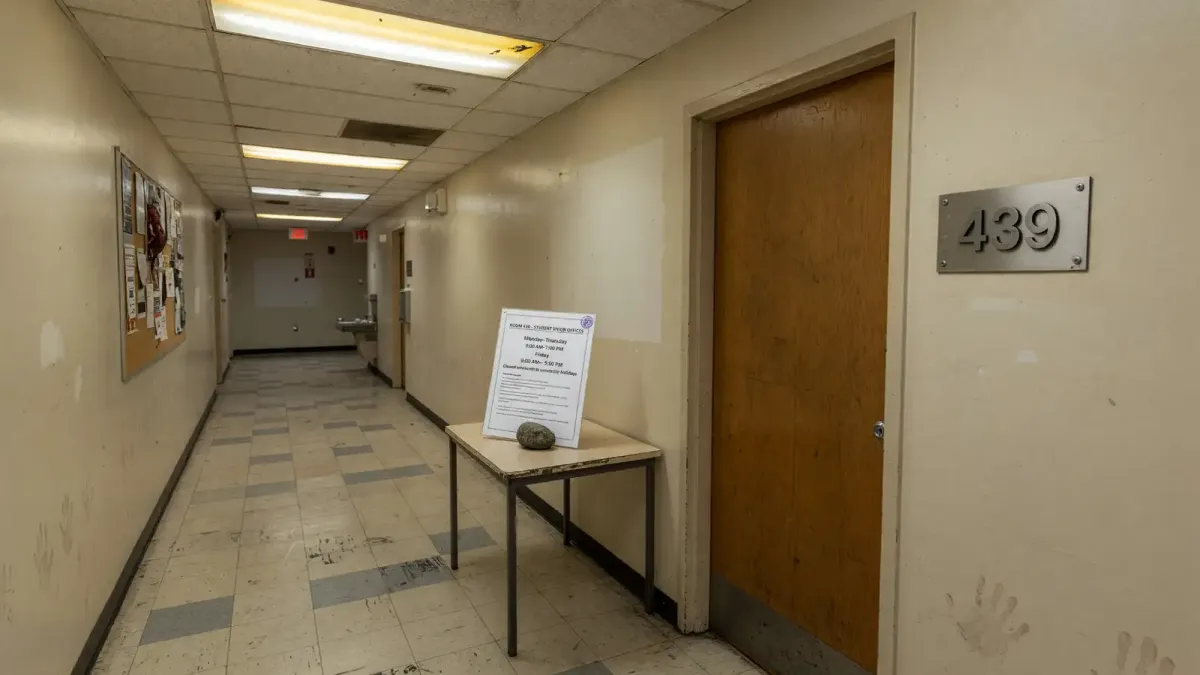
History Month is a banner. The panel is October 13. Saelee’s takeaway is a room. Keep the three objects from collapsing. PSU hitting No. 6 did not move Suite 439. A faculty panel does not move a Pride Center either. It can point at it.
A file photo is not UCLA’s hours either
Copeland Williams’s Daily Bruin column on October 22 is labeled Opinion. The feature image is the UCLA LGBTQ Campus Resource Center, a file photo. Williams argues that students should speak up for transgender and nonbinary peers while a federal Title IX framework shifts. California state protections, in that column, are described as weakening what the rollback can do on campus. Andrade-Mayen, a second-year theater student who identifies as gender-fluid, wants support that is out in the open, not only from the sidelines. Juarez, quoted on student space, asks who the government is to define that space.
Those are campus-paper sentences. They are not a resource list. The pictured center is a building with a lock. An opinion column does not unlock it. If you are a Bruin looking for the actual desk, leave Williams’s piece and open the center’s page. If you are on another campus, do not paste UCLA’s photo into your student-government slide as if it were your hours.
We are not going to litigate Title IX in this file. We already spent weeks on register text versus handbooks. The useful collision this week is simpler: a national awareness-day webinar, a community-college panel that accidentally advertised a Pride Center, and a flagship paper that used a resource-center photo to dress an opinion. The resource is still the room.
CTQA printed the map. Steal the map.
Emily Rutz, in The Quad at West Chester on October 19, did the thing the other three pieces mostly did not: name a center and list what it hands you. WCU’s Center for Trans and Queer Advocacy. Mission on the page: cultivate an environment where intersectional experiences of trans and queer people are supported, celebrated, validated, and affirmed, with access to LGBTQIA+ resources and community advancement. That is mission copy. Under it, Dr. English is proudest of “A Queer Ram’s Guide to WCU,” a slideshow with a map of gender-inclusive bathrooms, LGBTQIA+ housing, how to change your name, and trans and queer businesses around West Chester.
That slideshow is a support resource. A webinar is not. A panel is not. An opinion column is not. If your campus has a Pride Center and no equivalent guide, you are asking students to reconstruct housing policy from Instagram.
Rutz: CTQA collaborates with the Center for Women and Gender Equity and the Dowdy Multicultural Center. Instagram @wcu_ctqa posts in summer. Events English names: Big Queer Welcome (Wizard of Oz one year, rodeo the next), Coming Out Week, Trans Joy, Clothing Closets, The OUTlet, art therapy and de-stress, Lavender Graduation. Peer educators help pick what students want. Lavender Graduation is English’s favorite because it grew.
Clothing closets and a bathroom map are Tuesday objects. Lavender Graduation is a calendar object. Do not let the graduation photo become the only public proof the center exists in March. The guide is the proof you can send in a text.
Center Awareness Day asked decision-makers to treat QT resource centers as a blueprint. Fine. The blueprint on your campus is still a room number, a hours PDF, and a guide someone can open without registering for Zoom. CRC’s panel accidentally taught Saelee the center was there. WCU already wrote the guide. UCLA’s paper used the building as a backdrop. Pick the guide.
Mountain time is 10:30. Your campus is a different clock.
The Consortium printed four zones: 9-10:30 a.m. PT, 10-11:30 a.m. MT, 11 a.m.-12:30 p.m. CT, 12-1:30 p.m. ET. If someone on your staff forwards only “Monday morning webinar,” a Midwest advisor will show up an hour late. Put the zone on the calendar invite. Put “optional, for administrators” on the same line so students do not think the Pride Center is closed because staff are on Zoom.
The webinar title loads the word hope. The Consortium copy talks about hostile political and institutional climates, then chooses hope as a collective commitment. That is language for a professional audience. It does not change whether Winn-150 is unlocked on a Wednesday. If a vice president attends and then asks student affairs for “the blueprint,” send the hours PDF and the equivalent of WCU’s guide. Do not send a recap of radical hope.
Prieto, Daily, and Oliveira’s book is in the session description because the argument is inclusion work beyond the center. Read that as a staffing warning. Faculty, RAs, registrars, and housing all do part of the job. They do not replace the desk. A campus that cites the book while cutting the coordinator has quoted the title and ignored the first noun, “center.”
CRC’s History Month stack, in Thao’s caption, is several events. The panel is one. Saelee used a professor’s presence as the reason to attend. That is a distribution channel: put faculty in the room if you want students who will not walk into a Pride Center cold. It is also an indictment of how the center is advertised if a support specialist has to build a panel so students hear that the center exists. Print the hours on the syllabus week-one slide. Print the room number on the same History Month poster that advertised Winn-150.
Andrade-Mayen’s Daily Bruin line about support “out and in the open” is about visibility of people. Visibility of a center is a different job: signage, hours, a guide. Do not use a student quote about allies as a substitute for a map of bathrooms. WCU already has the map. UCLA’s file photo proves a building exists. CRC’s Pride Center, in this week’s paper, is a thing Saelee learned about. Three levels of documentation. Only one of them is a slideshow a first-year can open at 11 p.m.
Clothing closets, The OUTlet, and Coming Out Week are programs. Programs need a host. The host is the center. If your campus lists those names on a monthly calendar and the office is a storage closet with no posted hours, you have WCU’s event names without WCU’s desk. Instagram that posts in summer, as @wcu_ctqa does, is how a student finds Pride events in July. A Center Awareness Day webinar in October is how a dean finds talking points. Send students the Instagram and the guide. Send the dean the webinar. Do not reverse them.