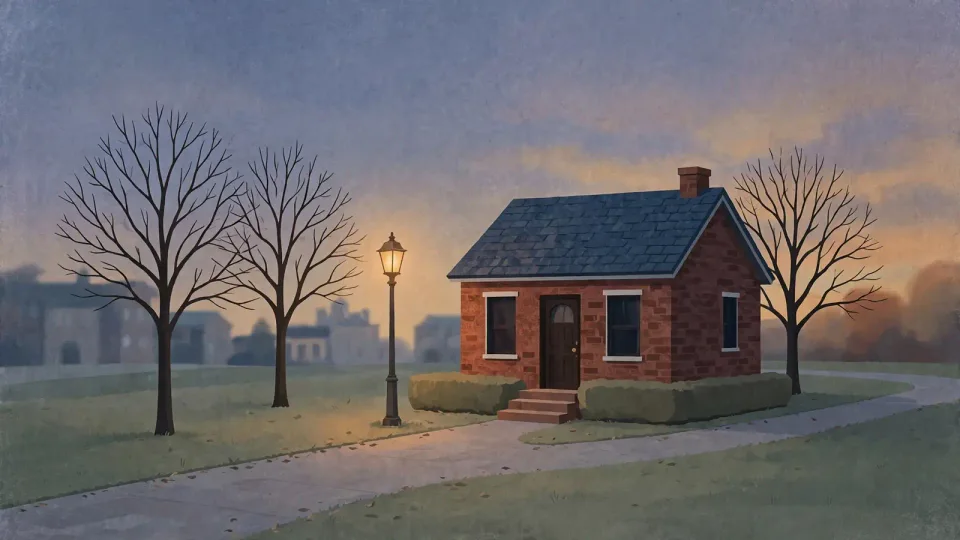
The College of Charleston closed its Pride Center in the summer of 2026. Most students heard about it 11 days before fall classes began. The building at 9.5 Glebe Street, the room students called “9.5,” is now an apartment for a residence hall director. By the time the student paper CofC Explained published its account on 18 November, the building had stood vacant for three months.
Students objected to more than the decision. The way it reached them mattered as much as the outcome. Four students got a meeting request. Everyone else got an email a week later. Students who had jobs lined up at the center for the fall found out a week before the semester that the jobs were gone. The pattern around the closure matters too. The Pride Center was the third LGBTQ+ resource to disappear at the college in 2026, after a gender-affirming clothing program and the LGBTQ+ questions on housing applications. None of the three removals came with a public announcement first.
This account draws on the CofC Explained reporting by Ana Andrade, published 18 November 2026, on the Williams Institute’s 2022 survey of LGBTQ people in college, and on the student-run @cofcpride Instagram account, which posted its own timeline of the closure in August. Where the two student sources differ on a date, this article says so.
A room at 9.5 Glebe Street
Izzy Waldner arrived at the College of Charleston as a freshman and found the Pride Center between classes. The house at 9.5 Glebe Street sat a little apart from the main foot traffic, and Waldner told CofC Explained that the seclusion was part of the point. It was a place to sit with other queer students without worrying about who might wander in. Waldner went several times a day, every day. The community there helped decide the choice of college. “I came here because I saw how supportive The College was of its queer community,” Waldner said. Waldner is now a senior and president of TTime, the campus group for transgender and nonbinary students.
A BestColleges survey had described the College of Charleston as the most LGBTQ+-friendly campus in South Carolina. That reputation was built on rooms like 9.5 Glebe Street, not on a line in a brochure. August, a senior and former Pride Center employee, put it plainly to CofC Explained: “Having a space that was by us for us meant having a space to exist without fear, and exist freely being ourselves.”
The fear August named is not abstract. A 2022 study by the Williams Institute at the UCLA School of Law and the Point Foundation, based on the Access to Higher Education Survey of 629 people who attended four-year colleges and 193 who attended graduate school, found that one in three LGBTQ people at four-year colleges had been bullied, harassed, or assaulted, compared with 19 percent of non-LGBTQ people. The same study found that 22 percent of LGBTQ people had picked a college in a different city or state in search of a more welcoming climate, compared with 5 percent of non-LGBTQ people. Students choose a campus partly for the room they expect to find there. When that room closes, the choice looks different in hindsight.
The pattern before the closure
The Pride Center was not the first resource to go. In mid-March 2026, Closet Corner, a program that gave gender-affirming clothing and gear to students who needed it, was discontinued without an announcement. Its only employee received no notice that the job had ended. Leo Dunlap, a senior and former Closet Corner employee, learned about the closure by chance from a faculty member who had no connection to the program. “They are the only faculty member to have spoken with me, and I still have not had any contact with The College,” Dunlap told CofC Explained. “If they had not chosen to tell me themselves, I would have arrived at school to discover my job no longer existed, with no communication from anyone.”
The college also removed its LGBTQ+-focused questions from campus housing applications. Those questions had helped place students in safe and welcoming housing. After they were removed, a student had to ask for a housing move because they had been locked out of their room. Their roommates were homophobic and did not want them in the dorm at all, according to Waldner.
Students who watched Closet Corner and the housing questions disappear expected the Pride Center to be next. What caught them off guard was how the news arrived, and how late.
One week to move, 11 days to tell everyone
About a month before fall classes were set to resume, four students who were heavily involved in the Pride Center received an email asking them to meet with Alicia Caudill, the executive vice president of student affairs. That night, August got a text from a trusted faculty member. It read: “I heard about 9.5; I’m so sorry.”
Three days later, the four students met with Caudill, and the closure was confirmed. The building would become an apartment for a residence hall director. The students were given one week to collect their belongings and move them to a temporary room at Bell South, one of the college’s educational buildings. Caudill asked for a list of email addresses so other students could be informed. Students say the wider notification did not go out for another week, 11 days before the fall semester was to begin.
Caudill’s email to students acknowledged the delay. “This decision was made earlier this summer. It took me some time to figure out how to communicate this information and how best to reach out to those of you who may be most affected by this change. I struggled with how to do this because I know how important this space is, and in this struggle, I did not communicate as quickly as I perhaps ought to have done.”
The student-run @cofcpride account posted its own version of the timeline in early August. According to that account, students learned on Monday, 20 July 2026 that the space was closing and being converted into housing for a single residence hall director, because the college had not provided enough housing for its largest incoming class. A follow-up post said the administration had likely decided in early June, and that the decision-makers were the administration and the campus Space Committee. The two timelines agree on the shape of the story. The decision came first, the students heard about it weeks later, and the building was already spoken for.
The short notice had a practical cost. Students who were counting on jobs at the Pride Center in the fall semester lost them and found out a week before classes started. Waldner told CofC Explained that those students were depending on the jobs to pay bills and buy groceries. A center is a room, but it is also a payroll line, a schedule, and a plan for the semester. All of that ended with a week’s notice.
Why a room matters
A campus Pride Center does three jobs at once, and the CofC story shows all three breaking in the same week. It is a place to be without explaining yourself. It is a point of contact for students who need something specific, like a clothing program or a housing form that asks the right questions. And it is a job, a meeting room, and a base for student groups.
The Williams Institute numbers explain why the first of those jobs carries weight. When a third of LGBTQ students at four-year colleges report being bullied, harassed, or assaulted, a room where that does not happen is not a luxury. It is the part of campus where the rest of the day becomes manageable. Waldner’s description of the center as a place to sit between classes sounds small, and it is the point. A student who can sit somewhere safe between classes can stay on campus for the rest of the day.
The second job, the point of contact, is the one that erodes quietly. Closet Corner ended in March with no announcement. The housing questions vanished from a form. Each change was small on its own. Together they meant that a student arriving in the fall of 2026 found fewer ways to ask for help, and fewer people whose job it was to answer. The Pride Center closing was the visible part of a longer sequence. The quiet parts came first, and they are the reason students read the closure as a pattern rather than a single decision about a building.
The third job, the base for student groups, is the one that survived. Q-Space, TTime, and the Queer Student Alliance are student-run groups, independent of the college, and they still exist. They lost their room, not their membership. That is the part that decides what comes next, because a group that already runs itself can keep meeting in borrowed rooms. A group that depended on the center’s staff and budget would have had a harder time.
What students did next
The student response started before the fall semester did. The @cofcpride account posted the closure news on 7 August, with a statement that the community was not tied to a physical location and that the campus LGBTQ+ clubs would keep meeting. A second post answered the questions students were asking: who decided, why, what happens to the things inside, and whether the building would ever come back. The answers were blunt. The building was unlikely to revert to the Pride Center, and no dedicated replacement space would exist for the foreseeable future. The items inside were being sorted and archived with the SCLGBTQ+ Collections at Addlestone Library, then moved to Bell South.
The archiving work deserves a closer look. The center’s materials did not go into a dumpster. They went to the library’s LGBTQ+ collections, where they can be found again. Students who lose a room often lose the paper trail with it: the flyers, the sign-up sheets, the photos, the record of what the group did. CofC students kept theirs, and the library now holds it.
August’s comment to CofC Explained carried the frustration of the semester. “I understand that he [College of Charleston’s President Hsu] is limited and it’s not entirely up to him, but he is letting so many people down and chasing so many students away, and maybe that’s the point,” August said. “It’s a huge slap in the face to all of us.” The quote is angry, and it is also specific. It names the president, it concedes that his power has limits, and it still holds him responsible for the outcome. That is the shape of a student response that has moved past the first week of shock and into a longer argument about who the college is for.
The contrast with other campuses is instructive. At IU Indianapolis, students rallied and won back their multicultural and LGBTQ+ centers earlier this year. At UT Dallas, students organized after the Pride Wall came down and pushed the administration for a clear answer. Charleston students did not get a rally with a win at the end. They got a building that stayed empty and a set of clubs that kept meeting without a room. Both outcomes belong in the same conversation, because they show the range of what student organizing can and cannot do in a single semester.
If your center is next
Most students will not get a warning that their center is about to close. The CofC story suggests a short list of things worth doing before that day, and a shorter list for the week after.
First, know who decides. At CofC, the decision involved the administration and the campus Space Committee, and students learned the name of that committee from each other, not from an announcement. Find out now which body on your campus controls room assignments, and which administrator signs off on them. A student government representative can usually get that answer in one meeting.
Second, keep your own records. The CofC archiving effort worked because students moved fast and had a library collection willing to take the materials. Keep a copy of your group’s membership list, event history, and budget off campus, in a place the group controls. If the room goes, the list is what lets you reassemble.
Third, separate the group from the room. The clubs that survived at CofC were the ones that did not depend on the college for their existence. If your group meets only in the center, start meeting somewhere else once a month, so the habit of gathering does not depend on one address. A group that has met in a library room, a coffee shop, and a classroom can keep going when any one of those disappears.
Fourth, document the timeline in writing the moment something changes. The CofC Explained article exists because students kept dates, saved emails, and talked to a reporter. A timeline with dates is harder for an administration to dismiss than a general complaint, and it gives the next group of students something to build on.
Fifth, check the quiet removals. A clothing program ending in March and a housing form changing in the spring were early signals at CofC. If a form on your campus quietly drops a question, or a program loses its only staff member, treat that as information. Ask what changed and who decided, in writing, while the people involved are still on campus to answer.
None of this guarantees a center stays open. The students at CofC did much of it and still lost the room. What it guarantees is that the group survives the room, and that the next group of students starts with a record instead of a rumor. The building at 9.5 Glebe Street is still empty. The clubs that met there are still meeting. That is the part of the story students at other campuses can use.