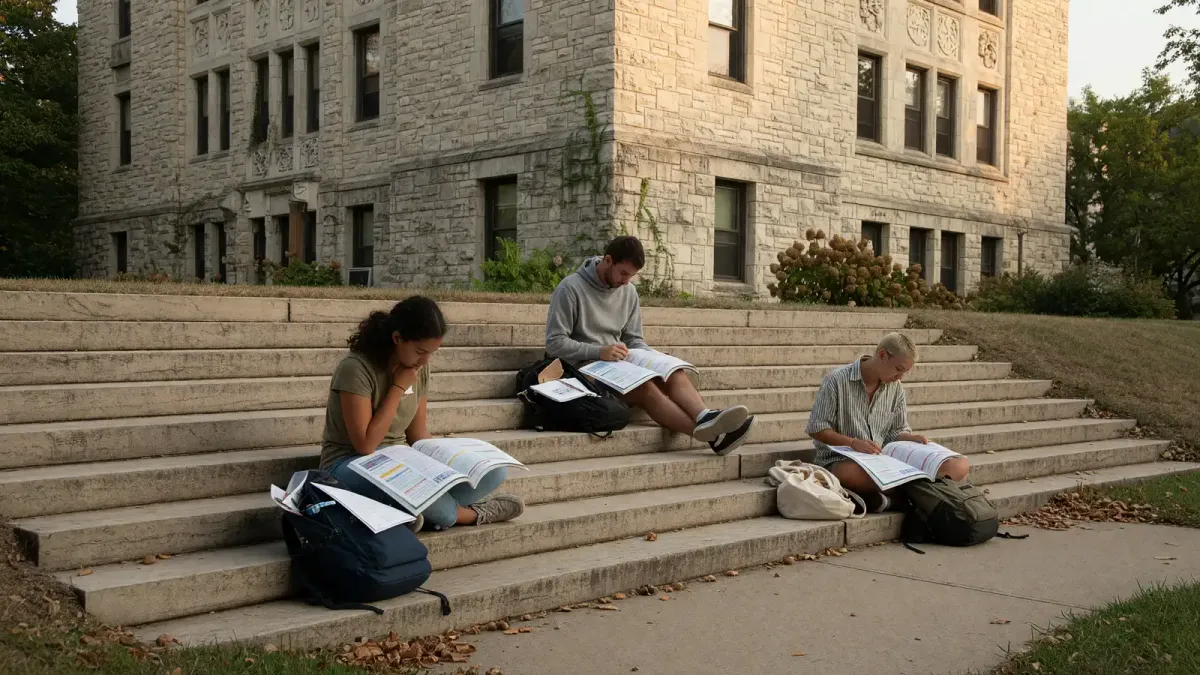
Inside Higher Ed spent last week on a problem every orientation slide pretends is solved: the rules nobody prints. On September 10, Joshua Bay talked with Hope Pacheco, associate dean of students at the University of Houston–Downtown and director of the Gator Resource Center, about what first-generation students actually walk into. The next day the same outlet ran a different story about campuses hitting record enrollment. Those two pieces belong in the same week for queer students, because a hidden curriculum gets worse when the building is full and the people who know the back doors are harder to find.
This is not a tragedy essay. It is a map. If you are first in your family to sit in that classroom, and you are also figuring out which office will say your name right, you are doing two jobs that the catalog lists as one.
What Pacheco actually said
The IHE interview is a podcast write-up, not a 40-page study. The useful parts are specific. Pacheco refused the single first-gen portrait. A traditional-age student who just left home does not need the same things as a parenting student working full time, or a transfer from community college. If your campus still runs one “first-gen lunch” and calls it a program, that is the misunderstanding she is pointing at.
She also pushed back on defining first-gen students only by what they lack. Plenty of them already advocate for family, already know how to talk to a landlord, already navigate clinics and bus schedules. The gap is not intelligence. It is the unwritten list: which form is due before the hold hits, which professor answers email, which office actually controls the waitlist.
If you are LGBTQ+, add a second list that also is not in the PDF. Who sees your chosen name on the roster. Whether housing assignment software has a field that matches how you live. Whether the counseling center’s wait is six weeks and the peer group meets in a room that still says “diversity lounge” on a taped sign. How to find those offices before you need them is a separate skill from financial aid, and nobody should make you discover it during a crisis.
Record enrollment is not a vibe. It is a line.
On September 11, IHE reported campuses that reversed enrollment slides. UC Merced is the number that stuck: first-year students up 36 percent, transfers up 66 percent, total enrollment 9,647, a record after a dip in fall 2025. The campus framed it as a decade of treating enrollment as everyone’s job, not a recruiting office hobby.
Good for the budget. Mixed for the student who needed the one LGBTQ coordinator who already had a full calendar. More bodies mean longer lines at housing, at disability services, at the center that shares a staffer with three other programs. First-gen queer students are often in more than one of those lines.
If your campus is celebrating a turnaround, ask what grew with the headcount. Peer mentor hours. After-hours staff. A name-change process that does not require a court order for the ID card. If those stayed flat, the hidden curriculum just got a longer hallway.
A new dorm is a building. Inclusive housing is a policy.
The same week, Building Design + Construction wrote up the University of Arizona’s Catalina: nine stories, more than 1,300 beds, a dining hall, Mortenson and Gensler, suite-style units because that is what students say they want. President Suresh Garimella tied on-campus living to a 50 percent higher four-year graduation rate for students who live on campus at least one year. First-year students are expected to live on campus unless they are within 30 miles or have a hardship exception.
Those are real numbers. They are also silent on gender-inclusive assignments, roommate matching, and what happens when a first-year who is out at school is not out at the address 30 miles away. A live-on rule can be a safety net or a trap depending on whether the assignment process has a confidential path. We already walked through how to read a housing packet without trusting the pride sticker on the brochure. A $247 million building does not replace that reading.
Mortenson cut the original 19-story idea down to nine and still added about 100 beds, partly because construction got expensive. That is a useful detail for students: density went up while height went down. More people per floor is not automatically more community. It is more roommate conflicts per RA.
If you are first-gen, you may also be the person who cannot pay the housing deposit on the university’s timeline, or who needs to live with a sibling, or who is parenting. Pacheco named parenting students on purpose. Campus parent resources are part of campus life, not a side blog. A first-year live-on rule that only imagines an 18-year-old with a twin XL bed will miss them.
Two layers of unwritten rules
Layer one is the first-gen layer. Office hours are a real meeting, not a punishment. “You should have asked sooner” is a sentence staff say when the deadline was buried in a portal. The hold on your account is often a bill, not a moral failure. The people who grew up with college at the dinner table learned that in ninth grade.
Layer two is the queer layer. Some of those same offices are safe. Some smile in April and freeze in October. Some will copy a parent on an email if you have not filed a FERPA restriction. Some RAs are great and some will “accidentally” use a deadname because the roster won. You should not have to run a background check on every adult. You will anyway.
The overlap is the ugly part. First-gen students are often told to bring family to orientation. That is good advice until family is the reason you cannot be out in the group photo. Then “family weekend” becomes a scheduling problem, not a celebration. Pacheco’s point about not defining students by deficits helps here: you may already know how to keep two calendars. That is a skill. The school should not make it the price of belonging.
If you are a transfer, the hidden curriculum resets. Community college may have had a small pride club and a counselor who knew your name. The four-year campus has more programs and less memory. Ask for the org list in week one, not week eight. Student orgs are how a lot of first-gen queer students find the adult who will actually answer.
What to do in the first three weeks that is not “put yourself out there”
Write down three offices and one person in each. Financial aid. Housing or the dean of students. The LGBTQ center or the equivalent staffer hiding in student affairs. Get a name, a room number, and the drop-in hours. If drop-in hours are “email us,” send the email while you are still standing in the hallway so you do not talk yourself out of it.
Ask one concrete question per office. Not “what resources do you have.” That produces a brochure. Try “what is the deadline to change the name on my ID card without a legal change” or “who overrides a meal plan hold” or “is there a first-gen mentoring program that is not only for STEM.” Specific questions get specific answers. Vague ones get the carousel.
If you are parenting, or working nights, ask which of those offices has evening hours before you decide the campus has nothing. Pacheco’s warning was that needs differ. A Tuesday 2 p.m. workshop is not a program if you have a shift.
Find one peer who is also first-gen, also queer, or both. Not a professional network. One person who will text you when the portal says your FAFSA is “incomplete” and you cannot see why. Peer networks are not a replacement for staff, but they are often faster, which we have already said in the peer support piece.
What campuses still get wrong
They collapse first-gen into a single risk score. They collapse LGBTQ+ into a single pride week. They announce record enrollment and then wonder why the center’s Google form has a three-week delay. They build suite-style dorms and forget that suites can isolate a student who needed a gender-inclusive floor more than a granite counter.
Pacheco asked colleges to see strengths as well as gaps. That is not a poster. It means a first-gen queer student who already navigates two households might be excellent at translating bureaucracy for other students, if you pay them as a mentor instead of extracting the labor for free.
UC Merced’s line about enrollment being campus-wide is the right shape for belonging too. If only one office “owns” first-gen, and only one office “owns” LGBTQ+, the student who is both will bounce. The hidden curriculum is the bounce. The fix is a shared list of who does what, published where students look, not where the accreditation report looks.
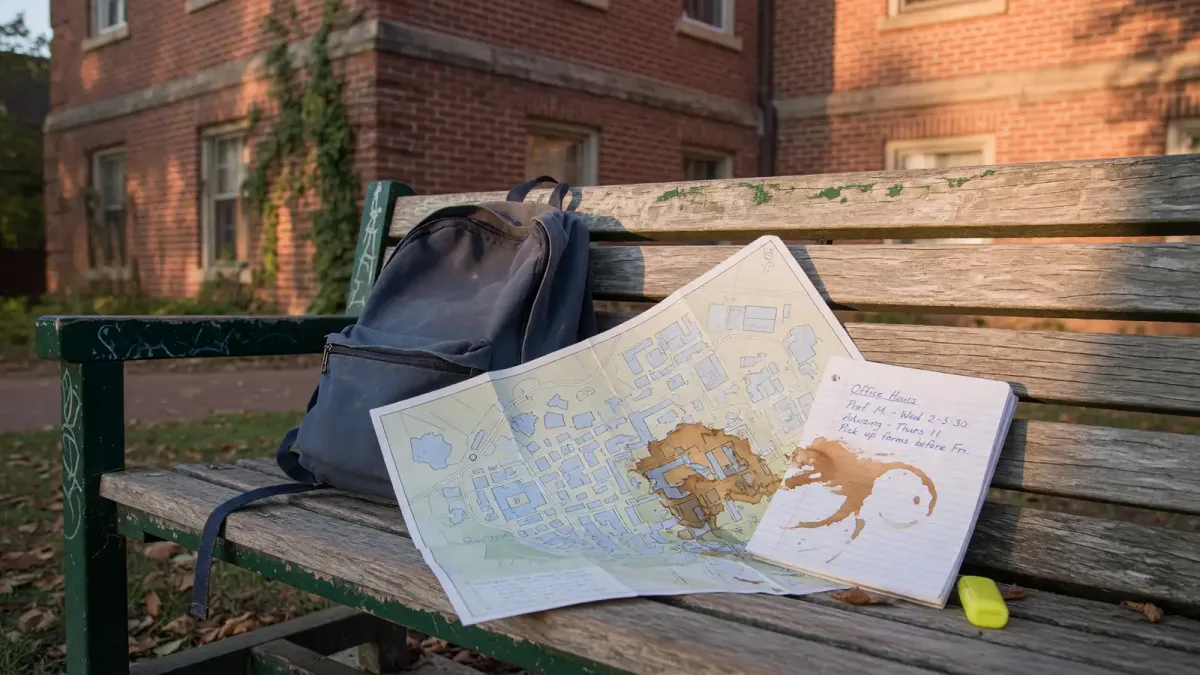
You do not need to come out to every dean to use this. You need the map. Pacheco’s interview is one more reminder that the map is uneven on purpose, not because you missed a slide. Read it, steal the questions, and treat the new dorm press release as architecture until housing shows you the assignment rules.
If you are the staffer reading this
Stop running one first-gen lunch. Split the hour. Transfers one week, parenting students another, traditional-age another. Put the LGBTQ center on the invite as a partner, not as a guest who waves in April. Publish a one-page “who does what” that includes name on ID, housing assignment appeals, emergency grants, and after-hours contacts. Put it where students look: the portal homepage, not a PDF buried under Student Success.
When enrollment jumps the way Merced’s did, freeze a percentage of the new tuition for the offices that absorb the bounce. A record headcount with a flat center budget is how you get a three-week form delay and then a story about students who “didn’t engage.”
If you are building a Catalina-scale dorm, put the assignment exceptions in the press kit. Live-on rules without a confidential path are a graduation-rate strategy that will fail the students you are using in the statistic. Pacheco asked schools not to define first-gen only by lack. The same applies here. Do not define queer students only by risk. Fund the map.