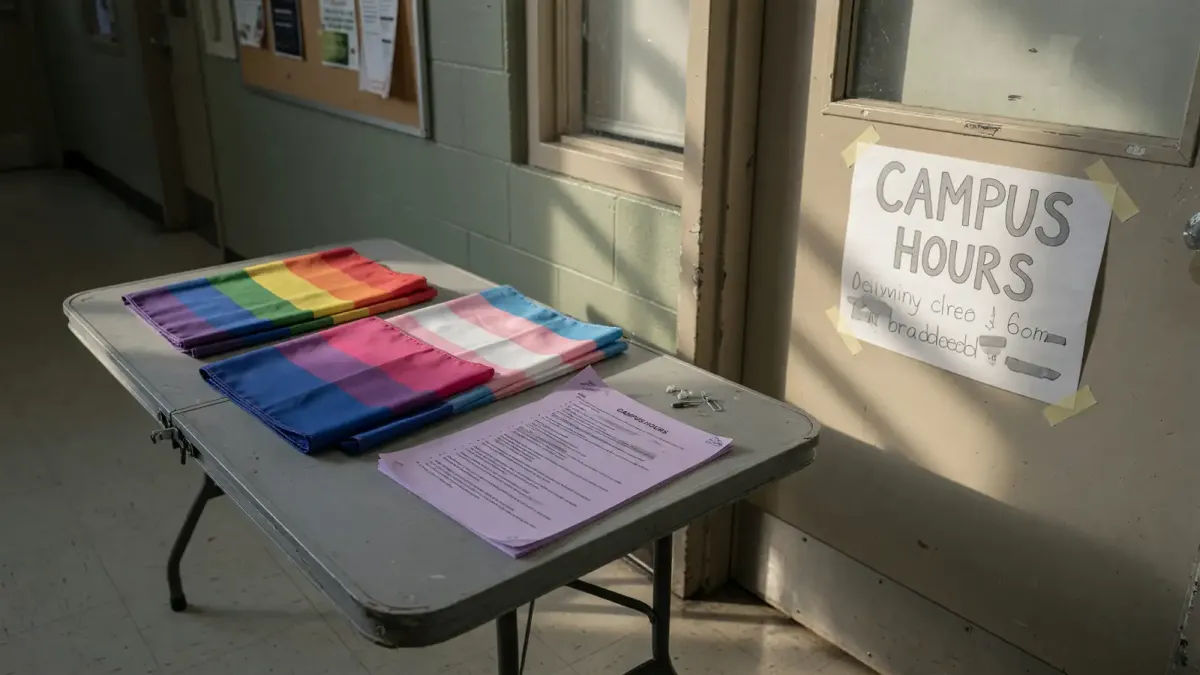
Campus administrative offices often struggle to address the immediate physical needs of vulnerable students during the academic term. While university diversity statements outline broad institutional commitments, the day-to-day realities of queer campus life frequently require practical supplies that campus bureaucracies do not provide. When transgender, non-binary, and queer undergraduates need chest binders, emergency transit assistance, or affirming winter clothing, they rarely find these items through official student affairs portals. Instead, undergraduates organize decentralized peer support projects, turning residence hall common rooms, student club closets, and community center corners into reliable distribution hubs.
Recent student press reporting documents how these student-led systems function under severe budget constraints. On November 4, 2026, The Manitoban reported that the Manitoba Binder Project established campus distribution points at the University of Manitoba to supply free chest binders directly to trans and gender-diverse youth. Student organizer Keat bypassed expensive retail imports and off-campus clinical waiting lists by sewing custom garments, producing a dozen binders for roughly 250 dollars. By placing physical supply bins directly in accessible university spaces, the initiative removes geographic transit hurdles and eliminates commercial markups for low-income students.
Understanding the mechanics of these mutual aid hubs explains how students keep each other safe, housed, and clothed when formal institutions fall short. Across North American institutions in 2026, peer-to-peer aid has evolved from sporadic emergency drives into organized campus fixtures.
Lowering costs with handmade supplies and campus bins
Retail costs for specialized gender-affirming garments place a heavy financial burden on college students. Commercial chest binders typically sell for 40 to 80 dollars each, excluding shipping fees and international import tariffs. For an undergraduate balancing tuition payments, rent, and grocery costs, purchasing an essential compression garment often means skipping meals or delaying textbook purchases.
The Manitoba Binder Project solved this issue through direct fabrication. As documented in The Manitoban on November 4, 2026, founder Keat began sewing binders by hand, reducing the unit cost to approximately 20 dollars per piece. This cost reduction allows community donations to stretch much further than standard gift cards or store vouchers. More importantly, the project planned a permanent, free binder bin directly on the University of Manitoba campus.
Physical distribution on campus solves several logistical problems:
- Transportation barriers disappear for students who do not own cars or cannot afford regional bus fares to visit distant urban clinics like the Trans Health Klinic at Klinic Community Health in Winnipeg.
- Privacy protections remain intact because students can collect supplies without presenting identification cards, logging into institutional portals, or justifying their gender presentation to an intake coordinator.
- Distribution responds directly to student schedules without waiting for monthly administrative reviews.
When students find necessary supplies waiting in a friendly student lounge, their connection to campus changes. Knowing that anonymous peers took the time to sew, measure, package, and stock garments creates a tangible safety net. It transforms an abstract campus building into a functional community resource.
Archival memory and student-managed cultural collections
Mutual aid extends beyond clothing and physical garments; it also protects community memory. University administrations frequently curate campus history through sanitized public relations displays, celebrating official policy milestones while ignoring the militant student organizing that made those reforms possible. When institutions archive queer history, they often exclude street-level protest material, zines, and informal mutual aid records.
On November 4, 2026, independent student newspaper The Charlatan published an in-depth interview with Carleton University sexuality historian Professor Patrizia Gentile regarding student activism and queer history. Speaking in connection with a major campus symposium on state apologies and memorialization, Gentile explained that official commemorative gestures often obscure ongoing political struggles. Her research on federal security campaigns and subcultural movements demonstrates that community archives, including leather culture collections and grassroots protest ephemera, must be protected by the people who created them.
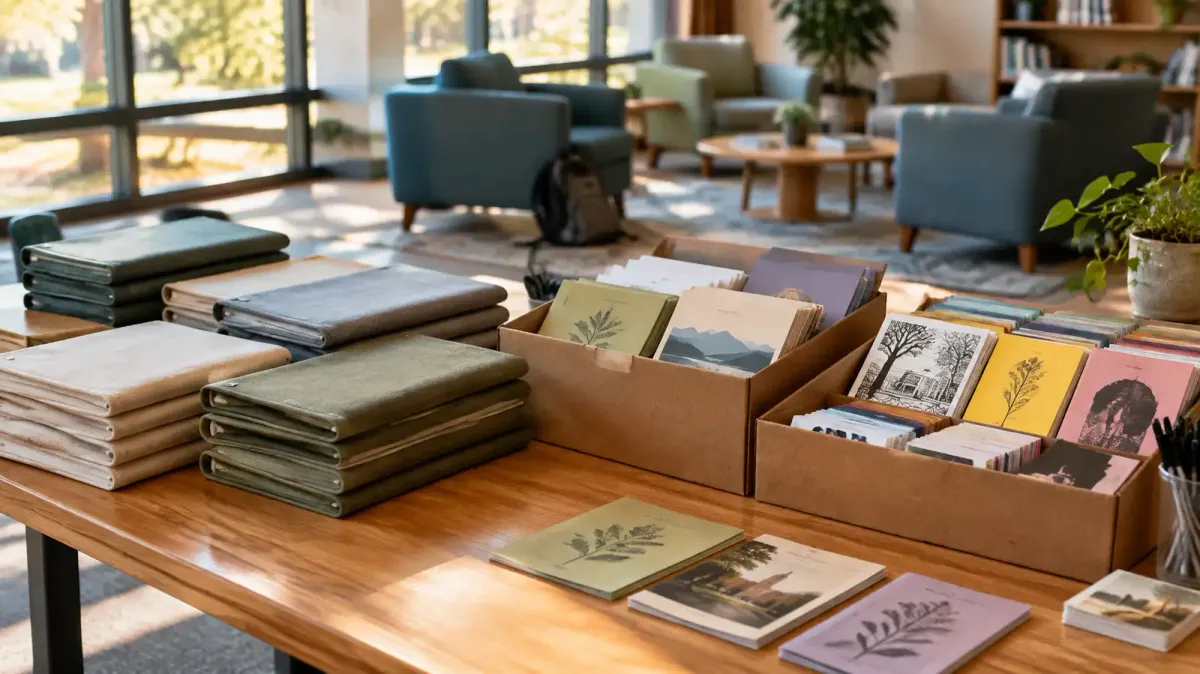
On university campuses, student organizers maintain these alternate records through autonomous zine libraries and reading rooms. When first-year students arrive in the fall, discovering a cardboard box filled with decade-old campus activist zines teaches them that their current difficulties are not new. As we noted in our guide to finding community in the first weeks of the fall semester, connecting with informal student spaces gives newcomers access to institutional knowledge that orientation leaders never discuss. These unofficial archives document which professors respect chosen names, which residence halls maintain private single-stall restrooms, and which off-campus clinics provide respectful medical care.
Institutional friction and student union bureaucracy
While mutual aid projects operate with lean budgets, their growth frequently sparks friction with university administrators and student government bodies. Student unions hold mandatory student fees intended to support campus life, yet distribution procedures are often entangled in rigid regulations, reimbursement delays, and conflicting governance bylaws.
A clear example unfolded in late October 2026 at Concordia University in Montreal, where student-run resource organization Queer Concordia publicly prepared legal complaints and human rights filings against the Concordia Student Union. As reported by The Link, student coordinators Jessica Winton and Jace Mac Rae encountered systemic administrative roadblocks and funding delays when trying to administer student health resources. Although the student union offered a baseline health plan, strict procedural caps and mandatory out-of-pocket payments left trans and queer students unable to access gender-affirming care. In response, Queer Concordia had to create its own independent relief fund and interest-free loan program to prevent students from falling into medical debt.
This institutional dynamic repeats itself across higher education:
- Student governments allocate thousands of dollars to high-profile weekend social galas, while denying small monthly allocations for free safer-sex supplies or binding gear.
- University financial offices demand itemized invoices and registered vendor tax IDs, making it nearly impossible for student clubs to purchase supplies from independent creators or community makers.
- Bureaucratic timelines require four to six weeks for grant approvals, while a student experiencing family rejection or sudden eviction needs immediate aid within twenty-four hours.
Because institutional funding channels are slow and restrictive, student organizations increasingly turn to community fundraisers, mutual aid bake sales, and open donation drives. By keeping money outside university accounts, student leaders retain the flexibility to disburse micro-grants directly to peers in crisis.
Editorial take: Why decentralized mutual aid outperforms top-down bureaucracy
Our editorial team has tracked campus resource allocation across dozens of colleges, and the pattern is unmistakable: top-down administrative initiatives repeatedly struggle because they treat student well-being as an administrative compliance task, overlooking basic material necessities. When a university administration decides to support LGBTQ+ students, its first instinct is typically to create an advisory committee, publish a colorful brochure, or purchase rainbow merchandise for orientation week. These initiatives look impressive in institutional diversity audits, but they do nothing to help a student who cannot afford food, winter boots, or a chest binder.
Decentralized student mutual aid succeeds precisely because it rejects administrative paternalism. Student organizers do not ask applicants to submit tax returns, obtain therapist letters, or prove their identity before receiving aid. When Keat places a binder bin in a university hallway, the transaction relies entirely on peer trust: take what you need, leave what you can, and respect your fellow students. This direct approach eliminates the humiliation often associated with traditional institutional charity. Furthermore, students understand the daily geography of their own campuses far better than senior administrators do. A third-year undergraduate knows which basement bathroom has the safest lock, which dining hall worker lets students grab extra fruit, and which student club closet has space for an extra coat rack. Bypassing administrative overhead allows every dollar collected to go directly into physical materials.
Practical steps for launching a campus mutual aid supply point
Students who want to establish a physical supply station on their own campus do not need permission from the dean of students to begin. Starting small and remaining organized allows peer networks to establish durable roots before attracting administrative interference. If you are interested in organizing peers, reviewing our foundational walkthrough on starting an LGBTQ+ student organization from scratch provides useful groundwork for building consensus.
To establish a functional mutual aid station in a residence hall or student lounge, organizers should consider several operational steps:
Securing a low-surveillance physical location
Choose a location that offers foot traffic without constant staff monitoring. Communal student club offices, commuter student lounges, and student-run cooperative spaces work well. Avoid placing distribution boxes directly under security cameras or right next to administrative reception desks, as surveillance discourages students who are not publicly out from accessing supplies.
Selecting durable, clearly labeled containers
Plastic storage bins with secure lids protect supplies from dust and accidental spills. Label each container clearly with simple instructions. State plainly that the items are free for anyone who needs them, and provide a contact email (or a dedicated anonymous digital drop box) so students can request specific sizes or restock alerts.
Establishing a consistent restocking rhythm
An empty supply bin creates frustration and signals abandonment. Assign two organizers to inventory the station twice a week. Keep backup inventory stored in a secure locker or dormitory room so you can replenish popular sizes immediately after weekend events.
Building partnerships with academic study groups
Physical distribution points thrive when connected to regular academic gatherings. Organizing supply drives alongside study sessions creates steady community contact. For advice on combining academic collaboration with mutual support, read our breakdown on building a queer study group on campus. Study groups provide a natural network for collecting donations, distributing flyers, and identifying students who might need emergency help during midterm and final exam periods.
Diversifying funding sources
Do not rely on a single student government budget line that could disappear after the next campus election. Maintain a mix of micro-donations, community alumni contributions, and seasonal supply drives. When asking for donations, request concrete physical items alongside financial contributions: collect boxes of medical-grade tape, warm socks, sealed hygiene supplies, and fabric bolts for sewing teams.
Sustaining peer networks and queer campus life across the academic year
The greatest vulnerability of campus mutual aid is the natural turnover of the student body. Every spring, dedicated organizers graduate, taking their institutional knowledge, sewing skills, and community contacts with them. If an initiative depends entirely on one charismatic leader, it frequently collapses when that person leaves campus.
Building longevity requires deliberate documentation and skill sharing. Student organizers should create transition guides that outline supplier contact information, sewing patterns, distribution schedules, and storage locker combinations. Training first-year and second-year students to manage inventory early in the winter term ensures that distribution continues uninterrupted when seniors enter their final semester.
Peer networks must also plan for holiday breaks. During Thanksgiving, winter recess, and summer vacation, university residence halls close, dining services halt, and heating in student buildings is turned down. For students estranged from their biological families, these campus shutdowns create acute housing and food insecurity. Coordinated student networks often assemble break-stay packages containing shelf-stable food, pharmacy essentials, and temporary transit passes before dorms lock their doors.
By grounding their work in concrete supplies and shared responsibility, student mutual aid projects provide a stable foundation for queer campus life. While administrative policies will continue to fluctuate with political cycles, the simple practice of students clothing, feeding, and sheltering one another remains the most durable support system higher education has to offer.