The Rider News published a Suicide Prevention Month column that opens with three numbers: 988, text HOME to 741-741, text START to 678-678. Four days later a Springfield hospital CEO wrote an awareness-month op-ed that lists 988, 988 press 1 for veterans, and the Trevor Lifeline as 1-866-488-7386. Those are not the same Trevor contact.
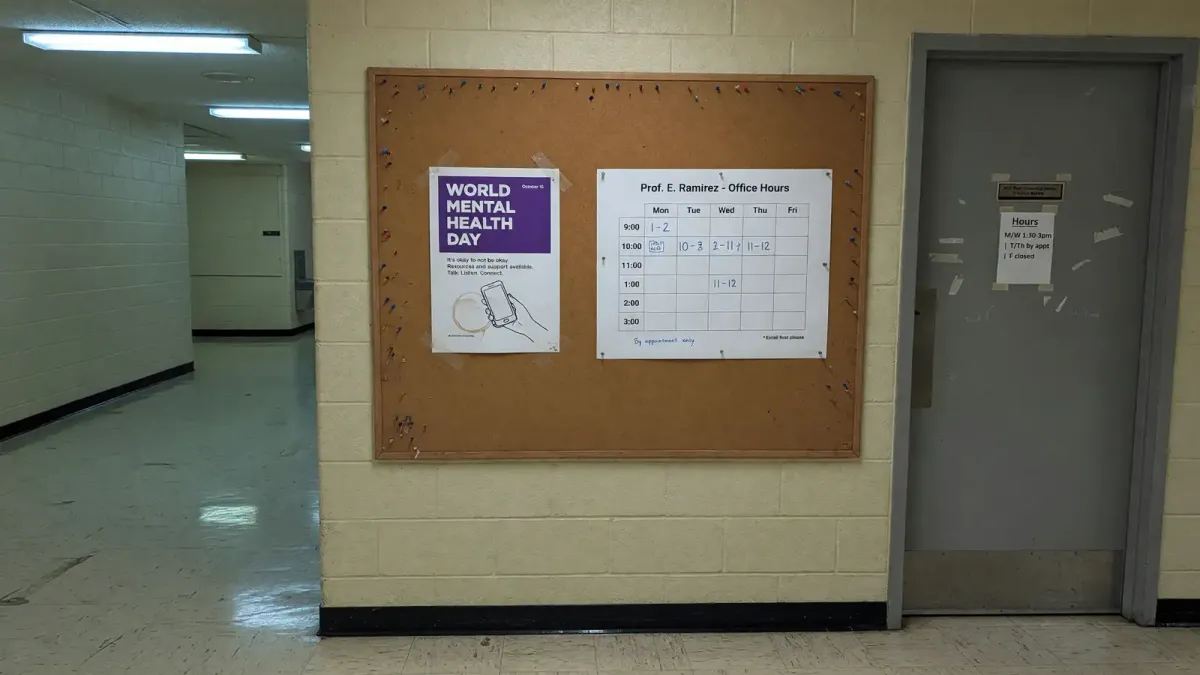
If the only thing you saved from a residence-hall table this month is a poster that says “you are not alone,” you still do not have an after-hours path. We already wrote that a painted pot is not a counselor and that 988 press 3 is a state backup, not your campus line. This week the miss is simpler: two different Trevor numbers, one month, no hours printed next to either.
This piece mentions suicide. If you are in crisis, call or text 988. Trevor text is START to 678-678. Trevor voice is 1-866-488-7386. Campus counseling is a third thing. Look up its after-hours number before you need it.
Save both Trevor numbers
Cal Sutton’s Rider piece is a student column, not a clinical protocol. It still did the useful job: it printed the text short code. The Trevor Project, in that writeup, is 24/7 crisis text and phone, plus TrevorSpace peer support and ally training. The number it gives you in the header is text START to 678-678.
Tom DeMarco’s September 20 column in the State Journal-Register calls the Trevor Lifeline “the only national 24/7 lifeline for LGBTQ youth” and prints 1-866-488-7386. He is CEO of Lincoln Prairie Behavioral Health Center. He is writing from a hospital, not a quad. The voice line is still the one a lot of older flyers use.
Put both in the phone. Label them. Do not argue about which article is canonical at 2 a.m. Text if you cannot talk. Call if you cannot type. 988 is the national Suicide and Crisis Lifeline in both pieces. Veterans in DeMarco’s column: 988, then press 1. Crisis Text Line in Rider: HOME to 741-741.
None of those are your campus counseling center. None of them know your hold on a midterm. They are the layer that is open when the student-health door is locked.
If a Pride table only printed 988, that table skipped the LGBTQ-specific lines both papers bothered to include. If a table only printed one Trevor number, it skipped the other. Copy from both pages, not from the vinyl banner.
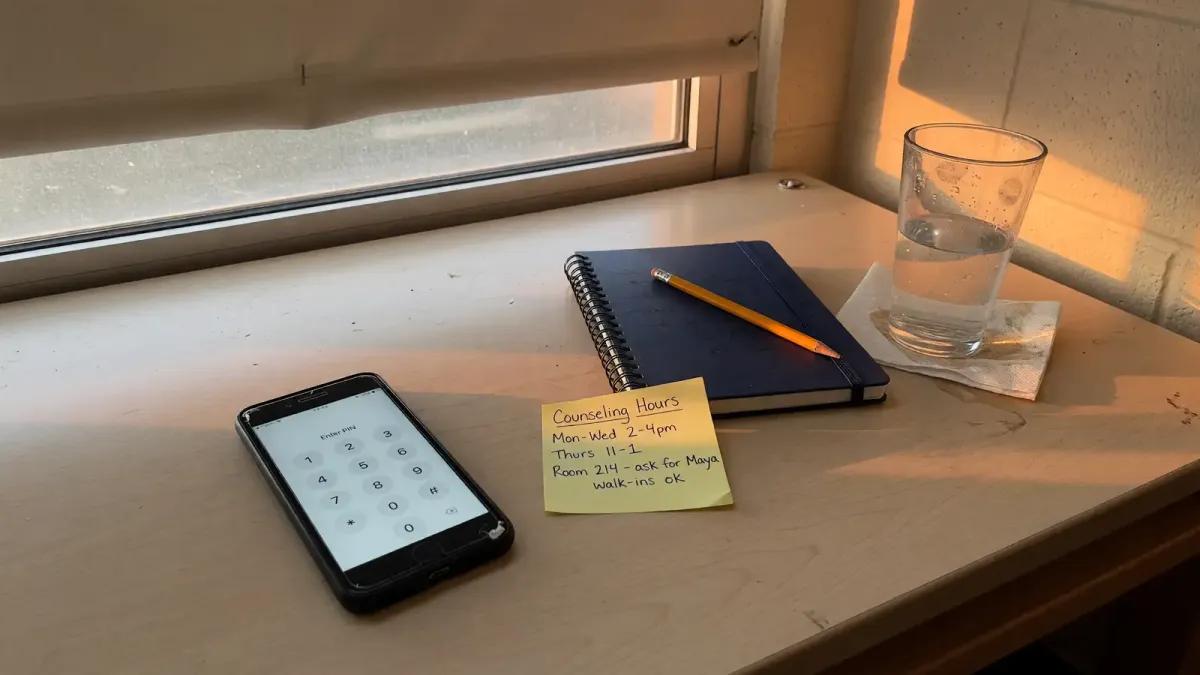
988 does not book Thursday at 11
DeMarco’s useful sentence is not the awareness language. It is this: prevention is not only a trained provider in a hospital, an outpatient office, or a video visit. It also has to exist in schools. Then he says people wait until a crisis is already loud.
Campus counseling is closer to the hospital side of that split than students think. It has a waitlist, a no-show policy, and a last appointment. 988 does not replace the intake. The intake does not replace 988.
Sutton tells Rider students to check on classmates, including the ones who look fine. That is peer work. It is not a clinical hour. If someone tells you they are in danger, you do not “hold space.” You get them to 988 or to campus after-hours, and you stay on the line until a person who is paid to do this is on it.
We already walked what campus LGBTQ wellness centers actually are. A lounge with a fridge is not after-hours coverage. A September bulletin board is not a slot.
Ask one question at the desk this week: what is the number after 5 p.m. and on Sunday. Write it under 988. If the answer is “call 988,” that is an answer. Believe it. Do not assume a counselor is on call because the month is printed on a sandwich board.
If the desk is closed, the number is still on the student-health site, usually under “after hours” or “crisis.” If the site is a maze, the RA protocol sheet and the public-safety non-emergency line are the next two places that actually answer. Public safety is not therapy. They are who you call when you cannot get a person on 988 and you need someone in the building. Do not make that the first experiment at 2 a.m. Do it as a lookup on a Tuesday.
Sutton’s “check on the ones who seem happy” is the peer layer DeMarco is also asking for, just without a hospital letterhead. It only works if the person you check on has a next step that is not you. You can sit with someone. You cannot be their 24/7 line. That is what the short codes are for.
3.5 percent is not a program
Rider’s Enrollment Planning data, in Sutton’s column, says nearly 3.5 percent of students identify with gender markers that do not match sex assigned at birth. Sexualities are not in that self-report. Pew, in the same piece, is about 1.6 percent of U.S. adults. Sutton uses the gap to say the campus has to make room.
A percentage is not a counselor FTE. It is not a same-day slot. It is not a name on a door. If your campus quotes a similar share in a diversity report and still has a two-week wait, the report did not treat anyone.
Sutton also cites a Journal of Adolescence writeup: suicide is the fourth-leading cause of death worldwide for ages 15 to 29, and a meta-analysis found LGBTQIA+ people more than three times as likely to have attempted suicide than cisgender or heterosexual peers. Those are population figures. They are not your roommate’s chart. They are the reason the short codes exist.
The National Center for Health Statistics number in the Rider piece is 48,824 suicide deaths in 2024. DeMarco’s CDC number is different and younger: the 2023 Youth Risk Behavior Survey found about 20.4 percent of U.S. high school students had seriously considered attempting suicide in the past year. If you are a first-year, that survey is the building you just left. The campus did not inherit a calm cohort.
Rider lost a student to suicide in October 2024, Sutton writes. That is local. Awareness month did not prevent it. A column cannot. A saved number can still be the difference between a locked door and a person.
A Chicago conference is not your 3 p.m. slot
UNC’s School of Social Work posted a September 21 roundup that is easy to misread as campus care. Pin-Chen Chiang presented “Longitudinal Associations among Intersectional Stress, Coping, and Depressive Symptoms in LGBTQ+ Youth of Color” at the 10th annual national LGBTQ Health Conference in Chicago. Dicky Baruah presented on intersectional stigma among young Latino sexual minority men in North Carolina at the same meeting. Sonyia Richardson spoke at the UNC Suicide Prevention Institute Summit on “The Path to Prevention.”
Those are talks. They are how the field updates itself. They are not a walk-in at student health. If your campus emails a faculty recap this month and you feel like someone is handling it, read the email again. A summit title is not an appointment time.
DeMarco lists a range of care: outpatient therapy, intensive programs, inpatient. That range lives off campus for most students. Your student-health plan may cover a few sessions. It may not cover the next level. We already wrote how to tell whether you can actually get care on campus. This week, add the after-hours number to that homework.
DeMarco also names the gap between “I noticed” and “they got in.” Warning signs in his column are ordinary: pulling away, a jump in substance use, sharp mood changes, hopelessness, talking about being a burden. He wants people to say they are concerned and ask how they can help. That sentence is for roommates and RAs. It is not a diagnosis. If the answer is that they want to die, you are done with the awareness script. You are on 988 or campus after-hours.
The care ladder he lists — outpatient, intensive, inpatient — is the part campuses hide in a PDF. Most student-health plans cover a handful of sessions. Intensive and inpatient are community hospitals and waiting lists. Lincoln Prairie is in Springfield. Your campus is probably not. Know which ER your student-health page names, and whether campus police will walk with you. That is logistics, not inspiration.
Do not wait for a conference PDF to explain your hold music.
What goes in the phone, tonight
Open contacts. Make four entries. Do it before the next poster week ends.
First: 988. National Suicide and Crisis Lifeline. Voice and text. Both this week’s pieces agree on that one.
Second: Trevor text. START to 678-678, from Rider.
Third: Trevor voice. 1-866-488-7386, from DeMarco.
Fourth: your campus counseling after-hours number, copied from the student-health page, not from memory. If the page only says 988, write “campus after hours = 988” so you are not hunting at night.
Fifth, if you want it: Crisis Text Line, HOME to 741-741.
Then one analog step. Tell one person which of those you want them to use if you go quiet. Not a group chat. One person. DeMarco’s warning signs are ordinary: withdrawal, substance use jumping, mood swings, hopelessness, talking about being a burden. You do not need a degree to notice a change. You do need a number when noticing is not enough.
Sutton’s closer is Rider-specific: you are loved and supported here. That can be true in daylight and still fail at 2 a.m. if nobody saved the short code. The month is a calendar label. The appointment is a form. The line that answers is the line you stored.
If money is part of why you have not called, that is a different spiral we already covered in financial stress and LGBTQ student mental health. 988 does not ask for a card. Campus intake might. Start with the line that does not.
One more check on the Trevor split, because it will confuse people. Rider printed a text code. DeMarco printed a 1-866 voice line and called it the only national 24/7 LGBTQ youth lifeline. Both can be true as products. They are not interchangeable on a lock screen that only has one field. If you can only save one Trevor contact, save both strings in the notes field of that contact. The 988 contact stays separate. Campus after-hours stays separate. Four labels, not one blob named “help.”
September will end. The numbers will not. Put them in before the vinyl comes down.