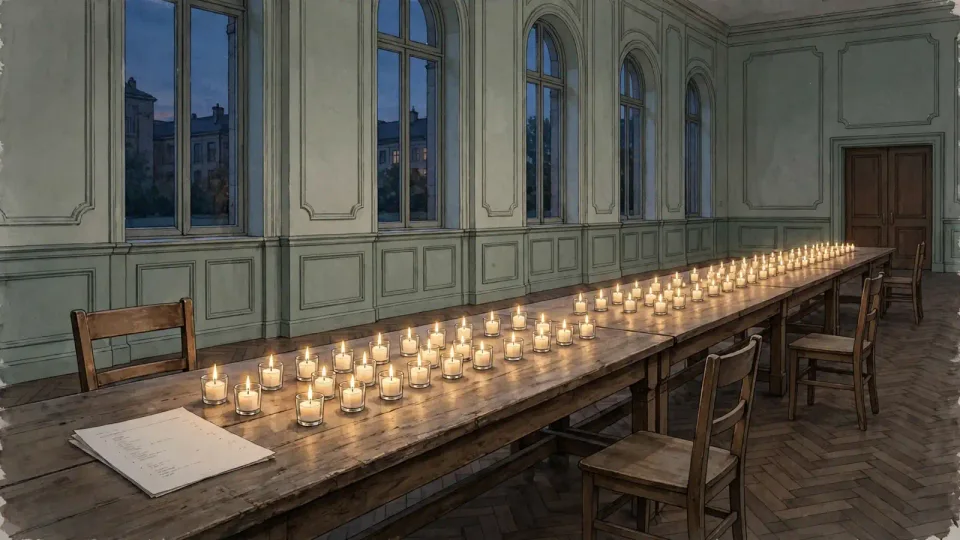
On Friday, November 20, 2026, students on campuses across the United States gathered in rooms that had been booked for something quieter than a rally. They read names aloud. Transgender Day of Remembrance has worked this way since 1999, when transgender writer and activist Gwendolyn Ann Smith organized a candlelight vigil for Rita Hester, a Black trans woman killed in Boston the year before. The day has stayed close to that shape: a room, a list, people who choose to be there.
This year the lists came with new national counts, published days before the vigils. The counts do not agree with each other, and the disagreement is part of the story. A campus vigil is one of the few places where the numbers get turned back into names, read one at a time, in a room with a door that stays open for an hour.
Three counts, three different answers
Advocates for Trans Equality released its 2026 Transgender Day of Remembrance report on November 19. Out reported the findings on November 20: the memorial honors 62 transgender people in the United States who died between November 1, 2025, and October 31, 2026, across 30 states and Washington, D.C. Of those 62, at least 28 were killed. Fourteen of the people killed were Black trans women. The report also remembers 21 people who died by suicide and 13 who died of natural or unknown causes.
A second count, from Transgender Europe’s Trans Murder Monitoring project, covers a slightly different period and a different question. Its 2026 report counts 273 trans and gender-diverse people reported murdered worldwide between October 2025 and September 2026, about one every 32 hours, in 35 countries. In the United States, that count is 29. The project notes that 95 percent of the people on its list were trans women or transfeminine, and that three quarters were Black or Brown.
A third number appeared on a campus page. Minnesota State University, Mankato, whose Pride Center hosted a vigil on November 20, wrote on its event page that 58 trans lives had been lost in the United States in 2026 so far. That figure sits between the other two, and the page does not publish how it was compiled.
None of these counts is wrong. They measure different things. Advocates for Trans Equality counts every known death of a trans person in the United States over twelve months, whatever the cause. Trans Murder Monitoring counts reported murders, worldwide, over its own twelve-month window. Mankato’s page gives a running total for the calendar year, without a published method. A reader who compares the three numbers as if they were the same statistic will come away confused. A reader who asks what each one counts will come away with a clearer picture, and with the reason the counts keep changing: the people compiling them say the official record is unreliable. Police reports and obituaries use names a person no longer used. Some deaths are never recorded as the death of a trans person at all. Advocates for Trans Equality builds its memorial from local reporting, LGBTQ organizations, volunteers, and families, and it says plainly that the gaps mean the annual counts cannot show whether fatal violence is rising or falling.
The report also puts the deaths in a political frame. Its director of public education, Bahari Thomas, said in a statement that lawmakers introduced more than 700 anti-trans bills this year and that spending on ads attacking trans people reached about $400 million in the election cycle. The same report notes that the Trans Remembrance Project held a public online remembrance on Friday evening. The numbers describe a year. The vigils describe a night.
CUNY turned its vigil into a record
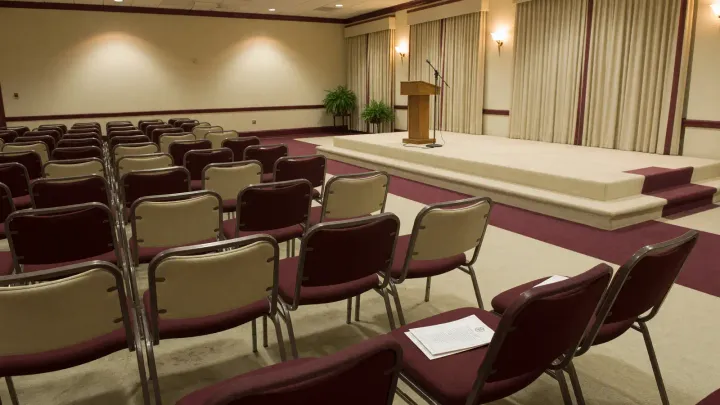
The largest campus vigil on the calendar this year belonged to the City University of New York. CUNY’s LGBTQI+ Council and its LGBTQIA+ Institute held their fifth annual Transgender Day of Remembrance vigil on Friday, November 20, from 4 to 6 p.m. The room was the Segal Theatre at the CUNY Graduate Center on Fifth Avenue, with a Zoom link for people who could not be there in person. Food was provided. ASL interpreters were present. The program centered a panel of transgender and nonbinary students, followed by a keynote from Paisley Currah, a professor of political science and women’s and gender studies at Brooklyn College and the Graduate Center. The evening closed with a reading of the names and a moment of silence.
What sets the CUNY vigil apart is what happens after the room empties. The event is recorded and archived at the LaGuardia and Wagner Archives, which preserve LGBTQ history at CUNY and in New York City. The vigil becomes a document, filed alongside the records of earlier years. That choice fits a week in which archives were already on this site’s mind: on November 20, the North Texas Daily published a timed account of how the University of North Texas unpublished an LGBTQ archive home page in September, and the paper named the interim provost who ordered the removal. A campus can lose a page in an afternoon. CUNY’s answer, in its own way, is to make a record that is harder to lose: a recording, a transcript of names, and an archive that expects to keep it.
The scale of the organizing matters too. The CUNY event lists more than a dozen co-organizers, from the Center for LGBTQ Studies at the Graduate Center to the LGBTQ Resource Center at the College of Staten Island, the Women’s Center and LGBTQ+ Hub at LaGuardia Community College, and the York College Women’s Center for Gender Justice. A vigil that size is not one office’s project. It is a system of centers agreeing, for one evening, to share a room.
Smaller rooms, same reading
Most campus vigils this year were smaller, and the details on their pages show how a vigil actually runs. At Minnesota State University, Mankato, the Jim Chalgren LGBTQ+ Pride Center hosted its vigil from 5 to 6 p.m. in CSU 101 Heritage Room. The center had already put up a memorial display in the student union, viewable from November 8 to 13, in the display case. A student who missed the hour could still walk past the case during the week and read the names there. The event page lists a contact email for questions, which is the kind of detail that matters when a student is deciding whether to walk into a room full of strangers.
At the University of Maryland, Baltimore County, the vigil ran from 11 a.m. to 1 p.m. on the terrace of the Albin O. Kuhn Library, with a reading of names. At the University of Illinois Urbana-Champaign, the Gender and Sexuality Resource Center kept memorial displays in the Illini Union and the center itself from November 18 to 20, and held a vigil on the evening of November 19, from 6 to 8 p.m., at the center on Green Street. UC Davis scheduled its vigil and march for 11 a.m. to 1 p.m. on November 20, starting at the LGBTQIA Resource Center.
The pattern across these pages is steady: a named room, a posted time, a reading of names, and a center that stays open afterward. None of the pages promise counseling on the spot. They promise a place to be, and a list that is read in full. That is a modest offer, and it is the whole point. A student who has spent the semester watching centers close or lose funding, which this site has documented through the fall, can tell the difference between a graphic posted on an account and a room with chairs in it. The vigil is the second kind of thing.
In Denver and Delhi, the vigil carried a demand
Not every gathering on November 20 stayed inside the frame of remembrance. On Thursday, November 19, students gathered on the Auraria campus in Denver for a Trans Day of Remembrance speak-out, part of a week of campus actions that also included a protest at the University of Washington on November 18, where around 150 students and community members turned out against a speaker hosted by a right-wing student group. The Denver gathering treated the vigil as a place to speak as well as to listen.
In Delhi, the day looked different again. Students held candlelight vigils at Delhi University’s Arts Faculty, at Ambedkar University, at Jamia Millia Islamia, and at Jawaharlal Nehru University, on and around November 20. The Hindu College Queer Collective had held its Pride parade on the university’s North Campus on November 17, with a panel on legal frameworks and a march to Faculty Gate 4. The vigils in Delhi were held in protest against the Transgender Persons (Protection of Rights) Amendment Act, passed by India’s Parliament in March 2026, which changes the legal definition of who qualifies as transgender. Students at the vigils spoke about the act’s criminalizing provisions, about harassment on campus, and about a long-standing demand for horizontal reservation for transgender students in university admissions, a demand they say universities have not met even after courts backed it.
The Delhi vigils are a reminder that the day is observed differently depending on where the students are. In the United States, the campus vigils this year were mostly quiet rooms with posted hours. In Delhi, the same date was a protest. Both versions read names. The difference is what the students asked for once the names had been read.
How this article was put together
This article draws on the published pages of the campuses and organizations named above, and on two national reports released for the day. The Advocates for Trans Equality figures come from its 2026 remembrance report as reported by Out and The Advocate on November 20. The global murder count comes from Transgender Europe’s Trans Murder Monitoring project as reported on November 19. The campus details come from the universities’ own event pages: CUNY, Minnesota State Mankato, UMBC, the University of Illinois, and UC Davis. The Denver and Delhi accounts come from student press and movement reporting published between November 19 and 23.
No one on this site attended these vigils, and no part of this article describes an experience at one of them. Where a detail could not be confirmed in a published page, it was left out. The counts in the first section use different windows and different definitions, and they are described that way so a reader can check each one against its source. The campus pages linked here are public, and a reader who wants to confirm a time, a room, or a name count can open the same pages.
What a campus can do after November 20
A vigil ends. The question students ask the next morning is what the center does with the rest of the year. The Advocates for Trans Equality report’s own framing points in that direction: its statement calls on allies for more than a moment of silence, in a year when hundreds of bills were filed and hundreds of millions were spent on ads. The campus version of that call is practical, and it is mostly about rooms and hours.
A Pride Center that kept a memorial display up for a week, the way Mankato did, can keep the list available after the event, in a place students already walk past. A center that recorded its vigil, the way CUNY did, can put the recording where a student who missed the evening can find it. A campus that has no center, or one that lost its room this fall, can say so plainly and point students to the nearest room that does have hours, instead of posting a graphic and calling the work done.
Students can also check the basics. If your campus held a vigil, the event page should still be up, with the center’s contact email on it. If the page is gone, that is worth noting, and worth asking about. The same week, students at Liverpool High walked out of class over a rule that would require staff to tell parents about a student’s disclosure of being gay or trans, and the public record of that policy is the reporting that named its wording. A vigil and a walkout are different kinds of events, but they share a test: whether the institution leaves a record a student can find later.
For students who need support now, the resources are the ones this site has listed before. The Trevor Project’s crisis line is 866-488-7386, and its text line takes START to 678678. The 988 Suicide and Crisis Lifeline is 988. Both are covered, with the routing details that matter on a campus, in this site’s earlier guide. A vigil is not a counseling appointment, and no article should present it as one. The room, the list, and the phone number are three separate things, and a student should be able to find all three without having to ask a stranger.
The names read on November 20 will be read again next year, with new names added. The work between now and then is unglamorous: keep the center open, keep the hours posted, keep the record where it can be found. A campus that does those three things has done more than mark a day.