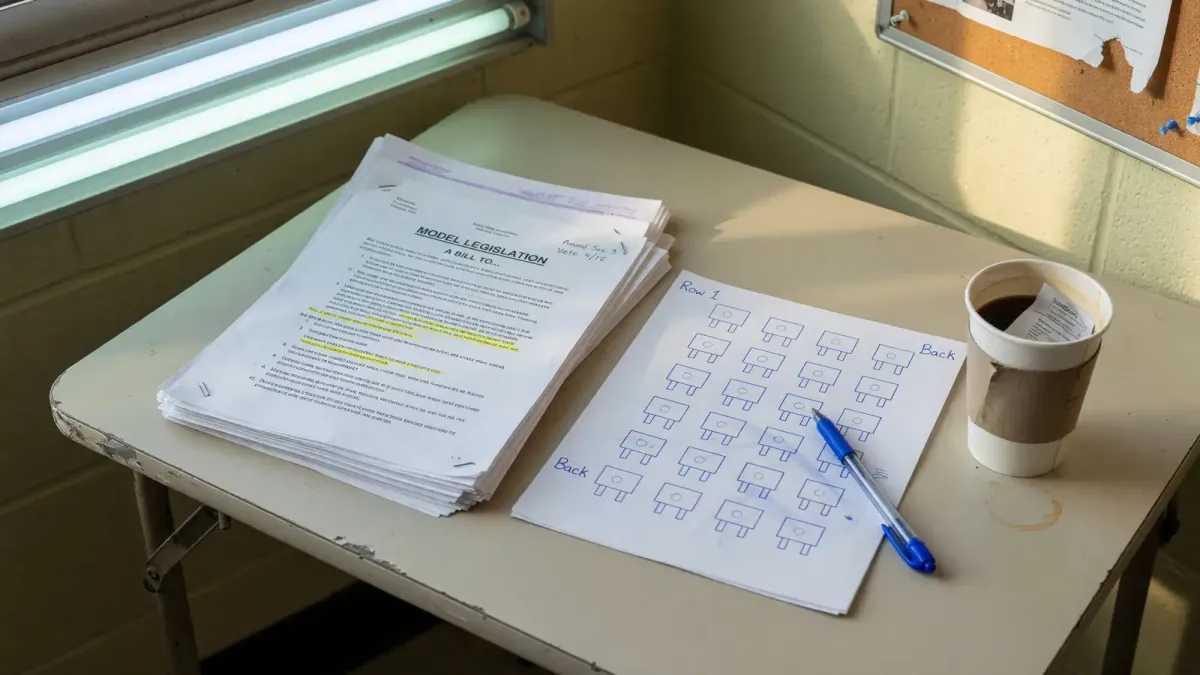
On September 28 the Education Department said it is permanently bringing back the 2020 Title IX sexual harassment rule. Lambda Legal’s write-up is dated that day. The 2020 text narrowed when a school must respond to harassment. It put college survivors in live hearings with cross-examination. The department did that without asking for public comments, and it is selling the move as proof that Title IX does not protect transgender students.
EdWeek’s account is the one that keeps you from panicking at the wrong object. The fact sheet says nothing changes in practice for students, parents, and teachers. The rules published this week are the rules the department has been enforcing since January 31, 2025. What changed is the Code of Federal Regulations. The 2024 Biden text comes out of the book. The 2020 text goes in. EdWeek says the 2020 regulations appear in the September 29 Federal Register and take effect immediately.
We already wrote the OCR resolution-agreement unwind and the broader legal shift. This week is the bound volume. A pact on Taft’s letterhead is not the CFR. The CFR is what a coordinator will quote when they tell you the PDF was always like this.
The fact sheet is doing two jobs
EdWeek quotes the department saying the point is so schools, students, and families can “easily identify the Title IX regulations that are actually in effect.” That sentence is clerical. It is also political. A code that still printed 2024 language while the enforcement shop used 2020 language was a gift to anyone who wanted to argue from the wrong PDF.
The department’s introduction, as EdWeek recaps it, refuses the policy fight in print. This final action does not reopen debate on the 2020 rule or the 2024 rule. It does not assess which one the department prefers. It does not choose between them. It updates the federal regulatory code. Believe that as a description of the paperwork. Do not believe it as a description of Linda McMahon’s week.
The Hill ran the same Monday with a different lead. The department formally rescinded the Biden-era interpretation that treated sex discrimination as covering sexual orientation and gender identity. Schools go back to the 2020 code. The department says that protects women’s sports. McMahon: the published regulations “faithfully reflect court orders and Congressional intent,” and the department will hold schools accountable when they violate the rights, privacy, or athletic opportunities of women and girls.
Those are not the same paragraph as “we are just tidying the CFR.” One is a clerk. One is a press conference. You need both in the folder. The clerk tells you the effective date. The press conference tells you what an investigation is for this year.
Lambda’s lede is the third copy. Permanently bringing back the first-term harassment rule. No public input. Cross-examination at live hearings for college survivors. Promoted as evidence that Title IX does not protect trans students. If you only read McMahon, you will think this is a sports memo. If you only read Lambda, you will miss EdWeek’s January 2025 enforcement date. Read all three.
January 2025 is the date that makes “new” a stretch
EdWeek’s history graph is short and ugly. The second Trump administration informally went back to the 2020 rules in January 2025. The Biden regulations had been in effect for some states and districts and not others because of lawsuits. A federal district judge struck them down for good in the last days of Biden’s term. A second judge issued a similar ruling weeks after Trump took office.
So if your campus already rewrote the intake form in spring 2025, this Federal Register drop is not a new hearing. It is the bound confirmation. If your campus never rewrote the form and still trains RAs on 2024 language, this week is the week general counsel will notice the mismatch, or the week a parent already noticed.
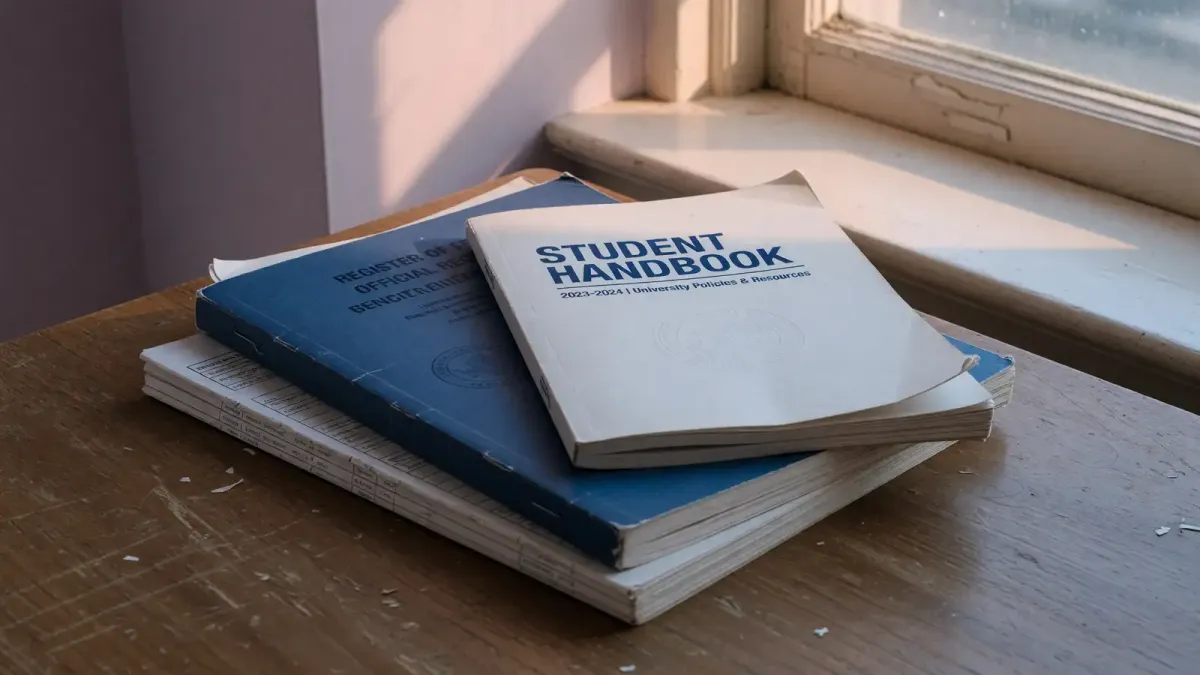
“Nothing changes in practice” is a sentence about federal enforcement. It is not a sentence about your Title IX office’s website. Websites lag. Training decks lag. The student handbook you got at orientation in August 2024 is a historical document. Treat it that way.
Do not let a dean use EdWeek’s status-quo line to end a meeting. If the PDF still promises gender-identity coverage the CFR no longer prints, the dean has a communications problem. If the PDF already matches 2020 and you were relying on a 2024 screenshot from Twitter, you have an evidence problem. Download the current policy. Date the file. Compare it to what you were told at orientation.
Community colleges that share counsel with a K-12 district should read this as a two-building problem. EdWeek’s K-12 frame in the same policy war is why. One lawyer. Two handbooks. Ask which one they updated.
Cross-examination is the survivor paragraph
Lambda puts the hearing structure in the first screen. The 2020 rule requires college survivors to face cross-examination at live hearings. That is not a vibe. That is a procedure. If you are advising a friend who is deciding whether to file, the procedure is the product.
Shiwali Patel, senior director of education justice at the National Women’s Law Center, told The Hill that sexual harassment and assault remain pervasive, and that the job should be enforcing the laws that protect student survivors. Her line on McMahon is that the administration ignored what survivors need and weaponized Title IX to attack trans students. That is an advocacy quote. Attribute it. Do not turn it into a campus statistic you do not have.
You do not need a new national prevalence study to give practical advice. Ask the Title IX office, in writing, whether live hearings with cross-examination are how they run college cases this semester. Ask whether an advisor can ask the questions. Ask whether informal resolution still exists. Get the answers in email. The CFR change is the reason the email is not rude.
If the office says “we have always done it this way,” ask since when. January 31, 2025 is EdWeek’s federal date. Your campus date may be later. The gap is where students get bounced.
Do not file or not file based on a blog. File based on counsel, a confidential advocate if you have one, and the actual procedure. This site is not your lawyer. It is a map of which federal PDF just moved.
Sports deals are a different machine than the CFR drop
The Hill notes the administration has pursued its own definition since Trump returned, including deals such as the University of Pennsylvania taking transgender athletes out of women’s programs. That is a named-school enforcement story. It is adjacent to Monday’s code update. It is not the same document.
If your question is “can I play,” you need the athletic policy, the conference, and whatever resolution your school already signed. If your question is “does the Title IX coordinator still treat gender identity as sex discrimination in housing and bathrooms,” you need the student handbook and the housing contract. Do not argue a locker room with a harassment-hearing cite, or a hearing with a Penn athletics cite.
Forced outing is another stack. FERPA, state bills, and K-12 parental notification are not automatically this Federal Register notice. Keep them in separate folders even when the same administration wants them in one speech.
The UC SVSH injunction was about a system document that is not a membership card. Same homework energy. The thing on the website and the thing a court or a federal register will enforce are allowed to diverge until someone makes them meet. Your job is to notice the diverge.
McMahon’s “women and girls” sentence will be in every alumni email. You can care about women’s sports and still need a harassment procedure that survivors will use. Patel’s point is that those got bundled. Unbundle them in your student government resolution or you will pass a statement nobody can implement.
What to do on your campus this week
Get the Federal Register entry dated September 29, 2026, or the department fact sheet EdWeek is quoting, into a folder you control. Do not rely on a story link. Story links rot.
Ask for the current Title IX policy PDF, the sexual misconduct procedures, the athletics gender policy, and the housing gender policy. Four files. If they send a combined handbook, fine. You still need the effective date on page one.
Search your own domain for “2024 Title IX” and “gender identity” and “live hearing.” If the search hits a 2024 training page and a 2020 procedure, send both URLs to student legal services, if you have it, or to a faculty ally who reads regulations for a living. You are documenting inconsistency, not starting a fight for sport.
If you are a survivor considering a report, talk to a confidential advocate first where one exists. Lambda Legal’s page points people at a help desk for LGBTQ and HIV legal questions. That is not a substitute for a campus confidential employee, and it is not a promise they will take your case. It is a door.
If you run a Pride group, do not workshop a five-page statement before you have the four files. The statement will be wrong. The files will tell you whether your fight is “update the website” or “the website already matches 2020 and we want a campus add-on.” Those are different votes.
OCR pacts we already covered can still sit in a drawer after the CFR changes. A school can keep a local promise the federal code no longer requires. A school can also quietly drop it. That is why you ask. Monday’s publication is the prompt. It is not the answer for your zip code.
The 2024 rule had a short, messy life in the places courts allowed it. EdWeek is clear that the life is over in the code book. Your RA’s training may not have caught up. Catch the RA up with the PDF, not with a push alert.
This week’s news is a register notice, a fact sheet that says practice already moved, and a set of quotes about sports and survivors that do not fit in one headline. Carry the dates. January 31, 2025. September 28 announcement. September 29 Federal Register. Then open the handbook and see which date it thinks it is.