A cookout is a date. A center is a door that is still there in February.
The University of North Dakota Pride Center’s September 25 blog is an anniversary note, which usually means balloons. Read it as an inventory instead. UND says it was the first campus in the state with a gender and sexuality resource center and a full-time staffer, in spring 2017, on the second floor of the Memorial Union. It also says it is still the only institution in North Dakota with a dedicated department for LGBTQ+ resources.
We already told you a Club Rush table is not a Pride Center and that a cookout is a flyer with a resource list under it. Ten years in Grand Forks is the long version of that argument. The student org started in 1982. The room showed up 35 years later. The room is still rare enough to be unique in the state.
1982 was a group. 2017 was a floor
UND’s own history is blunt about the gap. The first LGBTQ+ student group organized as the UND Gay Community in 1982. It still exists as the Queer and Trans Alliance. For decades that group did the work a department later claimed: sexual health education during the AIDS epidemic, policy fights, the unofficial map of which faculty would actually show up.
They met in officers’ homes. Some years they used the Women’s Center in the evenings. The blog does not romanticize that. It calls the borrowed room a form of othering, and a risk. Targeted incidents showed up in classrooms, residence halls, and student jobs. Administrators, in this telling, did not know how to support LGBTQ+ students, and the student code did not name protections.
If you are on a campus that still “lets the GSA use a classroom on Thursdays,” you are living in the pre-2017 file. A standing org is not nothing. It is also not a lockable office with a person whose job description is you.
In 2016, students at UND started meeting administrators and other student leaders with a specific ask: a resource like the Women’s Center, the Multicultural Center, the Indigenous Student Center, and the International Center. Not a week of programming. A peer of those other rooms. Spring 2017 is when the Pride Center opened and the first full-time professional was hired.
That sequence is the part to steal. Students did not ask for a speaker series. They pointed at four existing centers and said, we are the missing fifth. If your campus has those other doors and no LGBTQ door, the UND file is a template, not a vibe.
”Only in the state” is not a vibe either
UND still claiming to be the only dedicated department in North Dakota is the sentence that should travel off campus. It means a student at another public campus in the same state can have a recognized org, a rainbow during April, and no staffer whose hours they can walk into.
We already said you need one adult who gets it. A Pride Center is how a campus stops making that adult a volunteer in the English department. Full-time is the difference between “email me” and a door.
If you transfer from UND to a school that has a student org and a website, ask where the office is. If the answer is a Google Form, you already know the rest of the year.
The 10-year post is also a reminder that student groups predate the institution’s comfort. Queer and Trans Alliance is not a mascot for the Pride Center. It is the reason the Pride Center exists. Do not let a university anniversary flatten the org into an alumni slideshow. The org still has to recruit in a state where the next campus over may have no department at all.
If you staff a center, the anniversary week is when people will ask for a party. Give them the party. Also print the hours, the name of the staffer, and the after-hours path. A 10-year-old room that nobody can find after 4 p.m. is a museum.
A study is a window. It is not a center
The Diamondback reported on September 24 that the University of Maryland’s behavioral and community health department is running TEA3, a two-and-a-half-week study for trans and nonbinary students. Surveys and group sessions. Self-defense techniques aimed at sexual assault prevention. Principal investigator Sarah Peitzmeier said the team is looking for increases in students’ confidence to defend themselves, and that they do not ask participants to disclose past trauma. Facilitator Ramnik Dhingra talked about tools people can take with them.
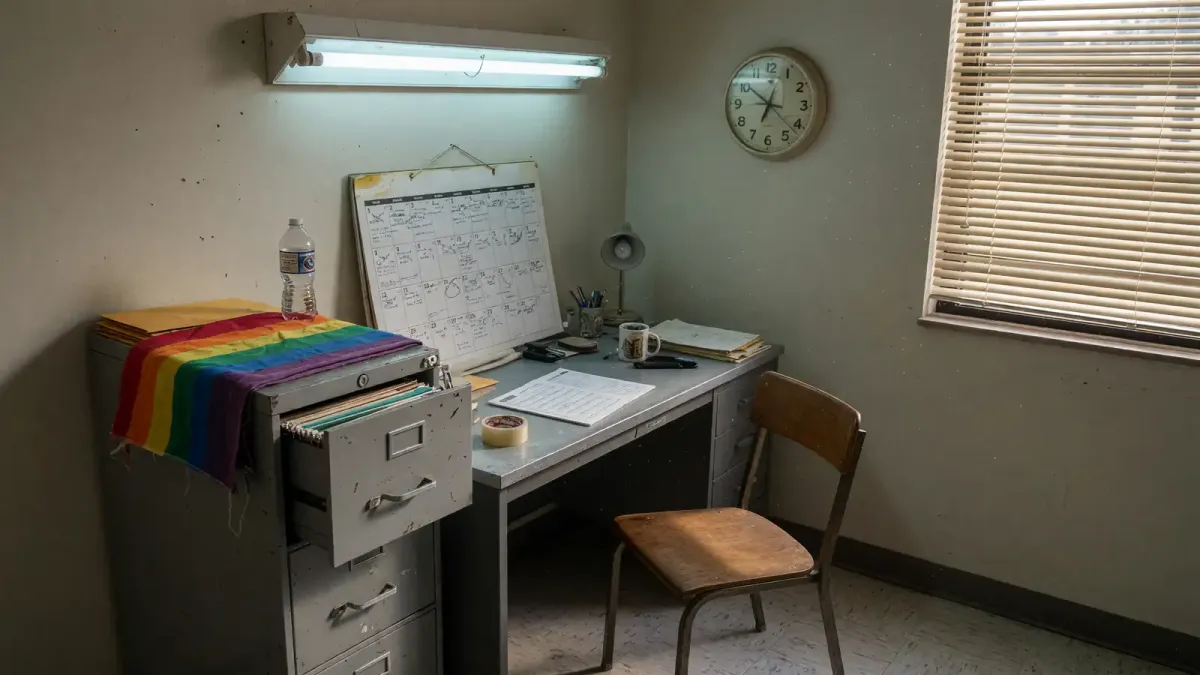
The first group, in that article, was due to start the Saturday after publication. A pride flag in the LGBTQ+ Equity Center, photographed September 16, sat on top of the story. That photo is the tell. UMD has a center. The study is a time-boxed program next to it.
Do not confuse the two if you are writing a student-affairs recap. TEA3 is research with a start date and a method. A Pride Center is the place you go when the study ends. If your campus only ever funds the study, you will have a paper and no door in February.
Peitzmeier’s line about not collecting trauma stories is worth taking at face value. Prevention programming that does not require a disclosure is easier to walk into. It is still not a substitute for a confidential advocate with a calendar. If TEA3 is the only trans-specific offering this semester, ask what happens in week four.
UND’s anniversary and UMD’s study landed in the same news week. That is convenient for a roundup and misleading if you flatten them. One is a decade of a department in a state that still has one. The other is a short protocol at a campus that already has an Equity Center. Steal the protocol if it helps. Do not use it as proof your campus “has community.”
Models of Pride is a Saturday. Pack it like a transfer fair
Gaye Magazine’s piece on the Los Angeles LGBT Center’s 34th Models of Pride puts the event on October 10, 11 a.m. to 4 p.m., at the Anita May Rosenstein Campus, 1118 N. McCadden Place. Free. LGBTQ+ youth 24 and under, plus allies. CEO Joe Hollendoner called it a joyful celebration and a space where young people can feel safe, affirmed, and empowered. Registration lives at modelsofpride.org.
Zaya Wade is the marquee name this year. The useful detail under the headline is Translatable, the hub she and Dwayne Wade launched in May 2024 for LGBTQ+ youth and for the adults around them. If you are a first-year who needs a parent-facing resource that is not your campus PDF, that is the take-home, not the award.
Models of Pride has run more than 30 years. That is longer than UND’s Pride Center. It is still a day. You leave with a tote and a list. The Center in L.A. is the building that is there on October 11.
If you can get to Los Angeles that Saturday, go. Treat it like a transfer fair: write down hours, names, and which tables actually have a service. If you cannot get there, do not let a celebrity youth event become your campus’s community plan. Building community on campus is still the weekday version.
What to copy if you do not go to UND
Ask for a room that already has cousins. UND students named four other centers. That is harder for an administration to dismiss than “we would like more programming.”
Ask for a staff line, not a graduate assistant who also runs three clubs. The 2017 hire is the load-bearing wall in UND’s story.
Keep the student org even after the room opens. Queer and Trans Alliance did not become redundant in 2017. Centers get budget fights. Orgs outlive vice chancellors.
Write down the prehistory. Homes, borrowed women’s centers, incidents in halls and jobs. If your campus insists nothing is wrong because Homecoming had a flag, the UND blog is a reminder that flags arrived after a long, uglier file.
If you are at a school with a center, use it when nothing is on fire. Anniversary weeks fill with people who only come for cake. The staffer needs the ordinary Tuesday visit so the room stays a habit, not a shrine.
If you are writing the ask, put numbers on the page. UND’s blog gives you a 1982 org, a 2016 lobbying year, a 2017 office, and a 2026 claim that the department is still unique in the state. Your version can be smaller: how many students use the org, which other cultural centers already have FTE, what happens after 5 p.m., who holds the after-hours phone. Administrators argue with vibes. They have a harder time arguing with a missing FTE next to four other doors.
TEA3 is a reminder to separate research recruitment from care. A two-and-a-half-week study can be good. It still ends. Ask Peitzmeier’s question in reverse: after the last group session, where does a trans student walk. If the answer is an Equity Center, say that. If the answer is “we’ll run another study in the spring,” you do not have a center. You have a calendar invite.
The product is still a door with hours
I have no patience for the version of this story that ends in “belonging.” UND published a timeline. UMD published a protocol. Los Angeles published a Saturday. Those are three different objects.
If you are a student in a state with one Pride Center department, the anniversary is not a reason to feel proud of the map. It is a reason to notice the empty squares. If you are a student at UMD, TEA3 is optional homework next to an Equity Center that already exists. If you are 19 and can get to Hollywood on October 10, go steal the resource list, then go home and ask where the equivalent door is on your own campus.
Ten years is long for a student. It is short for a building. The Memorial Union office is the part that will still be there when this week’s flyers are in recycling.