BetterMynd announced a partnership with Lavender Psychiatry on September 22. Buffalo dateline. Lavender is the largest nurse-led online psychiatry and therapy practice in the United States, per the release. The product is medication management plugged into BetterMynd’s student therapy stack. It is live at select institutions. Expansion is “throughout 2026 and beyond.”
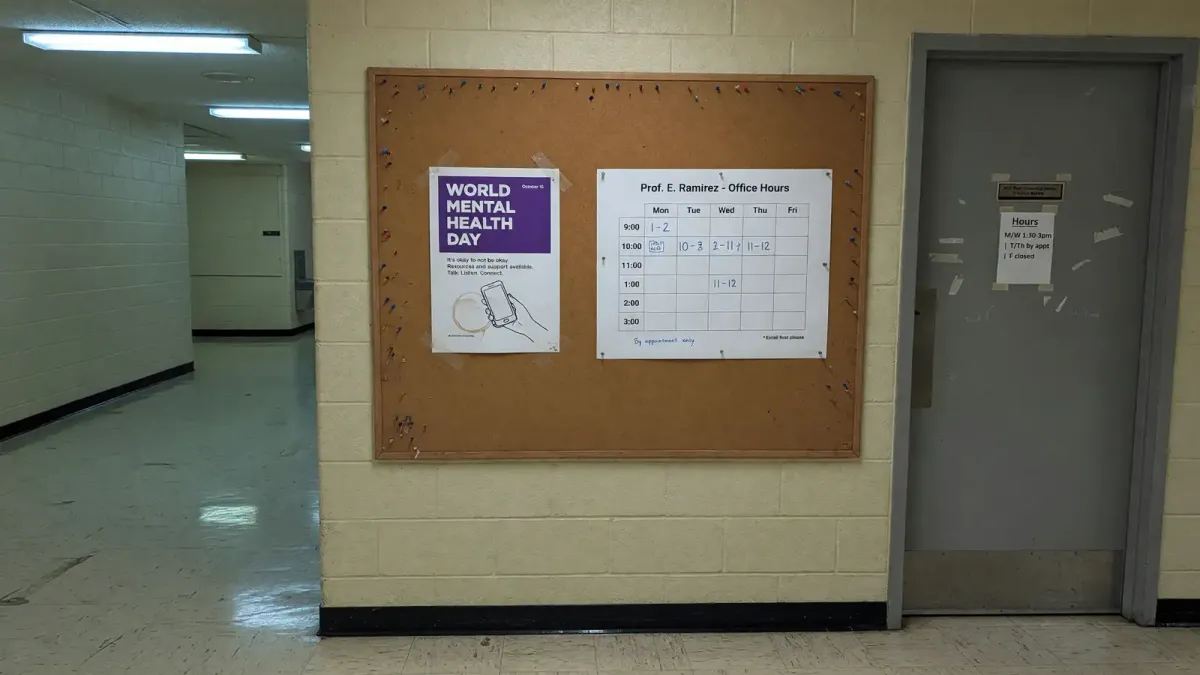
That is a vendor map. It is not a walk-in. If your campus counseling center’s next intake is in three weeks, a press release does not move the chair.
The same week, Utah Public Radio ran the CDC’s latest Youth Risk Behavior Survey write-up. High-school sadness is down. LGBTQ+ youth are missing from the tables. Those two stories belong in the same folder because one is a campus contract and one is a national dataset that just got quieter about you.
We already said Suicide Prevention Month is not an appointment. We already said 988 press 3 is a state backup. This week is the procurement version.
What the release actually sold
BetterMynd’s beat is college students. Lavender’s beat is online psychiatry, nurse-led. Together they say they will “expand access to flexible, high-quality care” by putting Lavender’s medication management inside BetterMynd. Pritma Dhillon-Chattha, DNP, MHA, RN, co-founder of Lavender, called it a “true extension of the campus counseling center.”
Extension is a metaphor. Ask the contract. Does the student already have to be in BetterMynd therapy to get a medication visit? Which states are licensed? Who is the prescriber of record when a student is home for break in a different state? Who sees the chart if the student is on a parent’s insurance? The release does not answer those. Live-at-select-institutions means your school might not be on the list.
“Easy to implement” is language for the dean of students, not for you. Implementation is SSO, a banner in the student portal, and a PDF in orientation. It is not a shorter wait for the person who already knows your name.
If your campus already uses BetterMynd as overflow, this is a formulary change. Therapy plus a path to meds under one login can be useful. It can also be a way to keep the in-person clinic at the same headcount while advertising “comprehensive care.” Count clinicians on the org chart. Then count this app.
Medication management is a medical service. It needs labs sometimes, interactions, a follow-up that is not a chatbot. A nurse-led practice can be excellent. It is still not the counselor who has office hours in the student center and who can walk you to urgent care.
Save the URL. Then ask disability services and the counseling center, in writing, whether this partnership is active for your campus ID, whether there is a copay, and whether notes go into the campus EHR or stay in the vendor. Finding a therapist who gets it is still the identity filter. A new logo does not pass that filter for you.
One in three is demand
The release cites Healthy Minds 2025: one in three students reporting symptoms of moderate anxiety or depression. That number is why vendors have a market. It is also why a “scalable solution” shows up in a press wire instead of a hiring freeze being reversed.
Demand is not the same as a filled slot. If a third of the student body could use care, a telepsychiatry overlay covers the people who will sit through an app onboarding and who have a door they can close. Residence halls, roommates, and rural broadband are still the access layer. So is a student who cannot put a psychiatry visit on a parent’s explanation of benefits.
Ask whether sessions are available after 5 p.m. and on Sundays. Campus crises do not book like a dentist. If the partnership’s hours are weekday business hours, you have a second waiting room with a nicer UI.
Lavender’s line about “feelings are respected and cared for” is mission copy. Keep the operational sentence: adaptable therapy plus medication management. Then ask what happens when the student needs both in the same week and the psychiatrist’s next opening is 18 days out. Seamless is a slide. Eighteen days is a calendar.
If you are trans or nonbinary, medication management in a student mental-health app is not gender-affirming care. Do not let a counseling-center flyer blur those. Campus SHIP versus hospital policies is a different fight we already covered. This partnership is anxiety, depression, and whatever the nurse-practitioner panel is licensed to treat. Read the panel.
International students should ask whether the vendor is in-network for the campus plan and whether a visa health form cares about psychiatric medication. Nobody in the release mentioned that population. Mention it in the email you send.
The CDC table got quieter
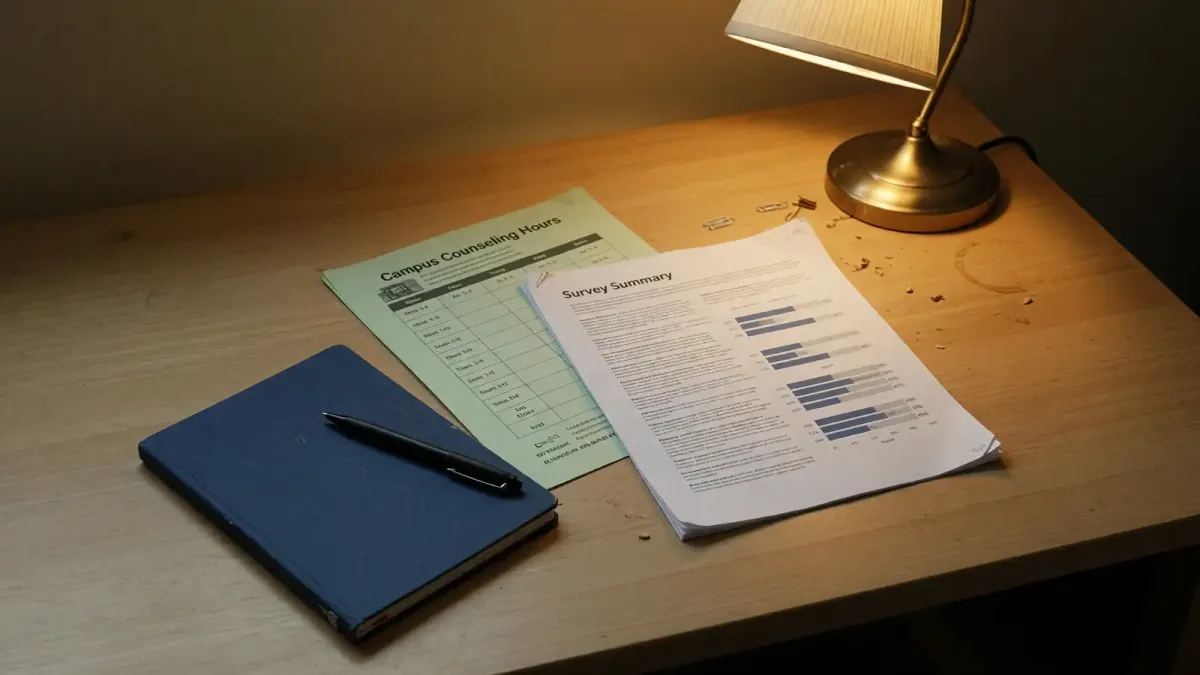
The YRBS is high school, not college. It still sets the weather for the 18-year-olds who arrive in August. UPR’s summary: persistent sadness or hopelessness among high schoolers fell from 42 percent in 2021 to 40 percent in 2023 to 33 percent in 2025. Suicidal thinking and behaviors also declined, a trend that started to show in 2023. Dr. Vera Feuer at the Child Mind Institute notes the post-pandemic ER peak and the later drop.
Feuer and Hadland both flag what is missing. The new report omits LGBTQ+ youth. Race and ethnicity detail is thinner. School connectedness, a protective factor Feuer names, is not in the write-up they wanted. Hadland’s sentence is the one to keep: inequities by race and ethnicity and by LGBTQIA+ membership were “really much more absent.”
A national improvement that does not break out queer kids is not a campus safety report. It is an average. Averages hide the stack you live in. If your RA training packet quotes 33 percent as “youth are doing better,” ask for the missing cross-tab. If there is no cross-tab, the packet is using a number that cannot see you.
College health centers love to paste high-school trends into first-year wellness talks. Paste this caveat next to it. The kids who needed the old YRBS LGBTQ questions are now in your residence halls. The questions left the report. The students did not.
MAHA framing in the UPR headline is politics around the Health Secretary. You do not need that fight to use the table. You need the omission. When a surveillance system stops printing a line, advocates have to collect the line themselves. Campus climate surveys, Healthy Minds campus modules, and the counseling center’s own identity fields are now doing work the CDC just put down.
If your campus skipped its climate survey this year because “national numbers look better,” that is the bad inference. National numbers look better and less specific.
A vendor is not hours
Dhillon-Chattha said the joint service is an extension of the counseling center. Treat that as a claim to test. Extensions have SLAs. Ask:
Is there a warm handoff from an on-campus clinician, or a QR code on a poster?
Does a student in acute risk get a same-day campus protocol, or an app prompt to call 988?
Who is on call when the app is down during finals?
988 remains a backup, not a counselor. We already walked that. A telepsychiatry partner that tells you to call a national line is not a center with a door.
Staffing math: if the university cites this partnership in a board slide as “expanded mental health,” ask whether FTE on campus went up, down, or stayed. Overflow vendors are how centers absorb enrollment without absorbing payroll. Sometimes that is the only option in a state that will not fund positions. Say that plainly. Do not call it a center.
Select institutions means a pilot. Pilots get the students who already read the student-affairs newsletter. The student who needed Lavender last March is not in the pilot unless someone put the link in the housing app.
If you work in a Pride center, do not become the unpaid help desk for a vendor you did not choose. Keep a one-pager: what the partnership is, what it is not, where the campus after-hours number still lives, where therapy navigation still starts. Your hours are not their onboarding.
What to do with a press release if you are a student
Search your email and the portal for BetterMynd. If you have an account, look for a psychiatry or medication tab after September 22. If it is not there, you are not in the select group. Email counseling with the PR URL and ask if a go-live is scheduled.
If you are in, read the consent. Medication notes plus therapy notes in one ecosystem is convenient and is a records question. Campus records and vendor records follow different disclosure rules. You want that in writing before a parent calls.
If you need meds and you do not trust an app, keep using the campus clinic or a local NP. A partnership does not retire those. It adds a lane.
If you are using this because the waitlist is the problem, time the first available psychiatry appointment and write it down. Compare it to the in-person wait. That comparison is the only review that matters. Marketing will not run it.
Keep crisis paths off the vendor. RA, campus police non-emergency if that is the protocol, local ER, Trevor, 988. The release is about “growing demand and increasing complexity.” Complexity is not a night when you cannot wait for a scheduled video slot.
If a flyer appears in the dining hall this month with a rainbow and a QR code, screenshot it. Check whether the vendor lists LGBTQ competency as staffing or as a stock photo. Competency is named clinicians and training hours. Stock photos are free.
What to do if you staff a center
Do not let student-affairs comms paste “true extension” into a homecoming email. Homecoming is a calendar. We already wrote that for a different campus. This is a clinical contract.
Put the partnership on the same page as hours, after-hours, and identity-affirming referral lists. Separate medication from talk therapy in the FAQ so students do not think a 20-minute med check is a counselor.
Ask Lavender and BetterMynd for the state list, the after-hours protocol, and whether they will show up at Q Center drop-in to answer questions. If they will not enter the room, they are not an extension of it.
Track how many students you refer, how many complete a first psychiatry visit, and how many bounce back to your waitlist in two weeks. That is the ROI. Futurum can keep 14 percent for software. You need show-up rates.
The CDC omission is a programming cue. If national youth data will not print queer kids, your center still has to. Intake forms, Healthy Minds add-ons, and a sentence in the annual report are the patch.
A partnership can be the right overflow. Overflow is honest language. Extension is a branding choice. Use the honest one on the door.