MedicalXpress on October 23: Columbia University Mailman School of Public Health, Boston University School of Public Health, and Harvard Pilgrim Health Care Institute analyzed 17,942 LGBTQ+ students ages 18 to 24 in the 2024–2025 Healthy Minds Study. The paper is in Behavioral Medicine. One in ten of those students reported interpersonal discrimination on campus in the previous year. That is a count. It is not a counseling slot.
We already filed Yahoo listing Trevor against a campus waitlist and 988 press 3 coming back while Trevor is not the operator. This week the named N is 17,942. The named room is still whoever answers at your campus counseling center on Monday.
17,942 is a survey. Monday is a calendar.
Healthy Minds is an annual national survey of college student mental health. This cut is LGBTQ+ students 18 to 24. The researchers looked at three kinds of discriminatory experience: interpersonal discrimination on campus, past denials of health care, and past denials of other services on the basis of sexual orientation and/or gender identity. They scored flourishing, depression, anxiety, suicidal ideation, and whether people used care.
A survey this large is how you get percentages that survive a news cycle. It is not how you get a same-week appointment. If your campus counseling center is booked three weeks out, the paper does not move the book. It gives you a citation for the student government meeting where you ask why the book looks like that.
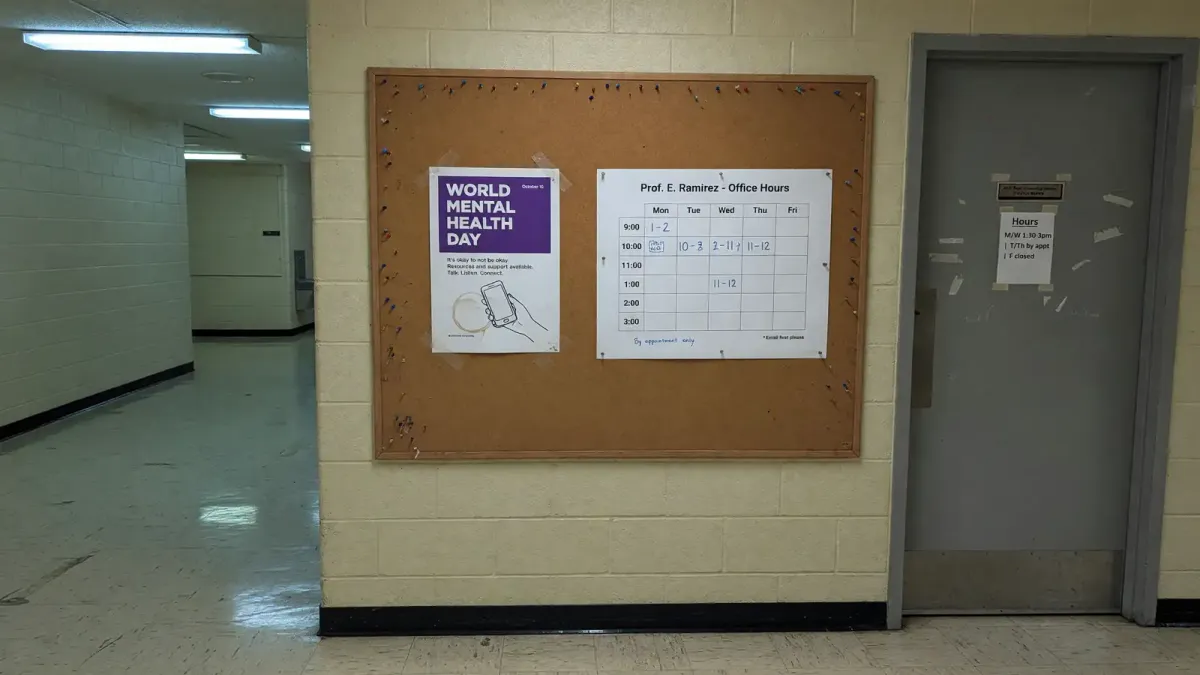
Print the hours. Print the after-hours line. Print the off-campus sliding-scale clinic the Pride Center actually names. Put those three numbers on the same page as the 17,942. The study is the why. The hours are the where. Do not let a headline about “nationwide” replace the building on your map.
If you are staff, the paper is also a staffing argument. One in ten reporting campus discrimination last year is not a vibe. It is a caseload. A caseload with no added FTE is a waitlist with a PDF.
The methods also scored flourishing and health-care utilization. The MedicalXpress recap we have does not print a flourishing percentage, so this page will not invent one. Utilization is the column that should scare a health center more than a climate slogan: discrimination tied to avoiding needed care. If your dashboard only counts appointments kept, you are counting the people who still trust you. The paper is about the people who stopped walking in.
One in ten is last year on campus
Students who reported that campus discrimination were 84 percent more likely to meet criteria for depression, 87 percent more likely to meet criteria for anxiety, and 78 percent more likely to report suicidal thoughts in the past year. Those are associations from the same MedicalXpress write-up of the Behavioral Medicine paper. They are not a diagnosis of any one reader.
Interpersonal discrimination on campus is the category that maps onto the hallway, the classroom, the resident advisor, the group project. It is the category a campus can actually log if it bothers to log. Many do not. A climate survey every four years is not last year’s one-in-ten.
If you run a Pride Center, do not answer this paper with a panel. Answer it with the incident form that students will actually use, and with the counseling referral that does not bounce. Mental Health Day as an award did not become hours. A journal article does not either.
The flourishing measure is in the methods. The news recap we have does not print a flourishing percentage. Do not invent one. What we have is the depression, anxiety, and ideation lifts for the students who reported campus discrimination. Use those. Stop at those.
Health-care denial is a 200 percent number
Among LGBTQ+ students, denial of health care was associated with a more than 200 percent higher likelihood of suicidal ideation. Denial of care also tracked with avoiding needed health care. That is the ugly loop: you get turned away, you stop asking, the ideation number is the one that shows up in the table.
Campus health is not always the denier. The study’s “past denials” can be off-campus clinics, pharmacies, specialists. For a student, the practical split is still local: does the student health center honor the name and pronouns in the chart, and does the referral network include people who will see trans patients for ordinary primary care, not only for “gender” visits.
If your campus still uses a legal-name banner on the after-visit summary, that is a denial waiting to happen in a waiting room. Fix the banner. The 200 percent number will not move because you fixed a banner. The student in front of you might.
Do not turn this into a thread about one court case. The paper is behavioral medicine, not a statute. The action on campus is the formulary, the referral list, and whether a student can get HRT labs without a six-week argument. If you cannot name the clinic, you do not have a referral. You have a poster.
Trevor’s two-year follow-up moved some rates and not others
The Bay Area Reporter on October 20 summarized The Trevor Project’s two-year follow-up. Anxiety went from 54 percent to 63 percent. Depression from 43 percent to 51 percent. Suicidal ideation stayed “consistently high” at 38 percent to 40 percent. Self-harm dropped from 39 percent to 34 percent. Suicide attempts dropped from 9 percent to 7 percent. Affirming homes rose from 53 percent to 61 percent.
That is mixed in the ordinary sense. Some harm behaviors ticked down. The mood and ideation numbers did not give you a victory lap. EBAR also notes gender-nonconforming youth who reported gender euphoria, as opposed to dysphoria, had 50 percent lower odds of suicidal ideation and 49 percent lower odds of depression. Transgender and nonbinary youth who could change name and sex on identification documents had 45 percent lower odds of suicidal ideation.
Past-year physical threats based on sexual orientation sat at 31 percent, up one point, not statistically significant. Conversion-therapy exposure is the line that should stop a staff meeting: nearly three times higher odds of suicidal ideation. Youth threatened with conversion therapy rose from 12 percent to 22 percent. Youth subjected to it rose from 9 percent to 16 percent.
This is a youth sample, not the Healthy Minds 18-to-24 college cut. Do not mash the percentages into one chart. Keep the college paper for campus discrimination. Keep Trevor for the two-year change and the conversion-therapy spike. If your state still lets a practitioner sell conversion therapy to a student home on break, the 16 percent is not an abstraction.
A trusted person is 35 percent versus 61 percent
Futurity on October 21 reported a JAMA Pediatrics paper led by Evan Krueger at Tulane’s School of Social Work, using a national survey of adolescents 12 to 17. Among gay and lesbian teens, an estimated 61 percent of those without a trusted person had experienced depression in the past year, compared with 35 percent of those who had at least one person to turn to. Suicidal thoughts: 66 percent without versus 27 percent with one.
About eight in ten heterosexual teens said they would turn to a parent. About six in ten gay, lesbian, and bisexual teens said the same. Krueger’s line in the recap: friends may not fully replace a consistent, supportive adult. Schools, families, and communities all have a role.
This is younger than the Healthy Minds college sample. The reason it belongs on a campus site is the six-in-ten parent number. A lot of first-years arrive having been the 40 percent who would not turn to a parent. RA training that assumes “call home” is the default is training that fails that 40 percent on night one.
Name the adults who are actually on the clock: the Pride Center director, the after-hours counseling line, the one faculty member whose door hours are real. A peer club is necessary. It is not the trusted adult in Krueger’s contrast. Do not staff a club and call it clinical backup.
CDC teen mental health improvement, in that same Futurity piece, gets partial credit for school-based efforts that connect students with support. Connection is a program with a person attached. It is not a QR code on a bathroom stall that goes to a 404.
Krueger’s sample is 12 to 17. Healthy Minds is 18 to 24. The trusted-person gap does not magically close at orientation. If your first-year survey still treats “family support” as a default protective factor, you are scoring the eight-in-ten heterosexual pattern on a six-in-ten population. Change the survey item or stop using it to close cases.
Conversion-therapy threats rose. Your PDF may not have.
The Trevor follow-up’s conversion-therapy jump is the policy object hiding under the wellness label. Threatened 12 to 22 percent. Subjected 9 to 16 percent. Nearly triple the ideation odds if exposed. A campus that still lists an off-network “Christian counselor” without checking for conversion practices is handing students a number from that table.
Check the student insurance directory this week. Search the listed therapists for conversion language. Remove them. If the insurer will not remove them, publish the workaround: here are the in-network people the Pride Center has actually talked to. A directory is not a vetted list.
The Healthy Minds paper gives you the campus-discrimination one-in-ten and the care-denial 200 percent. Trevor gives you the two-year youth change. Krueger gives you the trusted-person gap. None of the three books the 10 a.m. Tuesday slot. The slot is still the thing you write on the whiteboard.
Name-and-gender on ID, in the Trevor follow-up, is not a culture war prop on this page. It is a 45 percent lower-odds number for suicidal ideation among trans and nonbinary youth who could make the change. Campus registrar processes that still require a court order for a directory name are running against that number. If your school already splits legal name and campus name, print the form URL next to the counseling hours. If it does not, the form is the wellness intervention, not another listening session.
If you only share one figure from this week, share the one that matches your building. College health center: 17,942 and one in ten. Youth group: 16 percent subjected to conversion therapy. Residence life: six in ten versus eight in ten will call a parent. Then post the hours next to the figure. The paper is not the hours.