You’ve seen the stickers. A rainbow Safe Zone decal on a professor’s office door. A pink triangle on a department bulletin board. A “This is a Trans-Friendly Space” sign in a residence hall lobby. These stickers are everywhere on college campuses, and they’re supposed to mean something.
But here’s the question nobody asks: does the person behind that door actually know what to do when a student comes out to them? Can they explain the difference between gender identity and sexual orientation? Do they know the name of the campus resource center, or do they just have the sticker?
Ally training varies wildly from one campus to another. Some programs are two-hour workshops run by trained facilitators who cover pronouns, intersectionality, and real scenarios students face. Others are a 20-minute online module that ends with a certificate and a sticker. The sticker looks the same either way. The support behind it doesn’t.
What a good ally training actually covers
The Safe Zone Project, a free resource used by over 25,000 educators in 100 countries, lays out a curriculum that most effective programs follow. It starts with basics: sexual orientation, gender identity, the gender spectrum, and transgender identities. Then it moves to practical skills: how to use correct pronouns, how to respond when someone comes out to you, how to handle mistakes without making the conversation about your discomfort.
The University of Illinois runs an LGBTQ+ Ally Training program that’s open to all community members. Their Training 101 covers LGBTQ+ identities, the gender spectrum, transgender identities, gender pronouns, and intersectionality. The key word there is intersectionality, because LGBTQ+ students don’t exist in a vacuum. A queer student of color faces different challenges than a white queer student. A disabled trans student has needs that a cisgender queer student doesn’t. Good ally training acknowledges this.
The Human Rights Campaign’s guide to establishing Safe Zone programs adds another layer: allies aren’t just there for coming-out moments. They also need to handle situations where non-LGBTQ+ people express discomfort with visible queer culture. A student might be confused about sidewalk chalking on National Coming Out Day. A parent might question why a university has a gender-neutral bathroom. An ally’s job isn’t just to support LGBTQ+ people directly. It’s to help others understand why equality matters.
The difference between performative and genuine programs
Performative ally training has telltale signs. It’s short, under 30 minutes. It’s entirely online with no facilitator. It ends with a quiz, not a conversation. It focuses on vocabulary definitions rather than real scenarios. It doesn’t mention intersectionality. It doesn’t address what to do when you witness homophobia or transphobia in a classroom, a lab, or a residence hall.
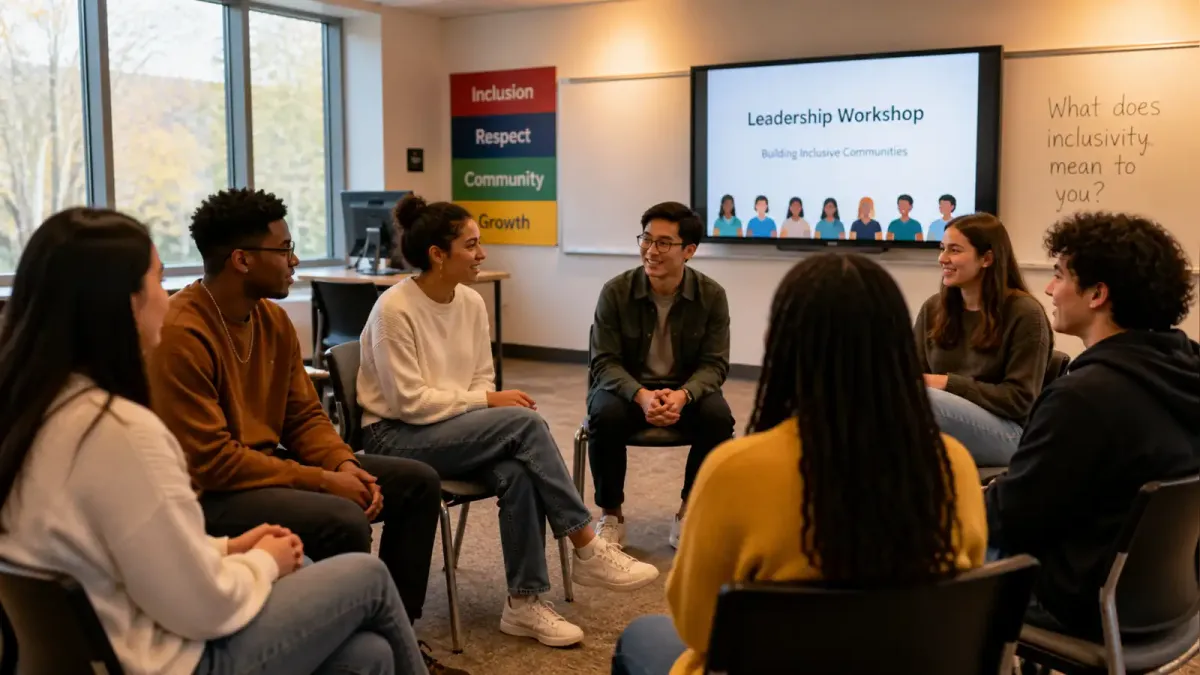
Genuine programs look different. They’re interactive. They use role-playing or scenario-based learning. They involve LGBTQ+ people as facilitators or co-facilitators, not just as case studies. They cover institutional policies: what protections exist on your campus, where to report discrimination, how to access resources for students in crisis. They don’t end with a sticker. They end with a commitment to ongoing learning.
The Safe Zone Project’s free 2-hour curriculum is a good benchmark. If your campus program is shorter than that, ask why. If it doesn’t include facilitated discussion, ask why. If the facilitator isn’t someone with training in LGBTQ+ issues, ask why.
How to advocate for better training at your school
If your campus only offers a basic online module, you have options. Student organizations can request specific programming from the campus LGBTQ+ resource center. Many centers will design custom workshops for student groups, residence halls, or academic departments. You don’t have to wait for the administration to act.
The HRC guide recommends starting with a core group of trained facilitators. This doesn’t have to be professional staff. Graduate students, advanced undergrads, or faculty volunteers can be trained to lead workshops, especially if they’ve completed a comprehensive program themselves. The key is that facilitators have depth, not just a certificate.
You can also push for ally training to be mandatory for specific roles. Resident advisors, peer mentors, and student orientation leaders interact with vulnerable populations daily. Requiring substantive ally training for these positions, not just a checkbox module, changes the culture of support on campus.
What students should know before attending
If your campus offers ally training, show up. But show up with questions. Ask the facilitator what happens after the training. Is there a follow-up session? A resource list? A way to connect with other allies? A single workshop without follow-through is better than nothing, but not by much.
Ask what the program covers beyond definitions. Real ally training includes scenarios: a roommate comes out as trans and wants to use different pronouns, a classmate makes a homophobic joke in a study group, a student is visibly distressed after a family rejection. These situations don’t have script-book answers, and a good program helps you think through them.
Ask about intersectionality. If the training treats LGBTQ+ identity as the only axis of marginalization, it’s incomplete. Queer students who are also students of color, immigrants, disabled, or low-income face overlapping challenges. An ally who understands this is more useful than one who only knows the vocabulary.
The sticker doesn’t mean much alone
A Safe Zone sticker on a door tells a student that someone inside probably won’t be hostile. That’s a low bar. The goal of ally training should be to raise it: someone inside will listen, know where to refer you, use your correct pronouns without being asked twice, and speak up when they hear something harmful.
The best ally training programs don’t just teach people to be less prejudiced. They teach people to be actively supportive, to recognize when something is wrong and act on it. That takes more than an online module and a sticker. It takes time, practice, and a willingness to keep learning after the workshop ends.
If your campus program doesn’t do that yet, it’s worth pushing for change. The students who need ally support are already there. The training should be ready for them.
Why some programs fall short
Budget constraints are part of the problem. Many LGBTQ+ resource centers operate with skeleton staffs and rely on student workers. Designing and facilitating a comprehensive ally training takes time, expertise, and money that many centers don’t have. A 20-minute online module is cheap, scalable, and looks good on an annual report. A 2-hour facilitated workshop costs significantly more per participant.
But budget isn’t the whole story. Some programs fall short because they were designed without meaningful input from LGBTQ+ students. A workshop created by administrators who’ve never sat in a room with a trans student processing family rejection reads very differently from one co-designed by the students it’s meant to serve. The best programs are built with LGBTQ+ students at the table, not just as the subject matter.
Another common failure: programs that teach vocabulary but skip practice. Knowing that “nonbinary” is a gender identity doesn’t help you when a student tells you their pronouns are they/them and you stumble through the sentence three times before getting it right. Knowing that “deadnaming” means using someone’s birth name without permission doesn’t prepare you for the moment when a parent does it at a campus event and you’re the one standing nearby. Skills require practice. Programs that skip practice produce allies who know the words but freeze in the moment.
What happens after the workshop ends
The real test of any ally training isn’t what happens during the session. It’s what happens in the weeks and months after. Does the campus follow up with participants? Is there a community of practice where trained allies can share experiences, ask questions, and refine their skills? Are there opportunities to deepen engagement through mentorship, peer support, or ongoing education?
Some campuses have implemented “ally cohort” models where participants complete a workshop series rather than a single session. The first workshop covers basics. The second focuses on intersectionality and specific populations. The third addresses institutional change: how to advocate for policy improvements, how to respond to discriminatory incidents, how to build inclusive environments in classrooms and organizations. This layered approach produces allies with real capability, not just awareness.
Others have created ally directories where trained individuals are listed as contacts for LGBTQ+ students seeking support. This is useful, but only if the directory is maintained and the allies on it continue their education. A directory entry from 2022 with no follow-up training is worse than no directory at all, because it promises support that may not be there.
The role of faculty and staff
Faculty and staff aren’t just participants in ally training. They shape whether it happens at all. A professor who completes ally training and then incorporates inclusive language practices into their syllabus, displays accurate pronoun information, and refers students to campus resources is modeling allyship in action. A department that requires ally training for new hires is signaling institutional commitment.
The University of Illinois approach of making ally training available to all community members, not just students, recognizes this. When professors, advisors, and residence hall staff are trained, LGBTQ+ students encounter support in multiple contexts rather than only through the resource center. This normalization matters. It tells students that LGBTQ+ inclusion isn’t a niche concern handled by specialists. It’s everyone’s responsibility.
Faculty can also advocate for ally training to be embedded in professional development. New faculty orientation, graduate student training, and staff onboarding are all natural points to introduce substantive ally education. The key is ensuring these programs go beyond the checkbox and include the interactive, scenario-based elements that make training stick.
Measuring whether training actually works
Campus administrators love metrics, and ally training is no exception. Completion rates, satisfaction surveys, and sticker distribution numbers are easy to track. They’re also largely meaningless as measures of impact.
Better metrics ask different questions. Do LGBTQ+ students on campus report feeling safer? Do they know where to go for support? Have incidents of homophobia and transphobia decreased? Are trained allies actually intervening when they witness discrimination? These questions are harder to answer, but they’re the ones that matter.
Some campuses have started using pre- and post-training assessments that measure knowledge, attitudes, and behavioral intentions. These aren’t perfect, but they’re a step beyond “did you enjoy the workshop?” The most rigorous programs also include follow-up surveys three to six months after training to see whether participants have actually changed their behavior.
The ultimate metric is simple: do LGBTQ+ students on your campus feel supported by the people around them? If the answer is yes, the training is working. If the answer is no, a sticker on a door isn’t going to change that.