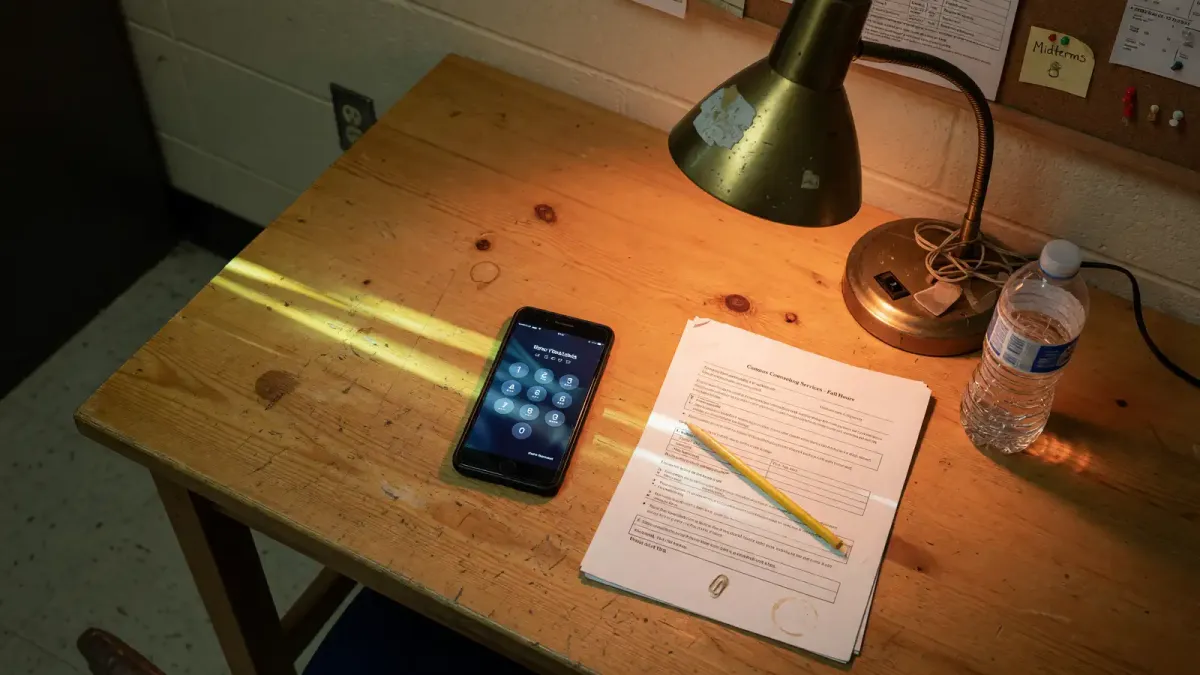
Campus counseling centers experience their heaviest traffic during the first weeks of November. Midterm grades have arrived, semester projects are entering final phases, and registration deadlines for the spring term create acute academic pressure. For queer and transgender students, this mid-semester squeeze often intersects with minority stress, family tension ahead of winter holidays, and the ongoing search for affirming health providers. When students reach out to university counseling centers during this peak window, they frequently encounter campus counseling limits designed to ration scarce clinical hours across thousands of enrolled students.
Understanding the structural policies behind university health centers helps students advocate for the care they need. In early November 2026, The Princeton Review released its 2027 Mental Health Services Honor Roll, evaluating 739 undergraduate institutions in partnership with the Ruderman Family Foundation. The survey reported that 71 percent of surveyed students feel their college prioritizes mental health, while 77 percent of participating schools offer wellness coursework. Yet broad institutional commitments do not eliminate the operational bottlenecks that occur inside student counseling suites. LGBTQ+ students who understand session caps, triage tiers, case management options, and healthcare privacy rules are better positioned to build sustainable support networks that last beyond a standard four-week university counseling block.
Understanding How Campus Counseling Limits and Stepped Care Operate
University counseling centers generally structure their clinical services around short-term treatment models. Data published by the Association for University and College Counseling Center Directors shows that roughly 43 percent of campus counseling centers maintain formal session limits on individual therapy. At institutions with explicit caps, limits are most often calculated per academic year, with the average ceiling set around 12 individual appointments.
At the same time, actual student utilization remains significantly lower than those published caps. AUCCCD survey data indicates that undergraduate clients at four-year universities complete an average of 5.7 sessions before case conclusion or referral, while community college students complete an average of 5.0 sessions. In addition, approximately 46 percent of college counseling centers now use a stepped-care delivery model. Under stepped care, intake coordinators route incoming students to the least resource-intensive option that matches their immediate screening score. A student seeking help may be directed toward an online coping module, a thematic workshop on anxiety, or a single solution-focused consultation before the center considers authorizing multi-week individual psychotherapy.
This service architecture creates distinct hurdles for LGBTQ+ students. Academic research conducted at the University of Toronto examining the post-secondary Stepped Care 2.0 framework identified significant tension between standardized stepped-care assumptions and the needs of queer and transgender undergraduates. Stepped-care triage assumes that a student’s distress is primarily episodic, such as acute situational anxiety tied to an exam or interpersonal conflict with a roommate. When an intake framework treats student distress as a short-term issue requiring brief interventions, it can fail to account for the cumulative weight of minority stress, family rejection, gender dysphoria, or the search for identity-affirming community. A student who needs a reliable therapeutic relationship to process complex social realities may find themselves pushed into generalized self-help apps or single-session workshops that offer little relevant support.
Why Institutional Wellness Accolades Can Mask Specialized Care Shortages
The gap between administrative recognition and individual student experience is particularly visible during late-fall campus surveys. The 2026 Campus Mental Health Survey revealed that 49 percent of participating universities conduct regular wellness screenings, representing an increase from previous years. Recognition programs celebrate these initiatives alongside campus mindfulness spaces, pet therapy afternoons, and peer wellness ambassador tables. These offerings can assist students managing everyday college fatigue, but they do not expand clinical capacity for students who require specialized psychological care.
Administrative scorecards evaluate aggregate programming without assessing individual clinical competency. A university can satisfy honor roll criteria by running wellness campaigns, distributing stress-reduction kits in residence halls, and funding digital wellness platforms. None of those initiatives guarantee that the licensed social workers and psychologists inside the campus counseling center have completed clinical training in gender-affirming care, affirmative therapy for sexual minorities, or the psychological impact of hostile state legislation. When university communications highlight mental health accolades, queer students may assume the counseling center has ample room for everyone who walks through the doors. The reality is that centers remain constrained by tight operational budgets and high staff turnover. When an LGBTQ+ student arrives at intake and receives a four-session allocation followed by a referral sheet, the experience can feel confusing if campus publicity promised comprehensive care. Recognizing that institutional wellness honors measure broad programming helps students evaluate their campus health center with realistic expectations.
Navigating Case Management and Community Provider Referrals
When a student reaches their allotted session cap or presents with concerns that campus directors classify as beyond short-term scope, the counseling center initiates a community referral. Historically, this step consisted of handing the student a paper printout of local therapists. Today, more than 60 percent of college counseling centers employ dedicated clinical case managers or care coordinators whose primary responsibility is guiding students through off-campus transitions.
A campus case manager acts as an administrative care coordinator. They review insurance networks, identify local clinics with current openings, and follow up to verify that students connect with outside care. For queer and transgender students, working intentionally with a case manager can make the difference between finding an affirming provider and abandoning the search entirely. During a case management consultation, students can state their specific clinical criteria:
- Requesting a clinician who has verified clinical experience with LGBTQ+ identity development, gender dysphoria, or polyamorous relationships.
- Asking for therapists who operate on a sliding fee scale if the student does not have sufficient health insurance or cannot pay typical private copays.
- Asking about university-contracted virtual therapy platforms that allow identity-specific matching, such as selecting an LGBTQ+-identifying counselor through telehealth networks.
- Exploring community health organizations and local queer resource groups that maintain dedicated low-cost therapy clinics for young adults.
Students can also check our guide on finding affirming healthcare off campus to prepare questions before an initial consultation with an outside provider. Reaching out to a case manager before reaching the final session limit gives students several weeks of overlap to establish outside care. This planning prevents an abrupt gap in support between semesters.
Managing Health Insurance and Privacy Concerns as a Dependent
Transitioning from free campus counseling to private community therapy introduces the practical hurdle of health insurance. Many undergraduate students remain covered as dependents under their parents’ employer-sponsored health insurance plans. When an insured individual receives mental health services or fills a prescription, insurance carriers generate an Explanation of Benefits statement. An Explanation of Benefits document details the date of service, the provider’s practice name, and standardized billing codes for medical diagnoses.
For students who are not out to their families or who have unsupportive parents, an Explanation of Benefits sent to a home address can unintentionally reveal private mental health care or gender-affirming consultations. Fortunately, federal regulations and state laws provide legal avenues to maintain confidentiality. Under the federal Health Insurance Portability and Accountability Act Privacy Rule (45 CFR § 164.522), covered dependents have the legal right to submit a formal Confidential Communications Request to their insurance company. A Confidential Communications Request instructs the insurer to send all billing notices, Explanation of Benefits forms, and care statements to an alternative address, such as a student’s personal email or campus post office box.
Several states have enacted specific consumer protection statutes that strengthen this requirement. In jurisdictions like California (under Insurance Code § 56.107), Maryland, New York, and Washington, health insurers must automatically approve confidential communication requests for sensitive services, including mental health, reproductive healthcare, and gender-affirming treatments, without requiring the policyholder’s permission. Students can call the member services number on the back of their insurance card to request and submit the necessary form before attending their first outside therapy appointment.
Students who cannot safely use a family insurance policy can explore whether their institution offers a Student Health Insurance Plan. Campus health plans often feature lower deductibles and in-network campus health center copays that do not generate statements to parental addresses. Our detailed analysis of campus student health plans and affirming coverage explains how institutional health plans handle mental health and affirming care benefits across different state jurisdictions.
Leveraging Satellite Drop-In Hours and Peer Support Networks
Students who hit campus counseling limits or face multi-week intake waitlists can also look to complementary campus programs that operate outside standard appointment queues. One of the most effective campus models is the drop-in consultation network known as Let’s Talk. First developed at Cornell University, Let’s Talk programs have expanded to dozens of major universities, including the University of Michigan, the University of Pennsylvania, and the University of Oregon.
Under the Let’s Talk model, licensed mental health counselors hold informal, confidential drop-in consultation hours directly inside satellite campus locations. Many universities schedule weekly Let’s Talk hours inside campus LGBTQ+ lounges and cultural resource spaces. These 15-to-20-minute meetings do not require advance scheduling, do not generate formal medical chart records, and do not count against a student’s annual individual therapy quota. A drop-in session allows a student to talk through an immediate academic stressor, ask for advice about communicating boundaries with relatives, or evaluate whether a specific counselor has the cultural competence needed for longer-term therapy. Learning more about how campus LGBTQ+ resource centers coordinate student support can help students locate when and where these satellite consultation hours take place.
Alongside professional satellite drop-in hours, student-led peer support groups offer a helpful community buffer. Peer support circles hosted by campus pride centers provide a non-clinical space to share experiences, decompress after intense classes, and combat social isolation. Using peer support effectively requires keeping healthy boundaries. Peer listeners and student group facilitators are undergraduates without clinical credentials; they do not provide psychiatric crisis intervention or replace professional trauma therapy. Peer groups work well for mutual encouragement and social connection, allowing students to participate without placing clinical responsibilities onto their peers.
Practical Steps to Maximize Your Campus Counseling Access
Navigating campus counseling limits during the late-fall semester requires clear communication during your first interactions with health center staff. When you contact your campus counseling center or prepare for an intake triage appointment, keeping the following practical steps in mind can help protect your access to care:
-
Be specific about affirming care during triage. Intake forms often ask whether you have provider preferences regarding gender, sexual orientation, or clinical background. Clearly state that you are seeking a clinician with specific competency in LGBTQ+ student concerns. If the center does not have an affirming full-time staff member available, stating this preference early allows the intake coordinator to refer you to a specialized case manager immediately. This avoids assignment to a clinician who lacks familiarity with basic terminology.
-
Inquire about session exceptions. While 43 percent of centers have session limits, AUCCCD data shows that hard caps with zero clinical exceptions exist at fewer than one percent of campuses. Centers routinely grant session extensions for students navigating acute identity transitions, safety concerns, or complex family estrangement. Ask your assigned counselor directly about their center’s clinical exception policy during your third or fourth session so you know what criteria apply.
-
Request case management early. Do not wait until your final authorized counseling session to discuss outside referrals. If you and your counselor agree that you will need ongoing support through the spring semester, ask for a case management meeting by your third session. This provides sufficient time to check insurance networks, contact outside practices, and schedule an initial consultation before your campus sessions conclude.
-
Confirm your billing confidentiality. If you plan to use an off-campus provider covered under a family insurance plan, contact the insurer to file a Confidential Communications Request before your first billable session. Verify the alternative mailing address or secure digital portal where Explanation of Benefits statements will be delivered.
-
Utilize satellite drop-in hours for mid-semester maintenance. If you have used your individual therapy allocation for the term but need a brief sounding board during finals week, check whether your campus LGBTQ+ resource center hosts drop-in counselor consultations like Let’s Talk. These drop-in spaces can provide situational advice without reopening an extensive clinical intake.
Students encountering difficulties with care coordination or seeking additional resource documentation can reach out to campus advocates or contact the editorial desk at [email protected] for editorial questions regarding campus wellness guides.
Disclaimer: This article is published for educational and informational purposes only and does not constitute medical, psychiatric, or mental health advice. If you are experiencing a mental health emergency or crisis, reach out for immediate support. You can call or text the Suicide & Crisis Lifeline at 988, text HOME to 741741 to connect with the Crisis Text Line, or call the Trans Lifeline peer support hotline at 877-565-8860.