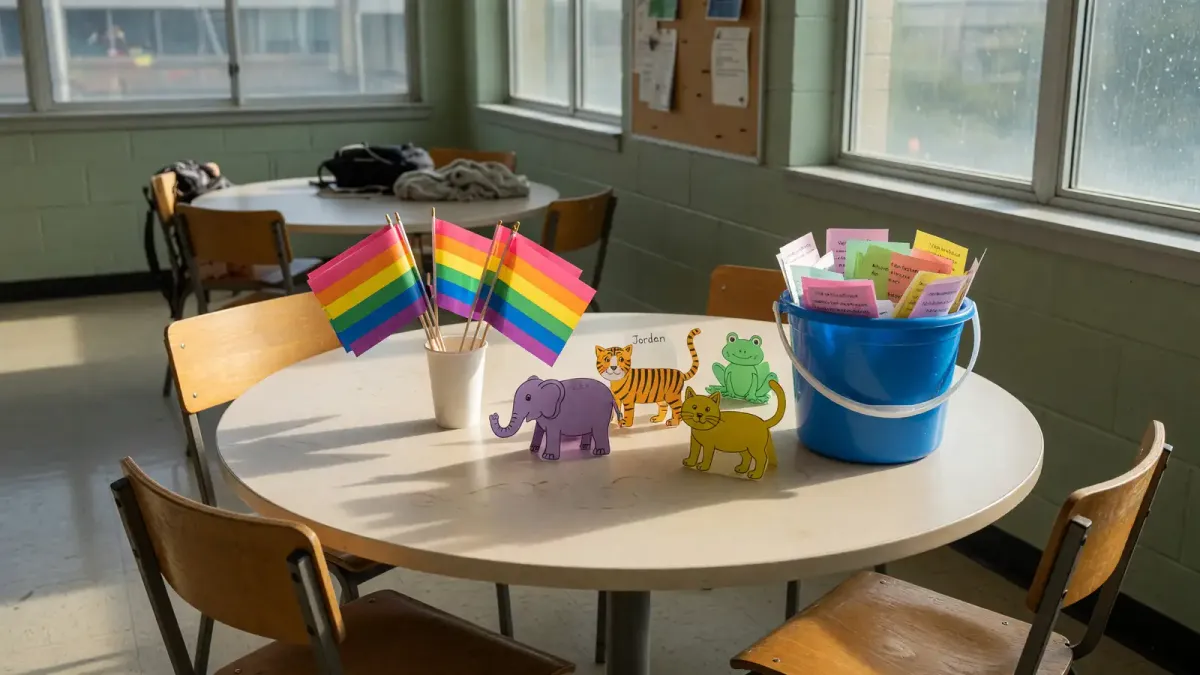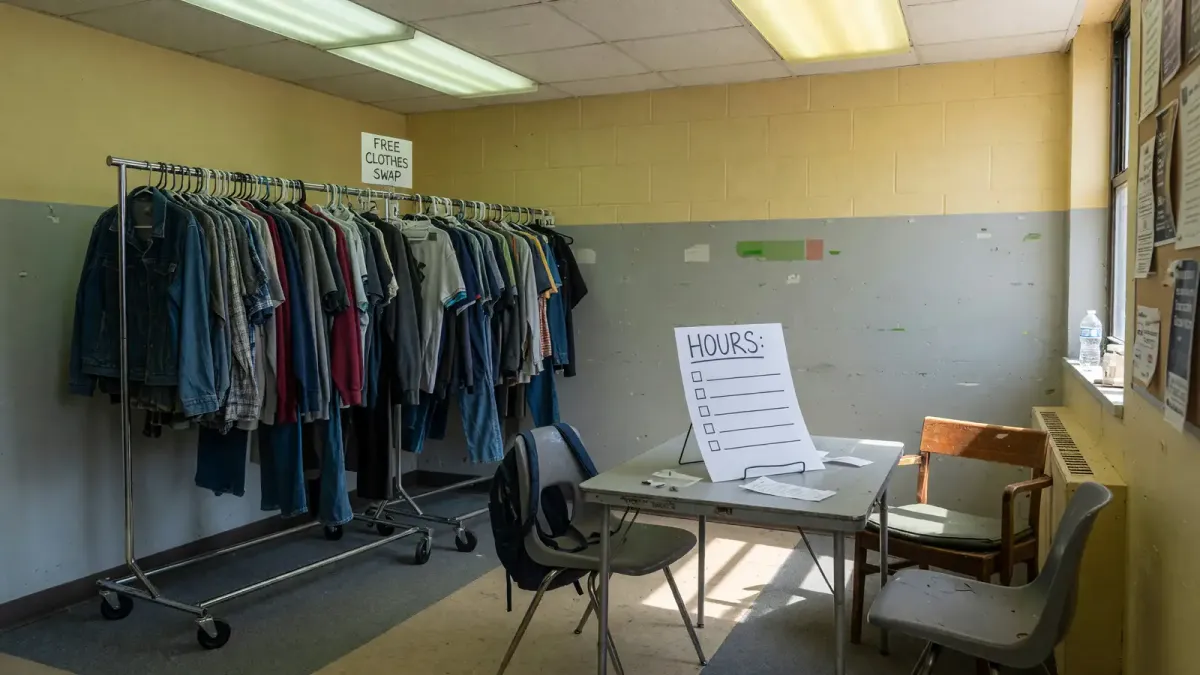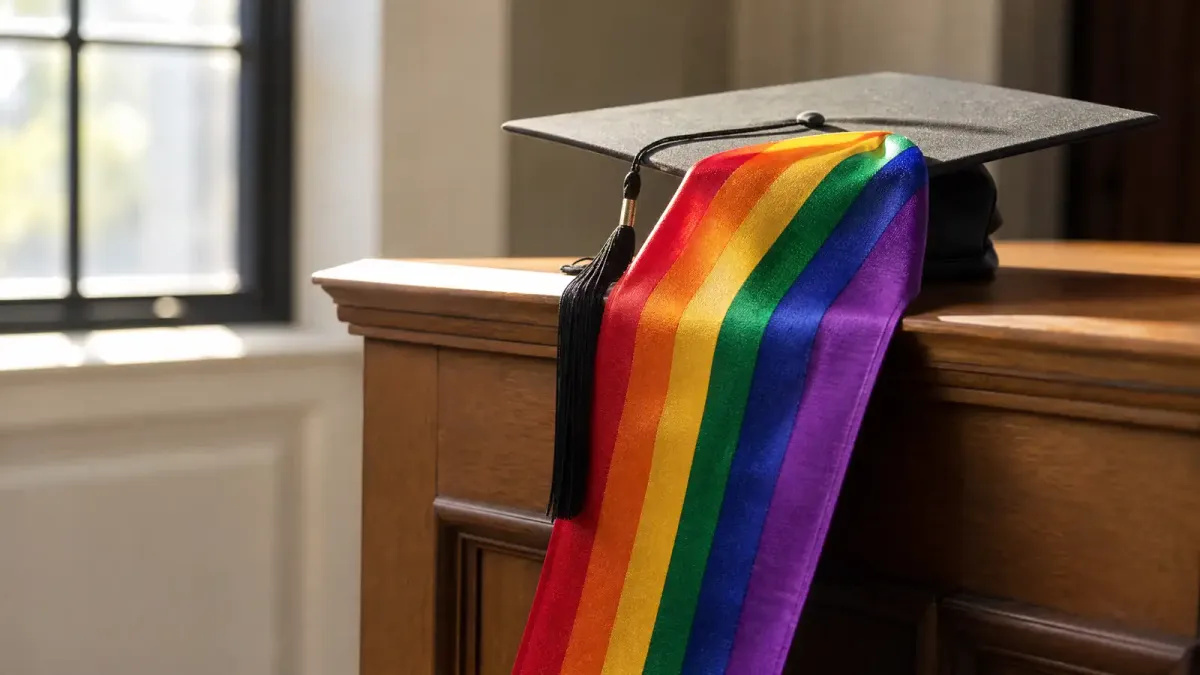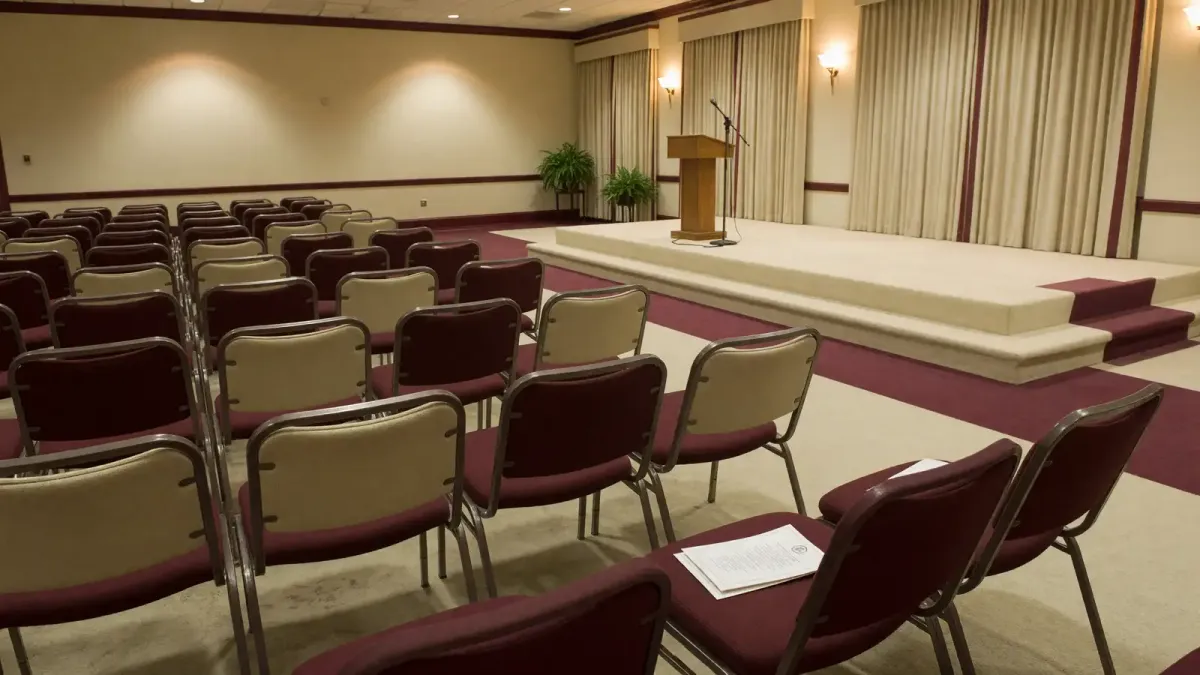
Vanessa Gomez’s State Hornet piece, dated October 7, puts Sacramento State’s PRIDE Student Resource Center in the University Ballroom on Wednesday, September 30. Twenty years. Nine events. The title on the night was “Defiant and Divine: Launching 20 years of pride.” That is a rental. It is also a date you can put on a calendar. If your campus only posted a flag graphic for History Month, you do not have this. You have a color.
We already treated UND’s tenth year as a room and Mt. SAC’s door as 6-160. This week is three physical facts: a ballroom on one Wednesday, a New Haven center that had to close, and a Stockton Homecoming slot with a start time.
Twenty years, one ballroom
Gomez says the anniversary ran like a conference that refused to stay academic. Director Hei Fok and program assistant Mono Hunter opened. The Sacramento Gay Men’s Chorus started the room with Shania Twain’s “Man, I Feel Like a Woman,” John Denver’s “Take Me Home, Country Roads,” and the “Forever Country” medley. That is a program. It is not a mission statement.
Fok told the Hornet the speakers were first imagined as more academic. The night moved toward student performances and topics that were not all “these are challenging times.” Eight panels ran with students, faculty, and alumni. Coordinator Amy Burke-Jones pulled in Sacramento collaborators: the Gender Health Center, the Sac LGBT Center, the UC Davis LGBTQ Center. Student assistants built some of the panels. The Hornet names assistant professor Daniel Cisneros, graduate intern Kateryna Karakulko, and filmmaker Roberto Fatal, who was on campus when the center was new and who screened two short films.
Development of the center started in 2005 after students went to the then-president. The Hornet’s extract cuts the name. I am not going to guess it. 2005 is enough. A 20-year center is a budget line that survived four administrations. A one-night ballroom is how you spend some of that survival in public.
If your Pride office exists as a web form, you cannot copy the chorus. You can copy the structure: a room, a start time, a list of sessions, names of the people who opened. SIU built a History Month without a Pride Center. Sac State spent an evening proving it still has the keys.
Fatal’s sentence is the product
Fatal’s quote is the one that should be on the door, not the gala graphic. The late 2000s, Proposition 8: “It was a horrifying time to be a young queer person. But when you knew you’d come to school and you knew that there was a pride center, it was a place that you could have to feel safe.” Then: “I can’t stress enough how much a physical refuge is so important for bodies that are under attack.”
A ballroom on September 30 is not the refuge. The refuge is the ordinary Tuesday office the films are about. The anniversary is advertising for that office. If the office hours are not on the same page as the gala recap, the recap is a press hit.
Steal Fatal’s test. Can a first-year walk somewhere between classes without an RSVP. If the answer is the ballroom once a decade, you threw a conference. If the answer is a staffed room, you have a center. Gomez did not print this week’s walk-in hours. Ask for them. The Hornet article is the invitation to ask, not the substitute.
Panelists from UC Davis and the city LGBT center are a map. A campus that cannot hire a coordinator can still print those phone numbers next to its own. Burke-Jones’s job, in that telling, was to bring the city into the ballroom so students did not have to pretend the campus is the whole network.
New Haven had to close to prove the room mattered
Yale Daily News, October 5, is not a student-affairs office. It is a town Pride Center that opened in November 1996, shut in February in a debt crisis, and reopened in April. On Saturday they took Crown and Orange in Ninth Square: drag, vendors, flags. Acting executive director Chris Freimuth, DIV ‘25, called it a thank-you. “We’re back.” “We’re not going anywhere.” Monday morning, the job is “let’s get things done.”
The number in that piece is the Great Give, a 36-hour New Haven nonprofit campaign in May. Freimuth said the center raised over $15,000, more than the last three years combined. That is a restart, not a surplus. Debt-free in the headline means they are not closed. It does not mean the rent is automatic.
A campus reader should not treat this as a vibe. Treat it as the failure mode. Centers close. The ballroom at Sac State is what 20 years of not closing looks like. The block party is what a close-and-reopen looks like. If your student org is raising money for a dance and the actual Pride office is a TBA, you have the order backward.
Freimuth’s Monday sentence is the one to steal. The festival is the receipt. The work is the next morning. We already said homecoming is a calendar you have to check. New Haven checked a street corner. Then they have to keep the door unlocked in October.
Homecoming is a calendar. Queer Cheer printed a time
Caravan News, also October 5, files University of the Pacific’s Queer Cheer 2026 for Friday, October 9, 3:00 to 6:00 p.m., McCaffrey Center, 3601 Pacific Avenue, Stockton. Center for Identity and Inclusion and the Pride Resource Center. Homecoming and Family Weekend is October 9 to 11. Pacific is marking 175 years in 2026. The listing says everyone is invited, including the general public.
The university, Caravan notes, has not published a detailed public lineup of performers or vendors. That is fine. A three-hour block with an address is already more than a color overlay on the football graphic. Alumni can find it. A Stockton resident who is not on the family-weekend email can find it. A first-year who hates mixers can still walk through for 20 minutes.
Put Queer Cheer on the same checklist as Howard’s lavender reception. If Homecoming weekend has a Pride event, it needs a building name and a clock. If it only has a hashtag, it is optional for everyone who already felt optional.
Pacific’s “everyone is invited” line is the opposite of a ticketed gala. Sac State’s ballroom was a 20-year show. Both can be real. Only one repeats every Friday the campus bothers to book it. Ask which one your campus actually funded.
Concurrent panels are still a room problem
Gomez says the anniversary was organized like a conference, with panels hosting concurrent talks. That is a logistics choice. A first-year cannot be in two rooms. Fok’s shift toward performances was partly about not making the whole night a lecture on how bad the year is. Fair. Concurrent sessions still mean someone misses the film or the city panel. If you copy this format, print a grid with room names. A ballroom with unnamed breakouts is a mixer.
Fatal showing two short films is the kind of program a 20-year office can book because alumni exist. Karakulko as a graduate intern is the kind of labor a center actually runs on. Cisneros on the program is faculty time. Count those roles when someone says “the students wanted a gala.” Galas have vendors. This recap has staff.
The city names are a directory: Gender Health Center, Sac LGBT Center, UC Davis LGBTQ Center. A smaller campus can put those three on a laminated card at the desk even if it cannot fill a ballroom. Burke-Jones’s job, as the Hornet tells it, was bringing collaborators in so the anniversary was not only campus talking to itself.
Pacific’s 175th anniversary is why this Homecoming is louder than a normal October. That is a trap. A 175th will get a video. Queer Cheer still needs the 3 p.m. line or it loses to the football graphic. Caravan’s note that there is no published headliner is useful. You are not missing a secret poster. The event is the gathering.
New Haven’s Crown and Orange intersection is a street, not a student union. Freimuth is DIV ‘25, which is Yale adjacent, and the center is still a city nonprofit that had to survive February. Do not file it as a campus club. File it as what happens when the lights go out. $15,000 in 36 hours is a rescue, not an endowment.
Steal the hours, not the graphic
Three stories, one job. Sac State proved a 20-year office can still fill a ballroom and name its director. New Haven proved an office can vanish in February. Pacific put three hours on a Homecoming PDF.
If you are a student staffer, do not copy the chorus setlist. Copy the fields: date, building, start time, who opened, who else is in the city. Put walk-in hours on the same flyer as the anniversary. If you cannot get hours, you are advertising a memory.
If you are an administrator quoting History Month, the Hornet already did the work of naming Fok, Hunter, and Burke-Jones. Your campus either has those jobs or it does not. A visiting film screening is not a coordinator.
If you are off campus and looking for a door this week, Pacific’s McCaffrey Center on October 9 is the one with a public time. New Haven’s center is the one that had to ask the city to bring it back. Sac State’s ordinary office is the one Fatal was talking about, and that address is the question to send the Hornet reporter if it is missing from the recap.
Gomez filed the story on October 7 about a September 30 night. That lag is normal for student papers. It is also why you should not wait for the recap to find the office. The office was there on October 1. The ballroom was the extra.
Ask for the Tuesday hours before you RSVP to the next ballroom. If the reply is a History Month graphic, you got the press template. If the reply is a room number and a clock, you got the product Fatal was describing in 2008 language.
A 20-year logo is not a refuge. A ballroom is not hours. Print the hours.