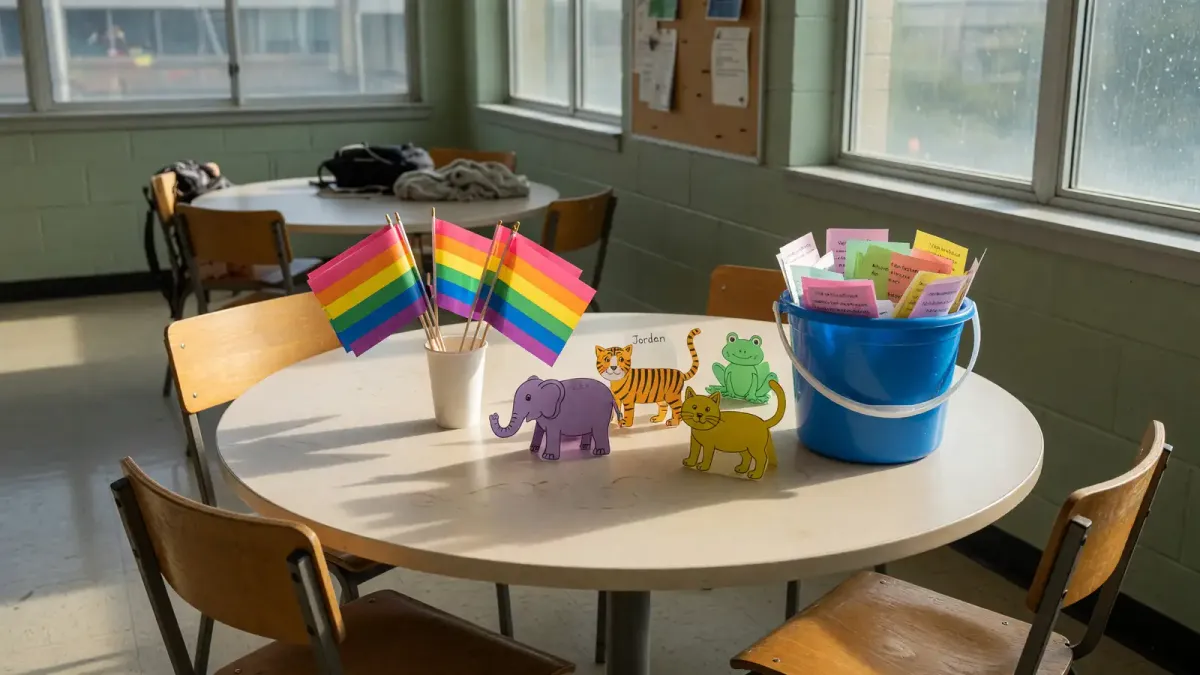
UCF’s student paper The Charge sent Itai Aarons to a speed-friending session that LGBTQ+ Student Services hosted in the Student Union. Thursday. Room 221. Tables with custom animal signs, handheld Pride flags, and small blue pails of folded conversation starters. The write-up names majors: environmental science, clinical psychology, communications, marketing, psychology, business management. Transfer students are in the lede on purpose.
That is a community story with a floor plan. It is not a ranking. It is not a lawsuit. It is a room that tried to make the first ten minutes less stupid.
Campuses love a resource list. Students love a person who will sit still for eight minutes. We already argued you need one adult who gets it. This mixer is the peer version of that sentence. The adult can still be in the building. The pail is what gets a transfer student past “so, what’s your major?”
Room 221 is a design, not a vibe
Aarons describes an open, relaxed setup meant to connect people across majors and backgrounds. The animal signs are seating labels. The flags are visible on purpose. The prompts are there because unscripted queer small talk in a union still dies in the first silence.
The photograph caption is doing more work than most “community” press releases. Jupiter Moraga, Vivian Winters, Lyliany Ocasio standing. Jessie Demosthene, Mikaela Ranger, Camryn Isidor seated. A fellow attendee who did not get a name. That last detail is the honest one. Not everyone wants to be in the paper. The room still has to work for the person who will not be in the caption.
Speed-friending is stolen from speed-dating and stripped of the romantic pitch. You rotate. You get a prompt. You leave with a few names you can text without pretending you have been friends since orientation. For a transfer student, that is not cute. That is how you stop eating lunch in a stairwell.
Finding community on campus is usually written as a hunt: center hours, club calendars, Discord links. UCF put the hunt in a room with a clock. The clock is the feature. If your campus pride group only runs a two-hour mixer with a speaker and a pizza line, the shy people leave with pizza and no names. Eight-minute rotations are rude in a useful way.
If you staff a center, steal the props before you steal the branding. Animal signs beat a blank table tent that says “Group 3.” A pail of prompts beats a facilitator asking everyone to “share their journey.” Flags on the table tell a walk-in the room is not a stealth meeting. Stealth meetings have their place. Thursday in the union is not that place.
The mixer is also an accessibility choice
Aarons flags transfer students in the first paragraphs. Transfers arrive without the freshman-week accident of meeting people in a dorm hallway. They also arrive without the energy to decode which org is actually active. A listed GSA that meets “biweekly, location TBD” is not a community. A Thursday on the union calendar is.
Majors in the caption span science, psych, comms, marketing, business. That mix is the point of a campus-wide services office doing the hosting instead of a single identity club. A club can be a home. It can also become a closed table that a first-year reads as already full. Speed-friending is a forced shuffle. You do not get to sit with the two people you already know unless you skip the rotation, and skipping is visible.
Prompts in a pail also help if talking about identity on command is the thing that makes your throat close. You can answer a silly question. You can pass. You can laugh at the prompt instead of at yourself. None of that shows up in an annual report as “identity development,” which is language UConn’s Rainbow Center still uses in its mission copy.
If your disability or your anxiety makes a loud union impossible, this format still has a hole. Room 221 is a room. Offer a second round in a quieter space, or a virtual rotation with the same prompts, or you have built a community for people who can already do rooms. The Charge piece does not mention a quieter option. That absence is worth copying in the other direction: add one.
UConn is paying for a closet. Ask what the closet does on Thursday
Campus Reform wrote UConn as if employee affinity groups and a clothing closet were a scandal. Read past the frame. The copy still has usable facts.
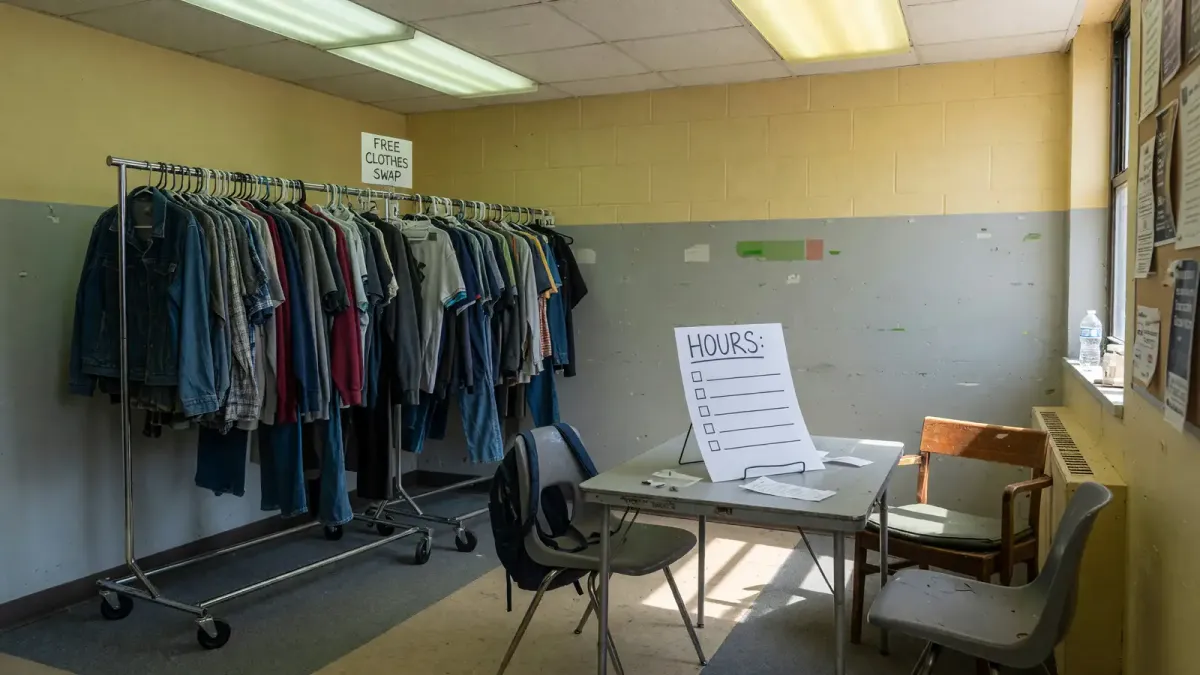
Queer UConn Employees is described, in the university’s own language as quoted there, as a university resource that brings faculty and staff together around shared experiences. The Rainbow Center sits in the Division of Student Life and Enrollment. Cultural centers are among units supported through the General University Fee. The center runs IRIS Mentoring, pairing first- and second-year students with continuing students for individual meetings and group events. It also runs a Gender Affirming Closet with clothing for students, faculty, and staff.
In 2025 UConn was one of five institutions to receive $50,000 from the American Association for the Advancement of Science for a project on collecting and using sexual orientation and gender identity data. The project was supposed to train faculty and staff after a survey found LGBTQ+ students reported lower belonging than their peers.
Lower belonging is the problem statement. A closet is one intervention. Mentoring is another. An employee group is a third. A $50,000 methods grant is not a friend. If belonging is down, the question for a student is not whether the fee exists. The question is whether you can walk into the Rainbow Center on a weekday and leave with a garment, a mentor name, or a Thursday event that looks like UCF’s.
Fee-supported cultural centers are a political target. They are also how a public campus pays for a room that is not a classroom. If your campus is quietly defunding the center, you will feel it as missing hours, not as an op-ed. Check the hours. Check whether the closet has a posted schedule. Check whether IRIS still pairs people or only exists as a PDF.
We have a student orgs guide for the club side. Employee groups are the staff side of the same building. When staff have a named queer group, students get a map of adults who have already said they are willing to be found. That is adjacent to the “one adult” rule. It is not a replacement for a student mixer. Staff meetings do not fix a transfer student’s lunch.
SF State put an activist in the Hall of Fame. Your campus still needs the Tuesday version
San Francisco State inducted Juan Acosta into its 2026 Alumni Hall of Fame. B.S. Psychology, 2019. First-generation Mexican immigrant. Mental health and LGBTQ+ activist whose advocacy started locally at 13. STAT News STATUS List in 2023, The Advocate’s 30 Under 30 the same year, Young Innovator in Behavioral Health in 2024, California Legislative LGBTQ Caucus Pride Honoree in 2025.
Hall of Fame copy is supposed to be full-circle. SFSU’s vice president of university advancement, Mahoney, said the inductees had the same promise as current students. Fine. The useful read for a student is narrower. Acosta’s work is public and national. Your Tuesday is local and unnamed. You do not need to make a STATUS List to justify a speed-friending table.
What the induction does for campus climate is mixed. Representation in a ballroom is real. It does not staff Room 221. If your administration would rather celebrate alumni than fund student services, you will get more Hall of Fame pages and fewer pails. Track both. Go to the induction if it is free and you want to see an adult who left and stayed loud. Then ask the center whether this month’s calendar has a mixer with rotations or only a speaker who already has a publicist.
Community stories rot when they only profile people who already won. Aarons’s piece is the correction: it profiles a format. The named students are in a caption because they were in a room, not because they founded a nonprofit at 13. Both kinds of story belong on a campus site. Only one of them tells you what to do at 7 p.m. on Thursday.
Steal the format. Do not steal the press release
If you run a queer student org and you have more group chats than events, copy UCF’s physical list:
- A public campus room, on the union calendar, not a secret suite.
- Tables that look like tables, not a lecture.
- Prompts in a container so silence has a script.
- Rotations with a visible timer.
- A caption-level mix of majors, including transfers, even if you never send a press photo.
If you cannot get a union room, a library instruction room works. If you cannot get flags, use any object that marks the table as the queer table from ten feet away. If prompts feel childish, they are doing their job. Childish is how you avoid forcing a coming-out story on a first meeting.
Pair the mixer with the boring infrastructure UConn at least still funds on paper: a clothing closet with hours, a mentoring sign-up that results in a meeting, a staff affinity list that students can see. Belonging surveys that produce a $50,000 training grant and no Thursday event are how offices spend a year.
If your campus has already closed the center, the mixer is harder and more necessary. Borrow a room from a department that still likes you. Borrow faculty from the employee group if one exists. Borrow prompts from UCF’s description if you have nothing else. You do not need custom animal signs. You need a rotation.
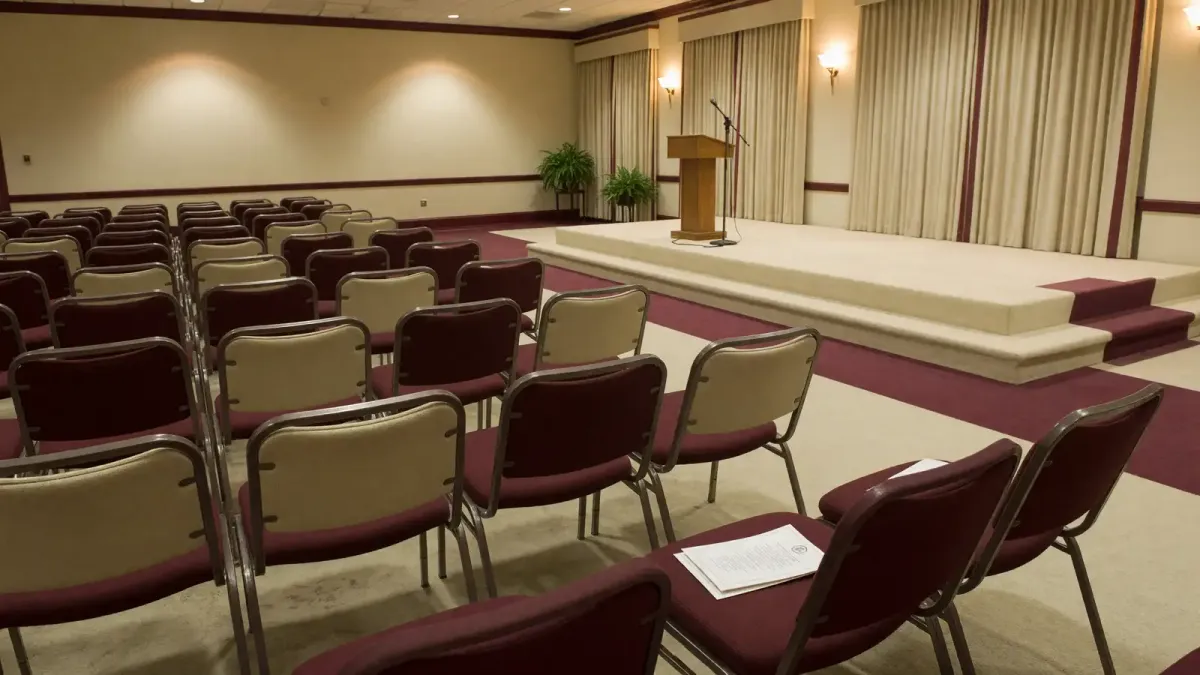
Budget the event like a class, not like a party. Room 221 is a union room, which means you compete with career fairs and blood drives. Put the reservation in for the same Thursday three months out. If LGBTQ+ Student Services hosted this one, ask them who signed the room form. If a student org hosted it, the form is the whole job. Centers that only send Canva flyers and never touch 25Live are how mixers stay hypothetical.
Bring a signup that is not a public Google Sheet of legal names. A paper list, a QR to a form that asks for a first name and a Discord handle, or a stack of index cards. The Charge named majors because students agreed to be photographed. Your mixer will have people who will leave if the first ask is a camera. Put the photographer, if you even have one, after the second rotation, and let people step out.
IRIS-style mentoring is the day-after path. UConn pairs first- and second-year students with continuing students for individual meetings and group events. Copy the pairing even if you cannot copy the name. A mixer without a follow-up is a nice hour. A mixer that ends with “here is the person who holds office hours on Tuesday” is how a transfer student gets a second week.
The Charge article will disappear into the student-media archive. The format should not. Community is not a feeling you wait to have. It is a Thursday in Room 221 with a pail, and a closet that is open on a weekday, and one named adult down the hall when the mixer ends and someone still does not have a ride home.