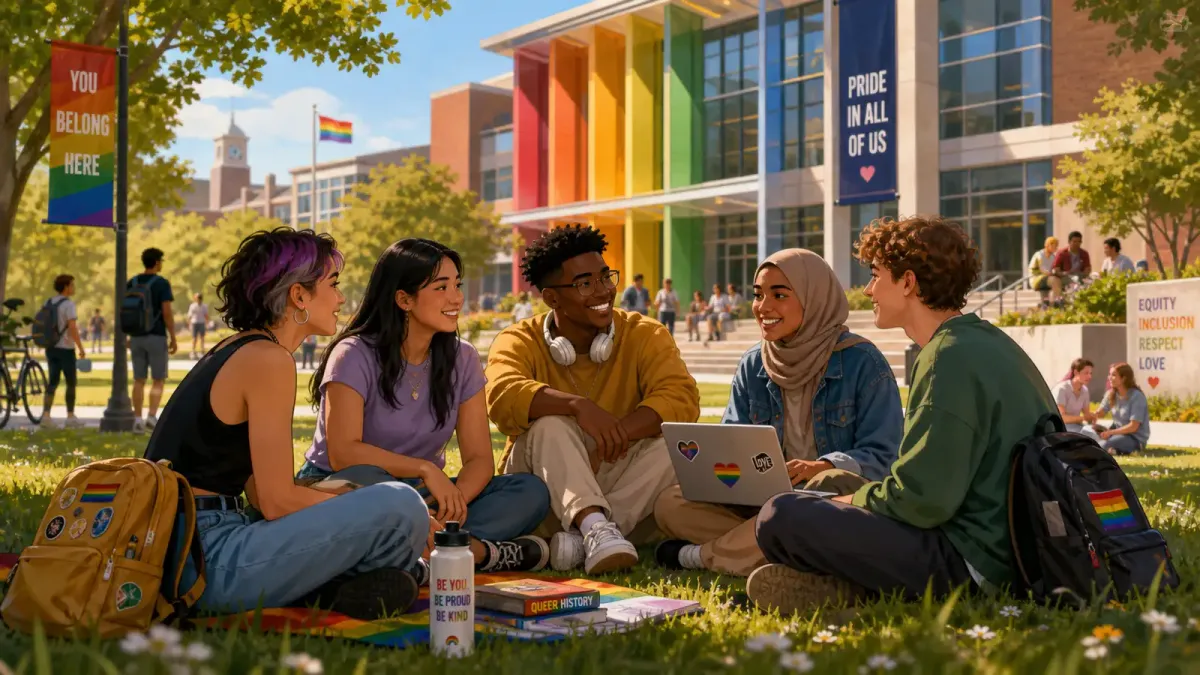
Spectrum Local News dated October 9 put Syracuse University students in the Schine Student Center for LGBTQ+ History Month while the campus Resource Center marked 25 years. A student organizer, Nance, described the programming as two hours of not watching the national argument. That quote is honest. It is also a scheduling constraint. Two hours is a club night. Twenty-five years is a door with a staffer.
Hope College posted the same week that its annual Affirming LGBTQ+ Students Lecture is Monday, October 19, at 3:30 p.m. in the concert hall of the Jack H. Miller Center for Musical Arts. Free, public, doors at 3:15, Q&A after. Put the lecture on a calendar. Then ask what is open on Tuesday.
25 years is a room. History Month is a program
Sydney Chan’s Spectrum piece is a student-voice story, not a facilities audit. Students at Syracuse described the campus as welcoming and also pointed at national fights over gender identity, gender-affirming care, and legal protections. Those two sentences can both be true in the same building.
The Resource Center is the object that survived 25 years. The History Month gathering is what Spectrum photographed this week. Nance said her club tables and promotes events so people can “let it all go” for those two hours. She also said the club talks to the Resource Center because staff actually want the student temperature, not a poster caption.
If you are on a different campus, translate the nouns. History Month programming is the two hours. The analog to Syracuse’s Resource Center is the Pride Center, LGBTQ Center, or multicultural office that still has a phone tree in January. We already made this split when Sac State’s PRIDE Center turned 20 in a ballroom. A ballroom is a good night. A room number is the product.
Ask for the hours before you ask for the theme.
Two hours of escapism is a real service. It is not intake
Nance’s “best escapism we can” line will get quoted because it sounds like a slogan. In the piece it is operational. The club is trying to run a window where nobody has to perform a position on a court case. That is a legitimate student-affairs job in October.
It does not replace:
- a walk-in or appointment slot
- a name-and-pronoun process that works with the registrar
- a staffer who answers email in November
- a referral list that is dated this semester, not 2023
If your campus only funded the two-hour block, you have a program. If it funded the desk, you have a center. Students in the Spectrum story keep pointing back at the Resource Center as the place that wants to know what student life is actually like. That is the sentence to steal for a student government question: who is paid to hear that after the month ends?
Reel Q putting films in McConomy is the same shape on another campus: a History Month object that is good, and still not the counseling waitlist.
October 19 at Hope is a time and a building
Hope’s listing is unusually complete, which is why it is useful even if you will never be in Holland, Michigan.
- Monday, October 19, 3:30 p.m.
- Concert hall, Jack H. Miller Center for Musical Arts, 221 Columbia Ave
- Doors 3:15 p.m.
- Free, public
- Q&A panel after the lecture
- Speaker: Rev. Alexander Swain, class of 2016, now an Episcopal priest in Tucson, vicar of St. Andrews and curate for Intergenerational Ministries at St. Philip’s in the Hills
- Talk title: “In Christ, a New Creation: The Significance of Inclusive Orthodoxy in the Church Today”
- Hosts: Center for Diversity and Inclusion, with Prism, the Phelps Scholars Program, and the Office of Culture and Inclusive Excellence
- Accessibility: [email protected]; listing updates on hope.edu/calendar
If you are at Hope, that is an actual hour you can occupy. Bring the question you would not put in a comment box. The Q&A is listed on purpose.
If you are not at Hope, copy the format, not the theology. A named speaker, a room, a start time, a door time, an access email, and a co-sponsor list is what a usable History Month event looks like. “Join us this October” with no building is a graphic.
Students who need the Center more than the lecture should still walk into the Center for Diversity and Inclusion on a random Wednesday and ask for the same things Syracuse students said they use: a place that is open, staffed, and interested in what the week felt like.
What to take from a 25-year anniversary if you are not in Schine
Anniversaries generate banners. They also generate the only week some administrations will answer a facilities question.
If your campus is marking History Month, ask:
- Where is the analog to Syracuse’s Resource Center, and what are this week’s hours?
- Is that office funded through the next fiscal year, or only through October 31?
- Who is the named coordinator, and is that a full-time line?
- When the two-hour event ends, what is the referral for housing, financial aid, and counseling?
Sac State’s 20-year writeup in the State Hornet on October 7 named coordinator Amy Burke-Jones and credited student assistants for organizing panels. Names are a feature. If your campus History Month page has no staff names, you are looking at a theme, not a center.
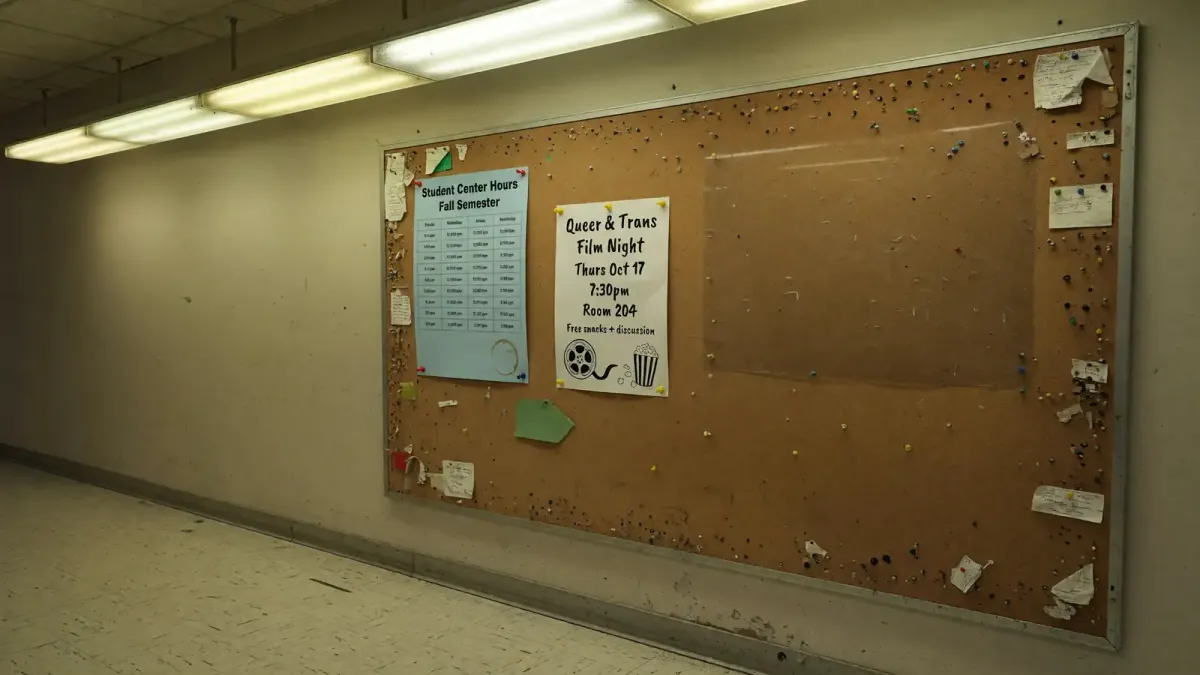
We already argued that a resource fair table is not Pride hours. A 25-year cake in Schine does not change that. The cake is allowed. The hours sheet still has to hang next to it.
A card you can actually carry this week
Write four lines. Put them in your phone.
- Center name and building
- Today’s hours, copied from the door or the site, not from memory
- One email that a human reads
- One after-hours line your campus names (counseling, dean on call, or a national line your health center lists)
If you are going to Hope on the 19th, add the Miller Center address and the 3:15 door time so you are not outside a locked hall.
If you table for a club, do what Nance described: promote the two-hour event and point at the Resource Center. The Spectrum story is explicit that the club and the Center talk to each other. That pairing is the useful part of the article, not the mood.
Do not use History Month as the week you finally “raise awareness” without printing hours. Awareness without a door is how students bounce.
After October
National policy fights do not pause on November 1. The Syracuse students already said that out loud while standing in a welcoming student center. The local job is narrower: keep the 25-year-old desk staffed when the flyer comes down.
Student reporters can ask for the budget line in spring. Student government can ask whether the coordinator is 1.0 FTE. Residence life can put the hours on the same PDF as the RA duty roster.
If your campus has a lecture like Hope’s, record whether the Q&A produced a follow-up office hour. If it did not, the lecture was a talk. Still go. Then walk to the office that will be there in February.
Residence life can put the hours on the same PDF as the RA duty roster. Orientation can stop using History Month as the only week the Center appears in a slideshow.
Student journalists have a cleaner assignment than a vibe piece. Ask for this year’s budget line, the FTE count, and whether the coordinator is on a renewable contract. The State Hornet named Amy Burke-Jones. Spectrum named the 25-year mark and quoted Nance on the two-hour window. Those are the two genres. You need both. A quote about escapism without a staff name is a color story. A staff name without hours is a press release.
If your campus religious life office is the only “affirming” listing, Hope’s lecture is a reminder that some of those events are public and free, with an access email. It is also a reminder that a concert hall at 3:30 p.m. on a Monday will miss anyone in lab or clinic. Record the talk if they allow it. Then keep the Center’s drop-in hours on the same card.
For students who will not be in Schine or in Holland this month, the translation is mechanical:
- Find the office that is supposed to be 25 years old on your campus, even if it is three years old.
- Copy hours from the door.
- Ask whether October programming is extra pay or the entire budget.
- Put one lecture like Hope’s on the calendar if it exists, and do not let it stand in for the desk.
Hope’s hosts are worth copying as a checklist even if you skip the theology: Center for Diversity and Inclusion, Prism, Phelps Scholars, Office of Culture and Inclusive Excellence. Four names on one lecture is how you tell the event is not a lone student’s Google calendar. If your campus listing has no co-sponsors, ask who pays the room.
Swain is class of 2016. Alumni lectures are a common History Month pattern. They are not a substitute for a coordinator who still works there. Invite alumni. Pay staff.
Spectrum’s students pointed at national policy while standing in a welcoming student center. Hold both facts. The local lever is still the desk in Schine or whatever building your campus uses. The national lever is not a two-hour club night.
Nance said the Resource Center wants the student temperature. That is the job description to print. If your Center only wants attendance counts for History Month, you have a program office. Push for the first job.
Print the October 19 Hope time next to Syracuse’s 25-year mark on the same staff Slack. One is a lecture. One is a desk. Both are this month. Doors at Hope are 3:15 p.m. if anyone is actually going.
Twenty-five years is a claim that someone kept a room open. Two hours is a good night. Fund the first. Attend the second. Do not confuse them on the flyer.