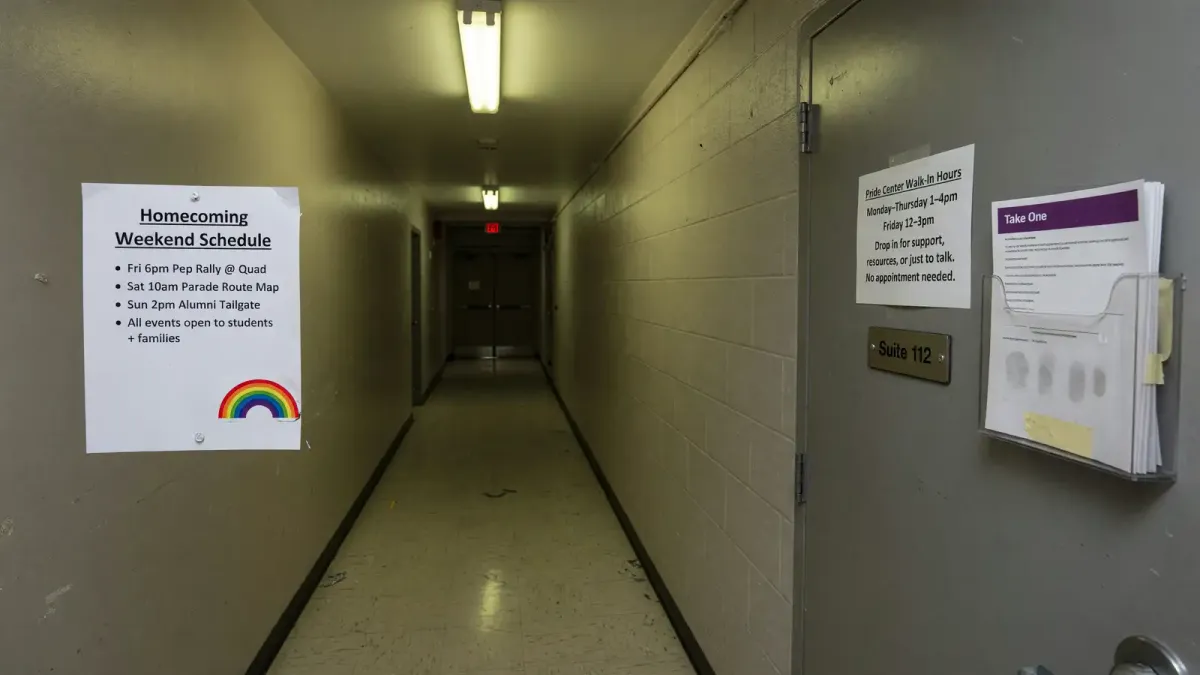
A cookout is a date. A homecoming listing is a test of whether your campus will print the word.
Howard University’s own events calendar now shows Lavender Reception | Homecoming 2026 for Wednesday, October 14, at 7:00 p.m. EDT, Blackburn University Student Center, 2397 6th Street NW. The blurb is the same sentence the university has used before: awareness and activism, scholarships for students who advocate for inclusion and justice, alumni and allies welcome. That sentence is not a Pride Center. It is a line on the same grid as the rest of Homecoming.
We already wrote about lavender graduation as a ceremony you can lose if nobody books the room. Homecoming is the louder calendar. If queer programming only exists in a GroupMe, it is not on Homecoming. If it is on Homecoming, a first-year can find it without already knowing the staff.
The listing is the product
Howard’s page is a Localist event. Time, place, map, add-to-calendar. Blackburn is a student center, not a borrowed classroom. The Google Calendar payload repeats the scholarship language and the invitation to students, alumni, supporters, friends, and allies.
That is bureaucratic on purpose. Bureaucracy is how a campus tells you the event will still exist if the student who planned it graduates. A Discord RSVP is not that.
Campus Reform wrote the listing up on September 23 as if the news were that Howard still hosts it. Read the facts, skip the frame. They confirm the Homecoming schedule language (“celebrating Howard’s LGBTQIA+ community”), 7 p.m. at Blackburn, and they quote Howard Development and Alumni Relations from 2025: the Lavender Fund had awarded more than $50,000 in scholarships since 2015. The university’s own line, in that recap, is that the fund “creates a space that affirms students’ Blackness and their queerness, something that was missing in Howard culture prior to the Fund’s establishment.”
Fifty thousand dollars over a decade is not a foundation endowment. It is also not zero. If you are a Howard student who thinks Homecoming is only the yard and the concert, the reception is the night the scholarship pitch and the alumni list are in the same room. Bring a student ID. Bring the question about how to apply. Do not wait for a friend to screenshot the flyer.
The same recap ties the reception to the Office of Intercultural Affairs and the LGBTQ+ Resource Center, and notes the usual campus stack: pronouns, gender-inclusive housing, bias reporting, student organizations, Safe Zone. Those are year-round pages. Homecoming is the one week visitors and alumni are on campus to see whether those pages are real.
If your school has a resource page and no Homecoming line, you have a PDF. If you have a Homecoming line and a locked resource center, you have a photo op. Ask for both.
Binghamton is throwing a birthday for a room
Binghamton University’s September 25 news story is a different object. The Q Center turns ten. On October 2 there is a reception in the Old Champlain Atrium. Bonnie J. Morris (MA ‘85, PhD ‘88), historian and lecturer at UC Berkeley, is the keynote. The rest of the dais is the org chart: Nick Martin, associate director; Carmen Jones, assistant vice president for DEI; Provost Donald Hall; Dara Silberstein from Women, Gender and Sexuality Studies; Kelly Clark, founding director.
That list is the point. A ten-year center can put a provost on the program. A club that started in August cannot. Yesterday we wrote about UND’s Pride Center turning ten as a room that still exists in February. Binghamton is the same species of fact, on a different campus, with a public atrium and a clothing closet in the history.
The decade of programming in the Binghamton write-up is a checklist you can steal for your own student government: Active Ally/Advocacy Workshops, the Gender Bender Clothing Closet, Lavender Living Community, Rainbow Fest, Queer Youth Conference, OUTober, Lavender Celebration, Empowered Women, Empowered Leaders Conference. The center employs more than 20 undergraduate and graduate student staff.
Twenty student jobs is a budget line. A reception with a historian is a night. You want the budget line. The night is how they remind the provost the budget line exists.
If you are not at Binghamton, do not copy the keynote. Copy the inventory. Clothing closet. Living-learning community. A conference that brings high-schoolers onto campus. Those are the pieces that survive a bad news cycle. A homecoming reception without a closet is still a party.
We already covered gender-inclusive housing as a form, not a vibe. Binghamton naming a Lavender Living Community in a ten-year recap is the housing version of Howard naming Blackburn on a Homecoming calendar. Named, staffed, on a map.
Homecoming weekend is when the campus lies or does not
Homecoming is built for alumni who remember a different school. That is why the lavender slot matters. If the university is willing to put LGBTQ students on the public weekend, the argument later in the year is smaller. If the university hides the reception in a basement and keeps the parade clean, you learn something before you donate as an alum.
Howard put it on October 14 at 7 p.m. in a student center with a street address. That is a locatable fact. You can walk a parent there. You can walk a date there. You can walk there alone and still look like you belong, because the calendar said Homecoming.
Binghamton put the birthday in an atrium with a provost. Different ritual, same tell: the institution agreed to be seen.
Your job, if you are on a campus that has neither, is not to write a thread. It is to find who owns the Homecoming schedule. Student activities, alumni relations, the union. Ask for a line. Bring last year’s attendance if you have it. Bring the Howard listing if you need a specimen. “Other HBCUs print this” is a sentence. “We would like Blackburn-equivalent, 7 p.m., scholarships mentioned” is a better sentence.
If you already have a center, ask whether Homecoming sends people through it. A ten-year atrium party that never mentions hours and location for Monday is a reunion. Put the hours on the program. Put the clothing closet hours on the program. Put the after-hours contact on the program. Visitors will not hunt your Instagram.
What a student should do this week
Open your campus calendar software, the official one, not the unofficial spreadsheet. Search lavender, pride, Q, LGBTQ, homecoming. If you get a hit with a building, screenshot it and send it to the group chat that still thinks nothing is happening.
If you get nothing, search the alumni site for a fund. Howard’s Lavender Fund is older than this year’s reception. Money with a name is leverage. A fund without a public event is a donation form. An event without a fund is a snack table. Prefer both.
If you are near Binghamton on October 2, the atrium is the easier room to enter than a center you have never visited. Anniversary crowds are for people who are not already regulars. Use that. Then ask where the Gender Bender Clothing Closet actually is, and when it is open after the speeches.
If you are near Howard on October 14, Blackburn at 7 p.m. is the line. The scholarship language is on the event page. Treat it like an office hour with alumni in the room. If you need gender-inclusive housing or a bias-report path, those pages exist year-round; the reception is not the intake form. It is the night you find out who will still email you in November.
For everyone else, the first weeks of fall still apply. Homecoming is a late-October version of the same problem: you cannot join a room you cannot find. Calendars are how large campuses hide or reveal rooms.
Do not outsource this to a hostile recap. Campus Reform will keep writing that Howard hosted a reception. Howard already hosted the listing. Read the listing. Walk to Blackburn or do not. The politics of the recap will not get you a scholarship form.
What “awareness and activism” is allowed to mean on a calendar
Howard’s event description still leads with awareness and activism, then pivots to scholarships. That order is a tell. A reception that only says “community” can be a mixer. A reception that says scholarships for students who advocate for inclusion and justice is a fundraising night with a political noun in it. You can attend for the mixer. You should still ask, out loud, how the Lavender Fund actually pays this year, who sits on the selection, and whether first-years can apply without an alumni nominator.
The 2015 founding date on the fund matters because it is older than most of the undergraduates in the room. A ten-year-old pot of more than $50,000 is a history, not a windfall. Divide it badly and it is a few thousand a year. Divide it as emergency grants and it is rent. Do not guess. Ask the staff from Intercultural Affairs and the LGBTQ+ Resource Center, who the Campus Reform recap already named as the connected offices. They have office hours on days that are not Homecoming.
Binghamton’s program list is the other definition of activism that fits on a university website: workshops, a clothing closet, a living community, a youth conference, OUTober, a lavender celebration that is not the same night as Homecoming. If your campus only has the mixer, you are missing the closet. If your campus only has the closet, you are missing the public night when alumni write checks. Steal in both directions.
Safe Zone training and bias reporting, which Howard still lists as standing resources, are not decorations for the Blackburn flyer. They are what you use the week after someone rips the flyer down. Put those URLs in the same GroupMe as the 7 p.m. time. A first-year who only has the party time will not file a report.
A reception is not a center, and a center is not a listing
UND’s ten-year room, Binghamton’s ten-year room, Howard’s Homecoming line. Three different products. Students collapse them because they all have a color in the name.
A center is hours, a door, staff, a closet, a housing community, a way to get a job as a student worker. Binghamton’s 20-plus student staff is the number I would take to a budget hearing. A reception is one evening that proves the center is allowed to be seen by alumni. A Homecoming listing is the university agreeing that the evening belongs next to the football weekend.
You can have a listing and lose the center. You can have a center that never appears on Homecoming. The boring work is to demand the pairing, in writing, with a building name.
If your campus will not print the building, you do not have a maybe. You have a no that wants to look like a conversation. Record the no. Then decide whether the student org can host a public night anyway, off the official grid, with a backup space. Off-grid is survival. It is not Homecoming.
October 2 and October 14 are soon. The calendars are already public. That is the news. Not that queer students exist on campus. That two universities were willing to say when and where, on pages a parent can open without a login.
Steal the format. Time, building, street address, one sentence about money if you have a fund, one sentence about who is welcome. Put it on the same grid as the parade. Then go back to keeping the room open in February, which is still the harder product.