Sharon Chia Claros started as director of LGBT Student Services at Loyola Marymount University on 1 October 2026. Ava Zuerlein reported that date in the Los Angeles Loyolan on 5 November, in a profile that is still the fullest public account of the hire. The university’s own About LGBTSS page lists her name, a short biography, a phone number, and an office in Malone Student Center 201. It does not list the start date. Students who read only the office page know who holds the title. Students who read the student paper know when the listening period began, who she replaced, and which gaps students have already named.
That split is the resource story. A director hire is easy to treat as a personality note. The office, on its own page, says it is the primary resource and support center for students of all orientations and gender identities. A primary center has to be findable, dated, and specific about what it will do this term. About six weeks after the start date Zuerlein recorded, the public record is still a mission statement plus one newspaper interview. That is enough to tell students where the door is. It is not a finished program calendar.
What the office already promises
The About page is short, and the promises on it are not soft. LGBT Student Services says it will promote equality, visibility, and inclusion of students of all orientations and gender identities. It says it will provide support for the LGBT student community and for individual students. It says it will serve as the primary resource and support center by creating an inviting, safe, confidential, and inclusionary atmosphere in the office. It says it will give the university community resources, education, and information about sexual orientation and gender identity. It also says it will engage the campus in regular dialogue about how sexual orientation and gender identity meet faith, religion, and culture, with particular emphasis on interculturalism and Catholic social teaching.
Those five lines are the job description students can hold up later. They are not a list of events. They do name a kind of work: individual support, community support, education for people who are not LGBT, and a standing conversation about faith. On a Jesuit campus, that last line is not a side note. It is written into the office mission. Zuerlein’s profile shows Claros treating it as part of the reason she took the job, not as a constraint she plans to leave unspoken.
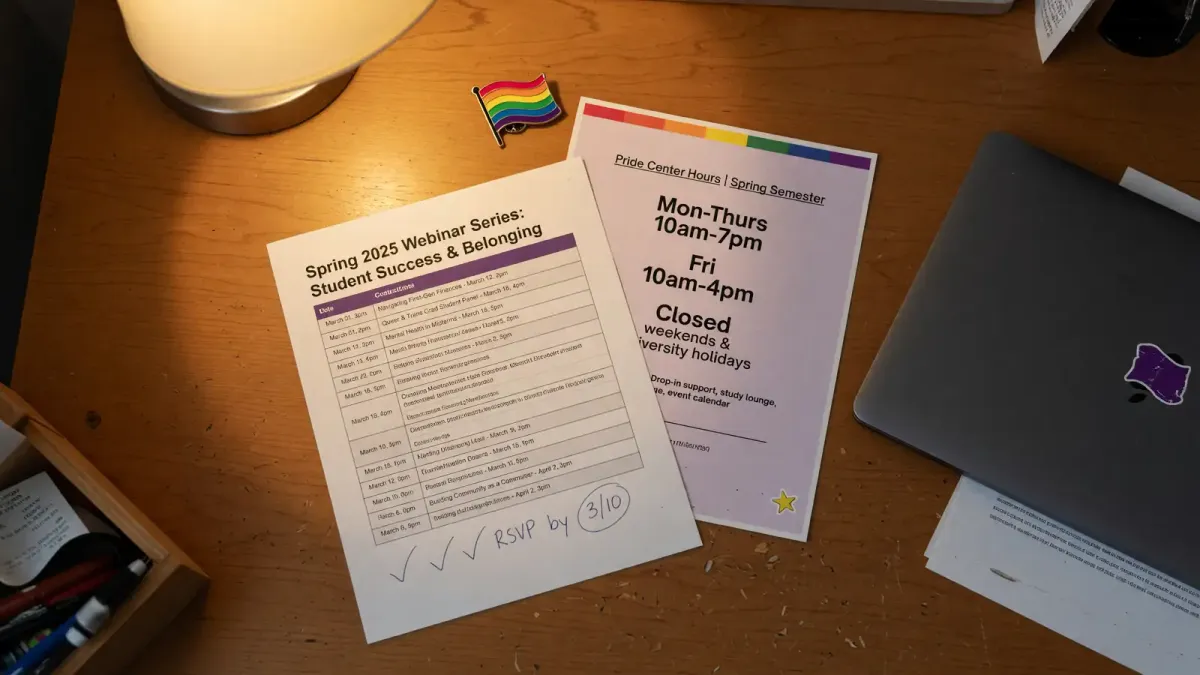
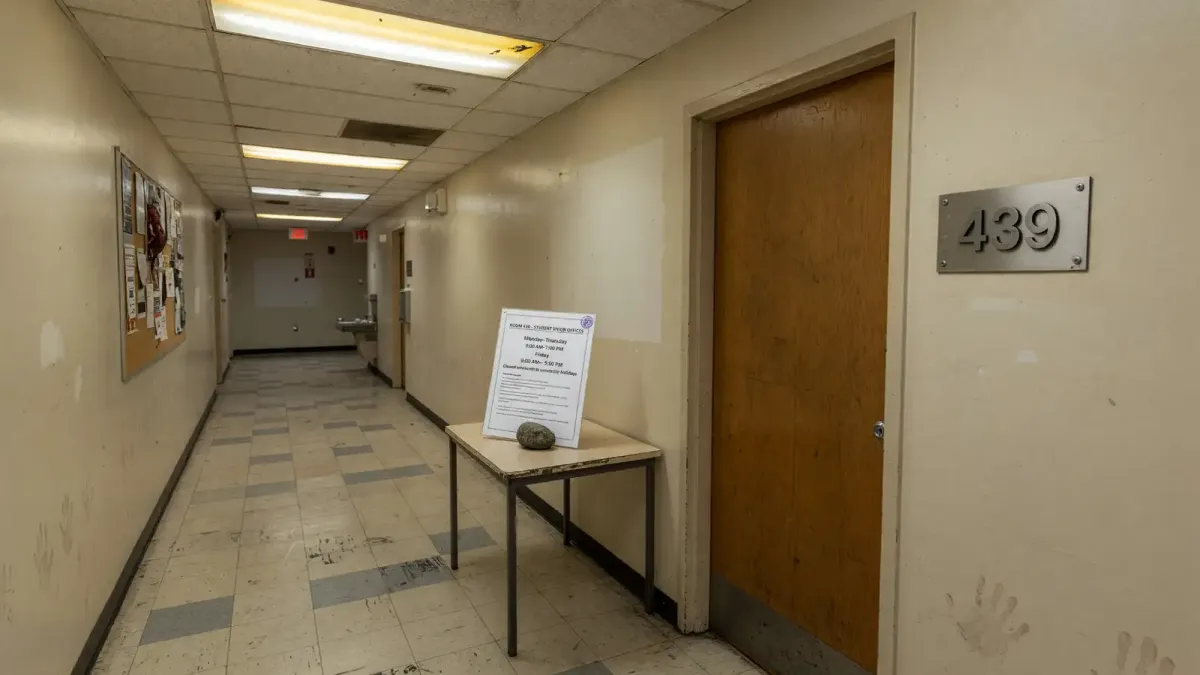
The page also gives two practical facts the profile does not lead with. The phone number is 310.258.5482. The office is Malone Student Center 201. The page invites people to stop by for resources and information. Claros told the Loyolan her door is open Monday through Friday. Neither source publishes a bell schedule, a walk-in hour, or a booking link. A student planning a visit still has a room number, a phone, and a weekday claim. That is more than a social media bio, and less than a front desk script.
A primary center with a published room is different from a student club that borrows space week to week. The mission text puts individual support and community support in the same office. That pairing matters when a student needs a private conversation and a friend needs a public event. One room cannot be both at the same minute, but one office can be responsible for both across a week. The confidentiality line is the hinge. If the atmosphere is supposed to be confidential, a drop-in chat and a club planning meeting should not share the same open table without someone saying so. The page does not describe how the room is zoned. Students can still ask that question because the promise is already in print.
A director, not a new office
Claros is replacing Stuart Moskovitz, who had been director since 2022, Zuerlein reported. The office is not a startup. The mission text students can read today was already the frame of the job before this fall. A new director can change pace, partnerships, and tone. She does not, on the evidence of the About page, rewrite the five promises by arriving.
The university biography says Claros has more than 20 years in higher education and K-12. Most recently she was dean of community engagement and belonging at Westmark School, where she partnered across divisions to embed belonging work in academics, professional development, experiential learning, and student life. The bio says she joins LMU inspired by its Jesuit values and by a commitment to helping students thrive as their authentic selves. It does not give enrollment figures, a budget, a staff list, or an evaluation of the previous director. Those absences matter. Students cannot treat the hire as proof that staffing grew, or that a prior program was judged and replaced.
Zuerlein adds a career shape the bio compresses. Claros was born in the Philippines and immigrated to the United States at age 7. She grew up in a deeply religious family and a multigenerational household, and she attended Catholic school until her senior year of high school. She told the Loyolan she knew something was different about her and did not have room to explore that until college, where queer theory classes became both personal and scholarly. Graduate study in college student development followed. Her roles, the profile says, have run from primary schools in California to colleges in Michigan and Chicago. She is a queer woman. She lives in Playa Vista with her wife and walks to campus.
Those details explain why she talks about college as a place where meaning-making happens. They are not a script other students have to match. A student who came out in high school, or who is not Catholic, or who does not have a short walk to Malone, is still inside the mission’s line about all orientations and gender identities. The biography is context for the director. The mission is the offer to students.
Her walk to campus is a small access fact, not a lifestyle feature. She told Zuerlein she lives close enough to walk, that she starts the day with that walk, and that she walks home toward the sunset. For students, the useful piece is proximity: the director she described is physically on the bluff on ordinary weekdays, not flying in for a speaker series. Proximity is not the same as availability. A person who walks to work can still be in meetings all day. The open-door claim is what turns the walk into something a student can use.
Listening is a method, and it has a cost
In her first weeks, Zuerlein wrote, Claros met with students, faculty, and staff and began a listening process. She said that when she steps into a community, the work is not her private goal list. She said she has never operated by announcing a personal target and a set number of programs. She wants to start from what students and professors say the community needs, then connect students with resources that close the gaps they see.
That is a recognizable student-affairs method. It is also a delay. As of the 5 November profile, the public record does not include a new program series, a research workshop, or a published partnership list. Students who wanted a calendar in October did not get one from this interview. What they got was a director saying the calendar should come from their goals, not from her arrival speech.
The gap she has already named is overall connection across campus. That is her reading, not a survey result. The profile does not say how many students she has met, which departments sat down with her, or what connection will look like in a room. A connection gap can mean clubs that do not know the office exists. It can mean faculty research that never reaches student life. It can mean a faith office and a resource office that share a mission sentence and do not share a date. Until she says which of those she means, connection is a direction, not a deliverable.
Students, in the same profile, were more concrete. They have voiced wanting more opportunities for research on the LGBTQ+ community or mental health resources, and more collaboration with university units and registered student organizations. Read that sentence carefully, because it bundles different asks. Research on LGBTQ+ community life is an academic and mentoring ask. Mental health resources are a care ask. Collaboration with registered student organizations is an organizing ask. A director who refuses a personal program quota still has to unbundle those three, or the listening notes will stay as one paragraph in a student newspaper.
This piece is not counseling advice, and it is not a guide to treatment. The Loyolan records a student request for mental health resources. It does not describe clinical services, wait times, or what the campus counseling center will or will not do. A resource office can point, host, and partner. It cannot, on the evidence here, be treated as a clinic.
The research ask deserves its own reading. Claros told Zuerlein she has long been drawn to how LGBTQ college students make meaning of their authentic selves and their identity, and that this thread ran through work aimed at belonging and empowerment. A student who wants a research opportunity can hear that as an opening: the director has a scholarly interest in student meaning-making, not only an events interest. The profile does not name a lab, a course, a faculty partner, or a way to apply. The opening is intellectual. The pathway is not posted.
The faith retreat is the first dated plan
One item does have a season attached. Claros spoke about an LGBT faith retreat with Campus Ministry, planned for early spring. At a Jesuit university, Zuerlein notes, the office mission already calls for dialogue about sexuality and faith, religion, and culture, with emphasis on interculturalism and Catholic social teaching. The retreat is the first public plan that puts a season on that sentence.
Claros told the Loyolan that Catholic social teaching’s language of dignity and compassion was part of what drew her to LMU, and that this work was underway in the university’s mission before the later vocabulary of diversity, equity, and inclusion. She also described a personal history in which the Church taught her about justice and a higher power, while her own life required welcoming spaces in order to exist as herself. Both claims are hers. Together they describe the tension the mission already names, rather than a settled campus peace.
She told the paper that LMU gives students a place to explore their wholeness at the intersection of sexuality and the divine. That is her view of the campus she just joined. It is not a finding from a student survey, and it is not a promise that every classroom or parish conversation on the bluff will feel that way. Students who have had a harsh experience with religion can read the retreat plan as optional, because nothing in either source says attendance is required. Students who want a faith conversation that does not ask them to split identity from belief can read it as the first scheduled place the office has named.
Students should not read the retreat as proof that faith and queer life have been reconciled at LMU. The office page says the dialogue is regular. Regular dialogue is an ongoing practice, not a verdict. The useful fact, in mid-November, is narrower: a partnership with Campus Ministry is planned for early spring, and no flier, location, or sign-up is in the 5 November profile or on the About page. A student who wants that retreat has a season to watch, not a link to click yet.
What a primary center can offer before the calendar exists
While programs are still being built from student goals, the low-barrier entries are the ones already in print. Stop by Malone Student Center 201. Call 310.258.5482. Come on a weekday, because that is the window she named. Look at books. Talk about a journey. Come in if you are questioning. Those invitations are in the profile, in the account Zuerlein published: check out some books, talk about a journey, or come by if you are questioning, because she is there to open the space.
A book corner is a small thing, and it is a real one. A student who is not ready to join a registered organization, and not ready to ask for a research mentor, can still enter a room and leave with something to read. The profile does not list titles. It does establish that books are part of the visit she is offering, not an afterthought in a storage closet she has not opened.
Confidentiality is already promised, on the office page, as part of the atmosphere the center says it will create. The page does not explain how notes are kept, who else in student affairs can see a visit, or what happens if a student asks the office to intervene with housing or a classroom. Confidential, in the mission text, is a standard the office has set for itself. It is not a published privacy protocol. Students with a high-stakes problem should ask, in the room, what will be written down and who will hear it. That question is part of using a primary center.
Registered student organizations sit beside this office, not under a chain of command the sources describe. Students asked for more collaboration with those organizations and with university units. Collaboration is not absorption. A professional office with a director, a room, and a mission can do things a student club often cannot: keep weekday hours when officer turnover hits, hold a confidential conversation, and stay in a dialogue with Campus Ministry across semesters. A club can do things a director should not pretend to own: set its own agenda, move faster than a listening tour, and remain a peer space. The profile’s collaboration ask only works if both stay distinct.
Education for the wider campus is the mission line people skip. The office says it will provide all members of the university community with resources, education, and information about sexual orientation and gender identity. That line is not only for LGBT students. It is a charge to answer faculty, staff, and classmates who need language, policy context, or a place to send a student. A new director who is still listening to students can still be the person a resident advisor calls. The sources do not say she has set office hours for that education work. The mission says the work belongs to the office, whether or not a fall calendar has been posted.
How the hire became visible
The university page confirms the person and the prior deanship. The student paper supplies the start date, the predecessor, the listening method, the student asks, and the spring retreat. On 9 November, the Los Angeles Loyolan account posted that Claros hopes to be her truest self to inspire others to live the same, and linked Zuerlein’s article. The same day, LGBTI+ News posted the headline and the same link. The card under the Loyolan post repeats the article’s frame: connection with others, and an authentic self, as her approach to education.
That sequence is how a campus resource story travels when the office page is stable and the news is in the student press. A student who follows the newspaper will have seen the profile four days before those posts. A student who only watches the student-affairs site could still miss the October start. Resource offices often update a name on a staff page and leave the narrative to the campus paper. Here, that pattern is visible in the two documents side by side.
The Loyolan post’s wording tracks the profile, not a new interview. The hope she will be her truest self is the paper’s summary of what she wants to model. It is not a second set of facts about programs, staffing, or the retreat. Anyone using the social posts as a source should follow them back to the article. The posts confirm distribution on 9 November. They do not add a calendar.
Zuerlein’s byline sits with the managing editor credit on the article page. The piece is a reported profile, with photo captions that match the text: Claros began the role on 1 October, she was born in the Philippines and immigrated at 7, and she is replacing Moskovitz. Those captions are part of the public record, not decoration. They pin three facts a skimming reader might otherwise miss if they only caught the headline about shared humanity.
What other campuses can copy
Nothing in these two pages measures whether LMU students are safer, more housed, or better counseled than students elsewhere. The profile does not compare Catholic campuses. It does not cite a climate survey. Copying the hire would be meaningless. Copying the public-record habits would not.
A campus resource office can publish, in one place, the start date, the room, the phone, the weekday claim, and the mission lines students are allowed to quote back. LMU has split those facts across a staff page and a student article. The split is usable if someone puts the documents together. It is a poor default. Students should not need a November profile to learn that the director began on 1 October.
A new director can also say, out loud, that the first semester will not be a personal program count. Claros did that. The cost is honesty about the wait. The benefit is that students can show up with goals instead of waiting to be recruited into a pre-built series. The Westmark line in the university bio suggests one way she has done belonging work before: across academics, professional development, experiential learning, and student life, rather than inside a single office program. That is a partnership pattern, not a result. It matches the collaboration students already requested. It does not prove the partnerships will form at LMU.
Kapwa, as Zuerlein glosses the word Claros uses, is a Filipino concept of a shared inner self, of finding oneself in another. Claros told the paper that people are not separate vessels, and that a connection between human beings can exist regardless of identity or ideology. That is her grounding, named as such. It is a poor export if another campus treats it as a slogan for a training module. It is a useful warning against a director who arrives with a private scoreboard. The listening claim and this grounding point the same way: start from the people in the room. They do not specify the agenda those people will set.
Her collectivist upbringing, as she described it to Zuerlein, is the personal root of that stance. She said she feels a shared responsibility for people in her circles, and that this sense of responsibility helps her find a connection even when beliefs differ. A campus office cannot require students to share her upbringing. It can notice the method: she is arguing for connection across disagreement, not for a room that only works if everyone already agrees. On a Jesuit campus where the mission requires faith dialogue, that method is the practical version of the fifth promise. Disagreement is assumed. The office’s job, in her telling, is to keep a human link while the dialogue continues.
A meeting that uses the record
A student walking into Malone 201 this month can treat the published record as the agenda. The connection gap is hers to define. The three student asks are already on paper: research tied to LGBTQ+ community life, mental health resources, and collaboration with university units and registered student organizations. A useful meeting asks which of those she has heard most often since 5 November, which office or club would have to be in the room for each, and what early spring means for the Campus Ministry retreat. It asks what the book collection is for, and what a confidential visit does and does not include. It asks whether weekday open-door time has a start and an end, because Monday through Friday is not yet an hour.
None of those questions require a student to perform a coming-out story. The profile invites journey talk and questioning. It does not require either. A student can also ask, as a member of a registered organization, what collaboration would look like if the club keeps its own leadership and calendar. That question follows directly from the sentence Zuerlein reported. It does not require insider knowledge of the previous director’s tenure.
Faculty and staff have a parallel use of the same record. Claros said she is listening to professors as well as students, and that she will not set the program count alone. A professor who wants undergraduate research on LGBTQ+ community life has a named opening. A staff member in Campus Ministry has a named season. A counseling or wellness office, if students keep asking for mental health resources, has a named request that this center cannot clinically answer by itself. The limit still holds: a newspaper sentence about a resource request is not a treatment plan, and this article is not one either.
There is a further distinction worth keeping in the meeting. Claros said the gaps she wants to close are the ones students see, and that her role is to connect students with resources that fill them. Connection, in that sentence, is a referral and partnership skill. It is not a claim that LGBT Student Services will itself become the research office, the clinic, and the club. Students who leave a meeting with a name, a room, and a next date have used the method she described. Students who leave with only a restatement of shared humanity have not yet tested the resource function, even if the conversation felt kind.
What the record refuses to support
A few claims are tempting and unsupported. The sources do not say why Moskovitz left, or whether students asked for a change in directors. They do not say how many staff sit in Malone 201. They do not say the retreat is funded, scheduled to a day, or limited to Catholic students. A closed retreat would be hard to square with the office’s own inclusion line, but the sources do not settle the guest list. They do not say Claros has closed the connection gap. They do not say LMU is exempt from pressure other campuses are under. She told the Loyolan there is a lot going on in the world, and that she still wants people to practice gratitude on a beautiful campus. Gratitude is her closing note. It is not an assessment of campus climate.
The personal details should stay in their lane as well. A wife, a walk, Filipino and Creole cooking, concerts, and friends appear in the profile because Zuerlein asked about a life near campus. They show a director who described ordinary joy alongside the grief, pain, and love she said make up a human span. She called that span a both-and. Students do not need to know her menu to use the office. They may need to know she has said the room is for the full span, including questioning and loss, not only for students who arrive already certain and already fine.
What the record does support is plainer. A professional LGBT student services office at a Jesuit university has a new director as of 1 October 2026. She has described a listening start, refused a personal quota of programs, and named connection as the gap she sees. Students have already asked for research opportunities, mental health resources, and collaboration with clubs and university offices. One partnership, a faith retreat with Campus Ministry, is aimed at early spring. The room is Malone Student Center 201. The phone is published. The door, in her account to the student paper, is open on weekdays. The mission text still says this office is the primary center, and that faith is part of the dialogue rather than a topic to avoid.
For students at LMU, the next useful document is not another headline about authenticity. It is a date for the retreat, a note on how research mentoring will work, and a clear line between the resource office and clinical care. For students elsewhere, the transferable piece is the standard: a primary center should be able to show its room, its promises, its predecessor, its start date, and the asks students have already made, without making anyone wait for a personality profile to learn the practical half.
The Loyolan gave this campus the practical half on 5 November. The office page still holds the promises and the room. Put next to each other, they are a beginning, not a finished support system. That is an honest place for a director a few weeks into the job. It is also a place students can walk into, on a weekday, and ask the next question from.